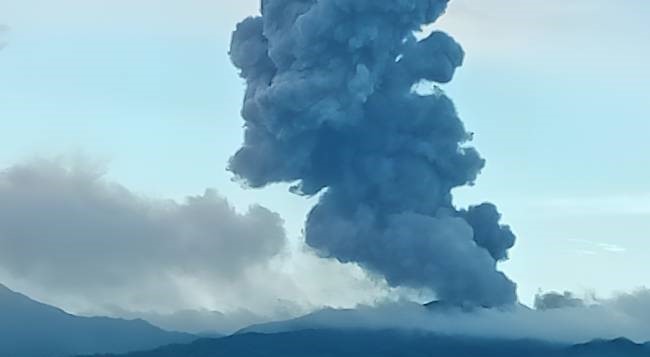
The Gunung Dukono volcano in North Halmahera, Indonesia, experienced a new eruption on Sunday morning, releasing a cloud of volcanic ash that rose to a height of 1,600 meters above the volcano's summit. This eruption was recorded at 08:33 local time, with the ash cloud observed to be gray to black in color, exhibiting high density directed towards the northwest.
In a statement to the Antara news agency, Bambang Sujiono, an official at the volcano monitoring center, reported that the eruption was recorded on a seismograph with a maximum amplitude of 28 mm and lasted for 166.67 seconds. He noted that the volcano, which stands at 1,087 meters above sea level, remains on a Level Two Alert, indicating that caution is advised.
Details of the Eruption Event
The eruptions of Gunung Dukono have been recurring, with another eruption occurring last Friday, which released a volcanic ash cloud that reached a height of 3,000 meters above the summit. This eruption was also recorded on seismographs, reflecting the increasing activity of the volcano in recent times. Local residents and visitors have been warned to stay away from the Kawah Malupang Warirang area within a 4-kilometer radius due to the potential for repeated eruptions.
Officials have urged residents to take necessary precautions, such as wearing masks to avoid health risks from inhaling volcanic ash, which can affect the respiratory system.
Background & Context
Gunung Dukono is considered one of the active volcanoes in Indonesia, which is home to over 130 active volcanoes. Historically, this volcano has experienced several eruptions, making it a subject of research and study by scientists. Its volcanic activity dates back to ancient times, significantly impacting local communities in terms of agriculture and public health.
Indonesia is one of the countries most prone to earthquakes and volcanic activity due to its location on the Pacific Ring of Fire, making it one of the most volcanically active regions in the world. This volcanic activity has significant environmental impacts, as well as effects on the lives of the population.
Impact & Consequences
Volcanic eruptions can lead to negative environmental effects, such as air and water pollution, in addition to impacts on agriculture and tourism. Volcanic ash can also cause airport closures and disrupt transportation, affecting the local economy.
Moreover, volcanic activity may result in the displacement of populations from nearby areas, increasing pressure on resources in other regions. Therefore, it is crucial for local authorities to take necessary measures to protect residents and provide support in the event of any emergencies.
Regional Significance
While the eruption of Gunung Dukono may seem distant from the Arab region, natural events like this remind us of the importance of preparedness for natural disasters. Many Arab countries, such as Lebanon and Syria, face various environmental challenges, necessitating enhanced preparations for any potential disasters.
International cooperation in volcanic research and studies can positively impact the understanding of natural hazards and how to manage them, thereby enhancing the ability of countries to face environmental challenges.
In conclusion, monitoring volcanic activity in Indonesia remains vital, not only for the protection of local populations but also for a better understanding of how these natural phenomena affect the environment and the economy.