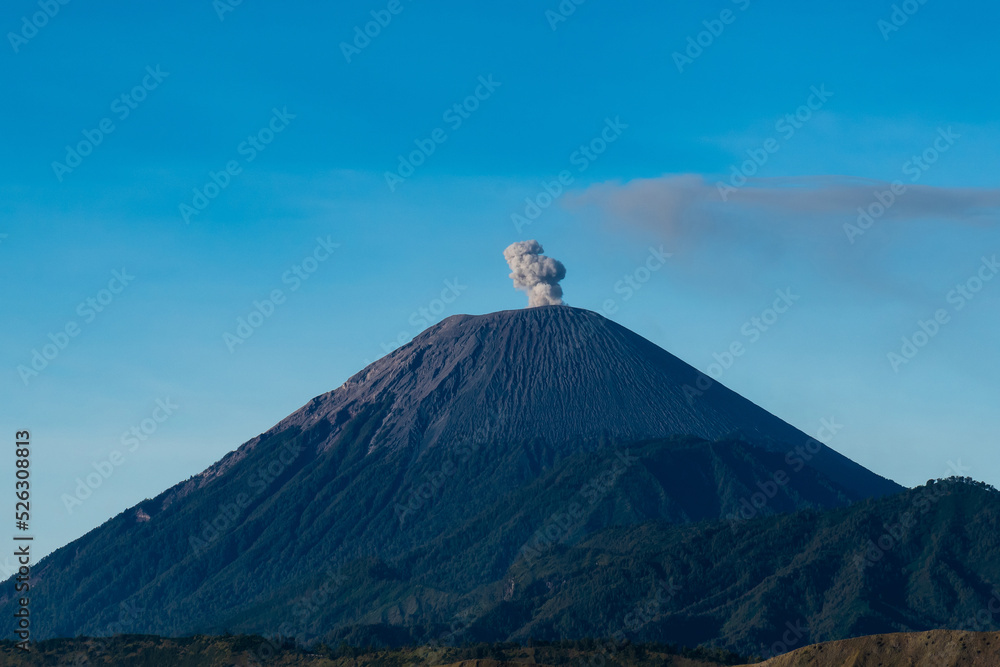
The Gunung Semeru volcano in Indonesia experienced a powerful eruption this morning, with ash clouds rising to a height of 1000 meters above the volcano's summit. The explosion occurred at 07:04 AM local time and was recorded by seismographic devices.
According to statements from Sigit Ryan Alfian, an official at the volcanic monitoring center, the ash clouds were a grayish-white color and drifted towards the west and southwest. The eruption was recorded with a maximum amplitude of 22 mm and lasted for 100 seconds.
Details of the Eruption
Prior to this eruption, the volcano also exhibited activity at 05:30 AM, with ash clouds reaching approximately 700 meters in height. This activity was also captured by seismographs, indicating an increase in volcanic activity in the area.
Currently, Gunung Semeru is classified at level three (Siaga) on the volcanic activity scale, which means caution is advised. Authorities have issued recommendations for residents to refrain from any activities in the areas surrounding the volcano, particularly in the southeastern sector.
Background & Context
Gunung Semeru is one of the most active volcanoes in Indonesia, having experienced numerous eruptions over the years. Its volcanic history spans thousands of years, making it a popular tourist destination. However, the increasing volcanic activity poses a threat to local residents.
Historically, the volcano has witnessed devastating eruptions, leading to the evacuation of residents from surrounding areas. In 2021, the volcano erupted forcefully, resulting in lava flows that impacted the lives of thousands.
Impact & Consequences
These eruptions pose a direct threat to local populations, with restrictions imposed on activities in the areas surrounding the volcano. Residents are advised to stay at least 5 kilometers away from the volcano due to the risk of sudden eruptions.
There are also concerns regarding lava flows and ash, which could affect the surrounding environment. Close monitoring of volcanic activity is expected to continue in the coming period.
Regional Significance
Although Indonesia is far from the Arab world, volcanic activity can influence global climate. Major eruptions may release large amounts of ash into the atmosphere, affecting temperatures and weather conditions in distant regions.
Natural events like this remind us of the importance of preparedness for natural disasters, which should be central to emergency plans in all countries.