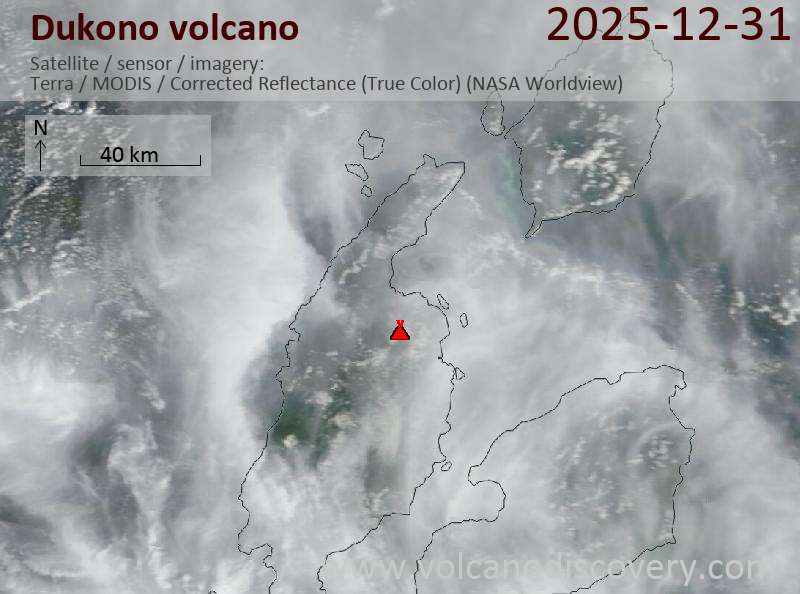
Mount Dukono in North Halmahera, Indonesia, experienced a powerful eruption on Friday, releasing a volcanic ash cloud that reached a height of 1500 meters above the volcano's summit. This eruption was recorded at 11:06 AM local time, causing considerable alarm among local residents and tourists.
According to Bambang Sujiono, an official from the volcanic monitoring center, the ash cloud was gray in color and of medium to high density, drifting towards the northwest. The eruption was recorded on the seismogram with a height of 25 millimeters and a duration of 82.26 seconds.
Details of the Eruption Event
Earlier on Friday, Mount Dukono also emitted a cloud of gray-white smoke that reached up to 900 meters above the crater. This cloud was of low pressure and was moving towards the south. Local authorities issued warnings to residents and visitors to avoid approaching the Kawah Malupang Warirang area within a four-kilometer radius of the volcano.
Authorities emphasized the importance of taking necessary precautions, advising locals to wear face masks to prevent inhalation of volcanic ash, which could impact respiratory health.
Background & Context
Mount Dukono is considered one of the active volcanoes in Indonesia, known for its continuous activity over the years. The region has experienced several volcanic eruptions in the past, prompting authorities to take precautionary measures to ensure the safety of residents. Indonesia is located on the Pacific Ring of Fire, making it susceptible to volcanic activity and earthquakes.
Historically, eruptions from Mount Dukono have had significant impacts on local communities, leading to evacuations and crop destruction. These events highlight the importance of ongoing monitoring and emergency preparedness in volcanic regions.
Impact & Consequences
Eruptions like that of Dukono pose a substantial threat to both the environment and local populations. Volcanic ash can affect air and water quality, leading to public health deterioration. Additionally, such events can disrupt economic activities in the region, particularly in tourism and agriculture.
The ongoing warnings from authorities reflect a growing awareness of the importance of disaster preparedness. It is crucial for local communities to be informed about preventive measures and to be ready for rapid response in case of emergencies.
Regional Significance
While volcanic events in Indonesia may seem distant from the Arab region, there are lessons that Arab countries can learn. Natural disasters do not recognize borders, and it is essential to have effective emergency strategies worldwide. Furthermore, international cooperation in sharing information about volcanic activity can enhance disaster response efforts.
In conclusion, the eruption of Mount Dukono serves as a reminder of the importance of continuous monitoring and preparedness for natural disasters. Local communities and nations must learn from these events to ensure the safety of their populations.