In a speech delivered from the White House, U.S. President Donald Trump confirmed that military operations against Iran may be nearing their conclusion, indicating that the desired objectives are on the verge of being achieved. However, this announcement coincided with the bolstering of U.S. military forces in the Middle East, including the deployment of a third aircraft carrier and amphibious warships, raising questions about the potential for a larger military escalation that could involve a ground invasion.
The program "Washington Report," broadcast in collaboration between the newspaper "Asharq Al-Awsat" and the channel "Asharq," examines the realism of the timeline set by Trump to achieve U.S. objectives, and whether the military reinforcements indicate genuine intentions for a ground incursion, or if they are merely a show of force to pressure the Iranian regime.
Details of the Event
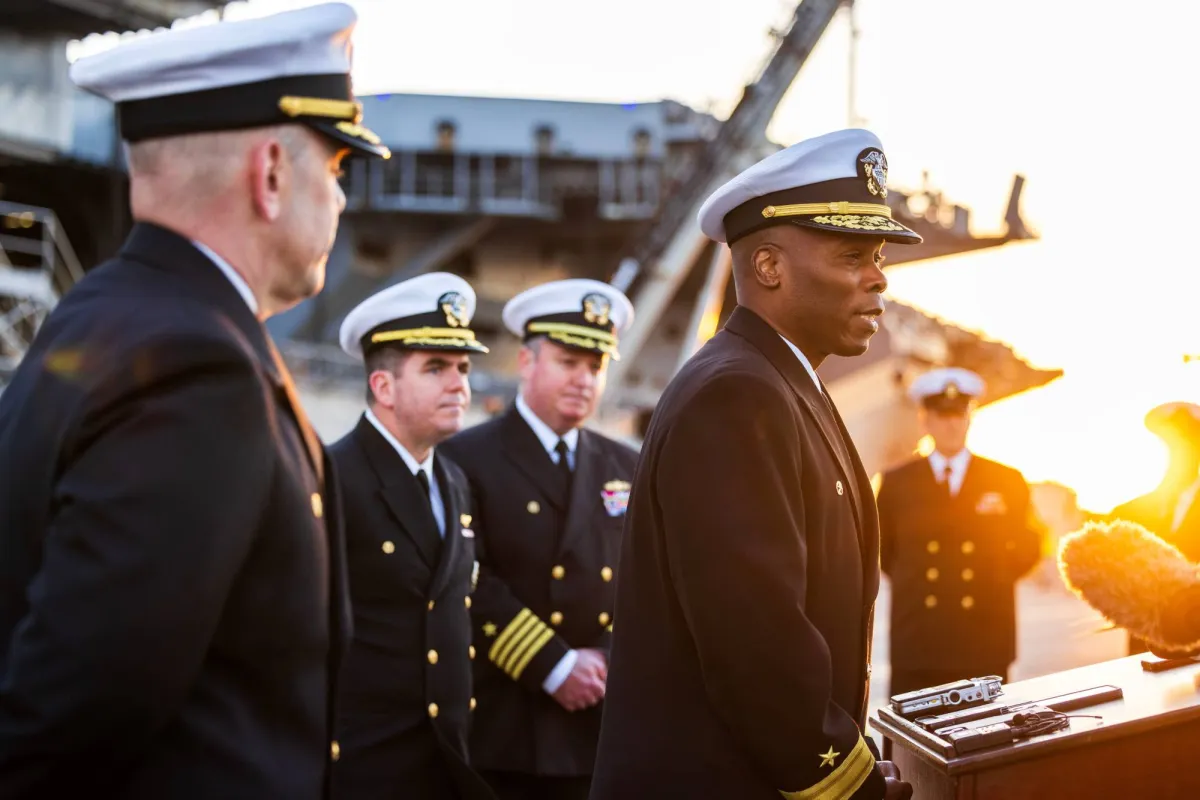
Admiral John Miller, former commander of the U.S. Fifth Fleet, expressed satisfaction with Trump's acknowledgment that the mission in Iran is not yet complete, emphasizing the necessity of its fulfillment. Miller clarified that the destruction of Iranian missile capabilities still requires additional efforts, as Iran continues to pose a threat to the region and the world.
Miller pointed to the objectives set by the U.S. administration, starting with the termination of the Iranian nuclear weapons program, noting that all known sites have either been destroyed or are in ruins. However, he affirmed that the mission related to eliminating the Iranian missile program is not yet complete, although it is progressing well.
Background & Context
These developments come at a sensitive time, as pressures on the U.S. administration increase to take decisive action against Iran. Trump has highlighted the importance of the Strait of Hormuz, linking the restoration of freedom of navigation to the resolution of the conflict. Nevertheless, some experts believe that the military assessments provided by Trump may be limited, as he has not offered clear predictions regarding the opening of the Strait of Hormuz.
In this context, Dave DeRoche, a former official at the U.S. Department of Defense, considered Trump's assessment to be realistic given the limited objectives he announced, indicating that the goal of the military campaign is not regime change, but rather economic pressure.
Impact & Consequences
Concerns are growing that military escalation could lead to unforeseen outcomes, as Chris Osborne, head of the Military Modernization Center, believes that the war against Iran depends on effects, meaning incapacitating the enemy without destroying infrastructure. He noted that there is a central incapacity remaining within the Iranian Revolutionary Guard to coordinate or organize attacks.
On the other hand, Admiral Miller warned that the Iranian regime has not changed, despite shifts in the personalities leading the regime, pointing out that the methods used by the regime to suppress the population have remained unchanged. He affirmed that the Iranian regime will not be able to sustain itself economically in the long term, which may provide an opportunity for the Iranian people to establish a better system.
Regional Significance
These developments directly impact the Arab region, as fears of military escalation rise, potentially affecting security and stability in Gulf states. Additionally, escalation could lead to increased tensions between the United States and Iran, placing the region in a state of uncertainty.
In conclusion, it appears that the U.S. administration is seeking to achieve its objectives in the region through the enhancement of its military presence, but the question remains: will it succeed in achieving these goals without further escalation?