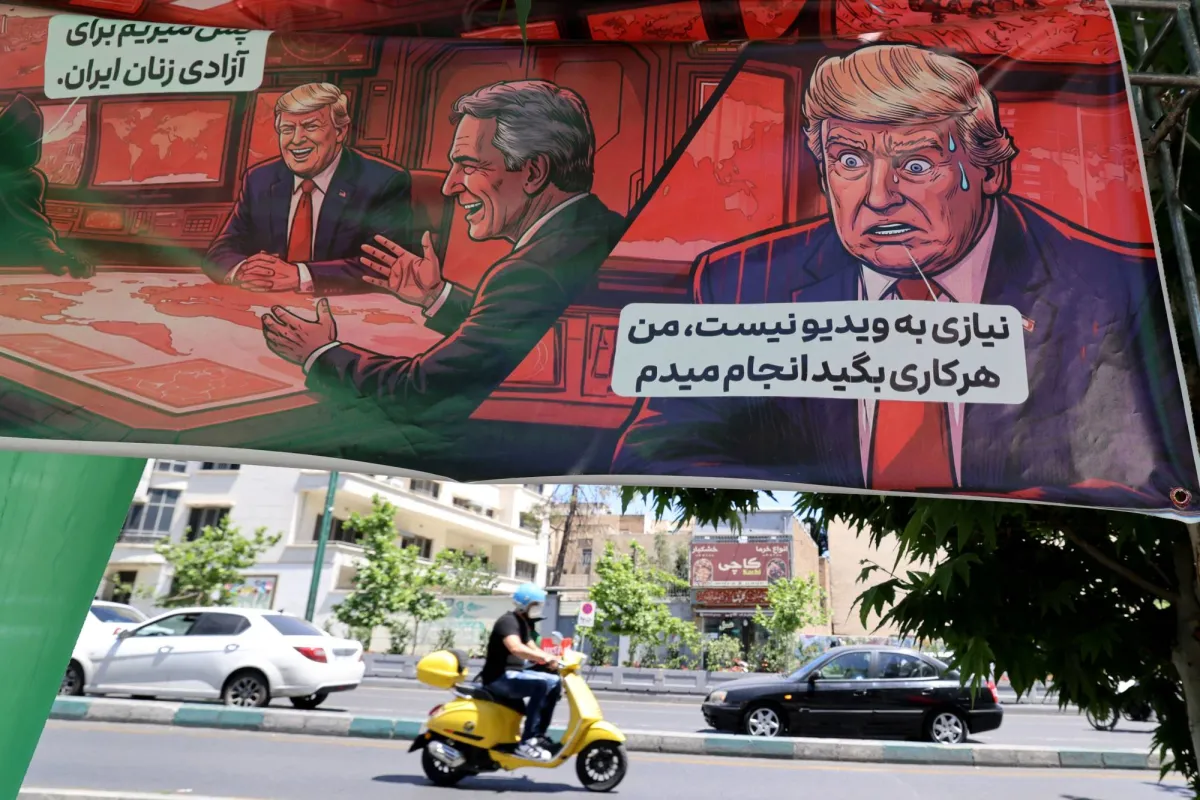
Iranian skepticism is rising regarding the United States' seriousness in reaching a diplomatic settlement to end the war in the Middle East, following statements from President Donald Trump indicating he is awaiting an Iranian response 'before the deadline expires.'
As the deadline set by the White House approaches, ending Saturday, May 9, 2026, the crisis has entered a sensitive phase where military pressures intertwine with a political and diplomatic race open to multiple possibilities overnight, extending into the dawn of Sunday, May 10.
Details of the Event
A relative calm prevailed around the Strait of Hormuz on Saturday, following days of sporadic clashes, while President Donald Trump hinted that the U.S. might resume the 'Freedom Project' to guide ships through the Strait of Hormuz, which had been suspended a few days earlier.
Trump stated while leaving the White House: 'I think the (Freedom Project) is good, but I also believe we have other ways to do it.' He continued, 'We may return to the (Freedom Project) if the Iranian response is not serious, but with (additions).' Trump did not clarify what those additions would be.
On Saturday afternoon, Trump reposted a report on the 'Truth Social' platform regarding a poll showing that a majority of Americans believe preventing Iran from acquiring a nuclear weapon is more important than ending the war quickly, writing: 'This is very important; this is our nation's position.'
Background & Context
According to a report published by 'Napolitan News', 53% of voters stated that preventing Iran from possessing a nuclear weapon is more important than ending the war. Meanwhile, U.S. Secretary of State Marco Rubio stated on Friday that Washington expects a response within hours. However, a day later, there were no signs of any movement from Tehran regarding the proposal that would officially end the war.
In contrast, Iranian Foreign Minister Abbas Araghchi stated that 'the recent escalation of tensions by U.S. forces and the continued mutual violations at sea undermine confidence in any serious negotiating path.' He added that Tehran sees Washington as 'using diplomacy as a cover for military pressure, not as a genuine path to resolution.'
Impact & Consequences
The current U.S. proposal outlines an initial framework for de-escalation that includes new maritime arrangements in the Arabian Gulf, reorganizing navigation in the Strait of Hormuz, alongside opening a gradual negotiating path regarding the Iranian nuclear file. However, Tehran considers the proposal 'unbalanced' as it does not separate the negotiating path from ongoing military pressure.
Since the resurgence of confrontation between the two sides, the Strait of Hormuz has returned to its position as the most sensitive arena in the conflict, becoming a point of almost daily friction between U.S. and Iranian forces. Field estimates indicate that recent days have witnessed sporadic maritime incidents, including mutual interceptions between military vessels and movements near commercial shipping lanes.
Regional Significance
Concerns are growing that the collapse of the current path could lead to a complete disruption of navigation in the Strait of Hormuz, which could directly impact global energy markets. In this context, Qatar has urged, during its communications with Washington, the necessity of 'prioritizing diplomacy over military calculations.'
While the international stance remains divided on how to deal with the escalation, some European countries are calling for support for the diplomatic path, while others emphasize the need to ensure freedom of navigation and protect energy flows. Under these circumstances, the fate of the region hangs in the balance, contingent on Iranian reactions and upcoming U.S. actions.