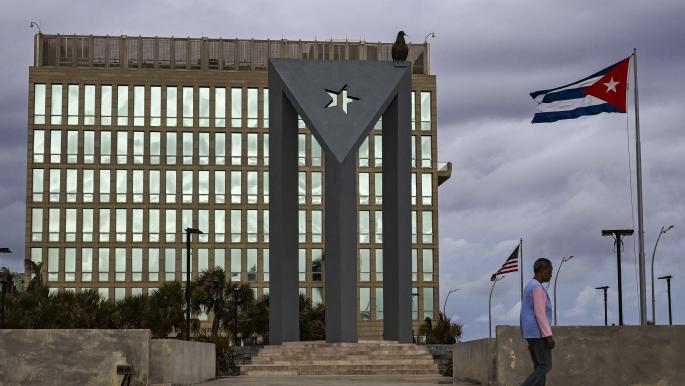
Tensions have reignited between the United States and Cuba, as the American embassy in Havana becomes the focal point of an escalating crisis following the Cuban government's recommendation to prevent the American mission from obtaining the essential diesel needed to operate its premises. This action appears to be part of a series of measures taken by Cuba in response to the U.S. policy towards it.
Reports confirm that the resource-strapped American embassy has been unable to secure the necessary fuel, placing its staff in a precarious situation that threatens their operational effectiveness amid increasingly complicated circumstances. This development comes after years of strained relations between Cuba and the United States, which have seen fluctuations in policies and stances since the presidency of Barack Obama.
Details of the Incident
Amid these conditions, the American embassy is struggling to obtain diesel fuel, directly affecting its ability to operate generators and air conditioning units, which adds to the pressures on its employees. This step taken by the Cuban government presents a new challenge for the American mission, reflecting the trend of increasing tensions between the two countries. The Cuban government has justified its decision by claiming that the measures imposed by Washington on Cuba adversely affect the Cuban society, and thus, it is not reasonable to talk about cooperation in hopes of positive outcomes.
Local media have reported on the Cuban government’s new decisions, hinting that this move reflects Havana’s strong will to confront U.S. pressure. Some Cuban officials have also claimed that depriving the American embassy of diesel is Cuba's right to defend its sovereignty and national security.
Background & Context
The history of relations between Cuba and the United States is marked by tensions and escalations since the Cuban Revolution of 1959. These relations had seen a brief thaw during the presidency of Barack Obama, who established a policy of engagement with the island, but tensions quickly returned after Donald Trump took office. Economic and political issues have resurfaced along with new sanctions imposed on Cuba, compounding problems on the island and depriving it of essential resources, raising humanitarian concerns.
The relations between the two nations are experiencing escalating tensions alongside an aggressive approach from the U.S. side, making it difficult to achieve any form of compromise or dialogue. Despite efforts from the international community to improve relations between the two countries, it seems that the road ahead remains long.
Impact & Consequences
These events carry new implications for the deterioration of U.S.-Cuba relations and could lead to an escalation of economic pressures on Cuba in the short term. It will be essential to monitor U.S. reactions to the Cuban government’s actions and whether these measures will contribute to increased pressure from Washington or lead to a long-term resolution.
On the other hand, these tensions raise concerns among Cubans, who are directly affected due to the living crises and shortages of vital materials. As is often the case in dire situations in Cuba, measures taken by the Cuban government are likely to lead to heightened protests from the Cuban people, increasing internal pressures on the ruling system.
Regional Significance
The deteriorating situation between the United States and Cuba serves as an indicator of how U.S. foreign policy can affect other regions, including the Arab world. These events provide a lesson for Arab nations on how to manage their relations with Washington. Concurrently, Cuba's experiences in facing U.S. sanctions could bolster the resistance spirit in some Arab nations, as these countries strive to maintain their sovereignty and reinforce their peoples' rights.
In conclusion, the current crisis between Washington and Havana represents a new chapter in the complex history of relations between the two countries. As pressures continue, the question remains whether this situation will lead to enhanced negotiations or further escalation, as has often been the case. At present, the Cuban people find themselves in a desperate situation, leaving the future uncertain.