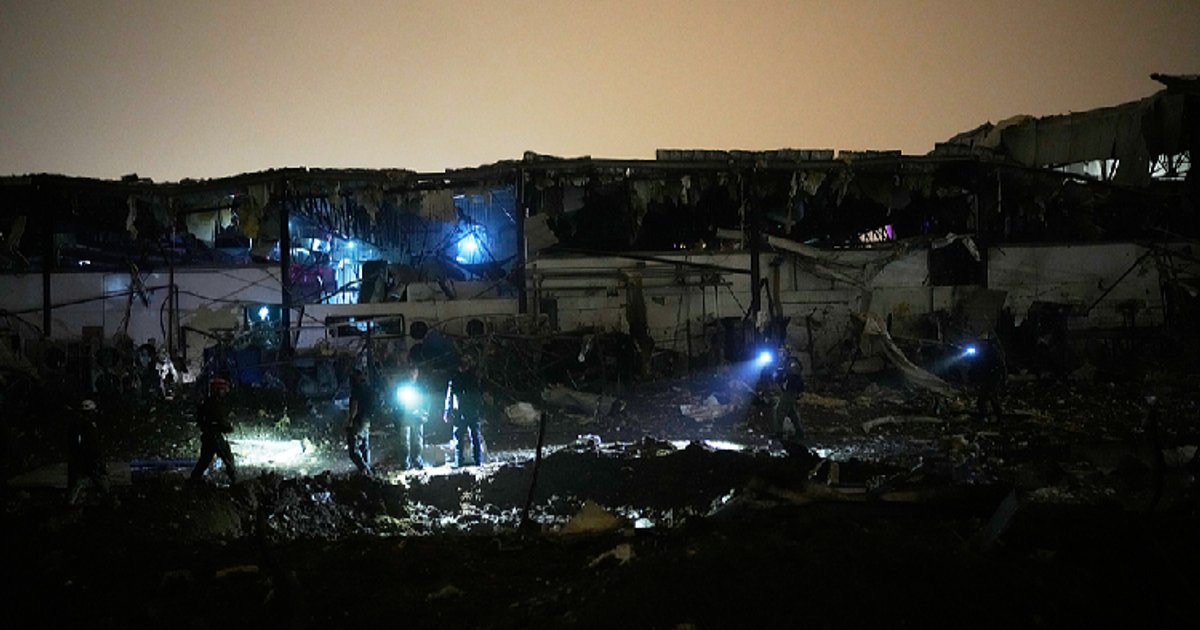
The conflict involving the United States, Israel, and Iran has entered its thirty-fifth day with no resolution in sight. Israeli forces have announced efforts to intercept missiles launched from Iran. This escalation comes at a time when the humanitarian crisis in the region is rapidly deteriorating, complicating the situation further and raising concerns among the international community.
As Israeli forces continue their military operations, tensions in the region are intensifying. Reports indicate that Israeli air defenses have intercepted several missiles launched from Iranian territory. These events unfold against the backdrop of escalating tensions among the three countries, which have seen a continuous rise in hostilities since the beginning of the conflict.
Details of the Incident
Reports suggest that the missiles launched from Iran were targeting strategic sites within Israel, prompting the Israeli military to take immediate action to counter these attacks. Military sources confirmed that Israeli air defenses successfully intercepted a number of these missiles, reflecting the high level of tension in the region.
These events coincide with increasing international pressure on Iran, as the United States and its allies seek to impose new sanctions on Tehran due to its military activities. In response, Iran continues to assert its right to defend itself, further complicating the situation.
Background & Context
Historically, relations between the United States and Iran have been marked by increasing tensions since the Islamic Revolution in 1979. These tensions have led to several conflicts in the region, including disputes in Iraq and Syria. On the other hand, Israel views Iran as an existential threat, prompting it to take preemptive military actions against what it perceives as threats from Tehran.
In recent years, these tensions have escalated significantly, particularly following the United States' withdrawal from the Iranian nuclear agreement in 2018. This withdrawal led to the re-imposition of economic sanctions on Iran, severely impacting the Iranian economy and exacerbating the humanitarian situation in the country.
Impact & Consequences
The repercussions of this conflict extend beyond Israeli and Iranian borders, affecting regional stability as a whole. Military escalation could lead to a broader conflict in the Middle East, threatening both regional and international security. Additionally, the deteriorating humanitarian conditions in the region may contribute to an increase in the number of refugees and displacement, placing additional burdens on neighboring countries.
Moreover, the continuation of this conflict could impact global oil prices, as the Middle East is one of the world's primary oil-producing regions. Any military escalation could lead to fluctuations in global markets, affecting economies worldwide.
Regional Significance
Neighboring Arab countries, such as Iraq, Syria, and Lebanon, are among the most affected by this conflict. Any escalation in hostilities could result in a greater influx of refugees into these countries, increasing their economic and social burdens. Furthermore, tensions between the United States and Iran may influence relations between Arab states and Iran, deepening divisions in the region.
In conclusion, the situation in the region remains complex, as political and military interests intertwine with humanitarian conditions. It is crucial for the international community to work towards peaceful solutions to this conflict before the situation deteriorates further.