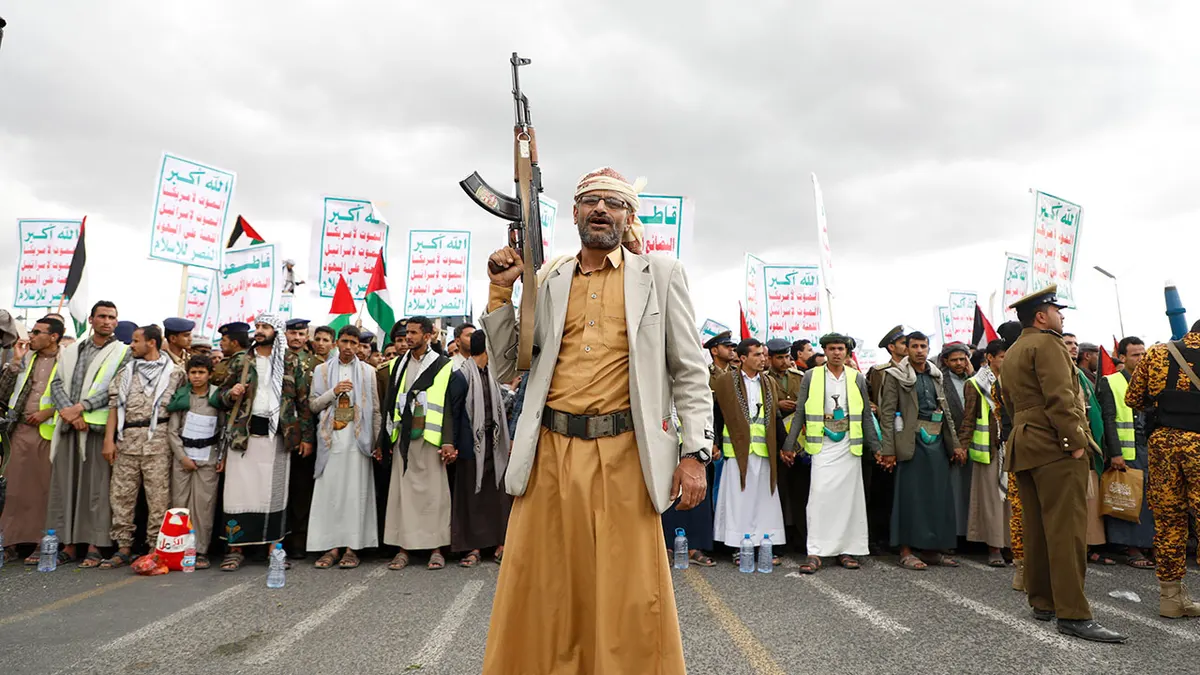
In a serious escalation of the conflict in Yemen, the Houthis have announced the opening of a new front in armed confrontations, complicating the security situation in the country. This development comes at a sensitive time as regional and international pressures to end the long-standing conflict, which has led to a severe humanitarian crisis, are increasing.
Clashes are intensifying in multiple areas, raising concerns about the worsening humanitarian conditions. The Houthis, who control the capital Sanaa, are seeking to expand their influence into new regions, threatening the peace efforts being made by the United Nations.
Details of the Event
In recent days, reports have noted a significant escalation in military operations by the Houthis, who have launched attacks on government forces in several areas. These attacks come at a time when international calls for a ceasefire and humanitarian assistance for those affected by the conflict are increasing.
The Houthis, who belong to the Zaydi sect, are part of the complex conflict in Yemen, where multiple parties are vying for influence. Reports have indicated that the Houthis are seeking to strengthen their military positions in strategic areas, further heightening tensions in the region.
Background & Context
Historically, the conflict in Yemen began in 2014 when the Houthis seized control of the capital Sanaa, leading to the intervention of the Arab coalition led by Saudi Arabia in 2015. Since then, the country has witnessed a continuous conflict that has resulted in the deaths of thousands and the displacement of millions. The war has also caused an unprecedented humanitarian crisis, with over 24 million people suffering from severe food and water shortages.
The regional and international dimensions of this conflict are intertwined, with Iran supporting the Houthis while Saudi Arabia backs the internationally recognized government. This situation reflects the broader struggle between regional powers in the Middle East, complicating peace efforts.
Impact & Consequences
The new front announced by the Houthis opens the door to a greater escalation in the conflict, which could exacerbate the humanitarian situation in Yemen. If the escalation continues, it may disrupt the peace efforts being pursued by the United Nations, increasing the suffering of civilians.
Moreover, the Houthi escalation could affect the stability of the entire region, potentially provoking reactions from the Arab coalition or even international interventions. This situation could reignite old conflicts and complicate the security landscape in the region.
Regional Significance
The repercussions of the conflict in Yemen extend beyond its borders, affecting regional stability. The ongoing conflict reflects tensions between regional powers and increases divisions within the Arab world. Additionally, the deteriorating humanitarian situation in Yemen raises concerns for the international community, necessitating urgent actions to end the conflict.
Ultimately, hope remains pinned on the peace efforts led by the United Nations, but the current escalation threatens these efforts and complicates the situation further. The situation in Yemen requires urgent international attention to ensure that humanitarian conditions do not worsen.