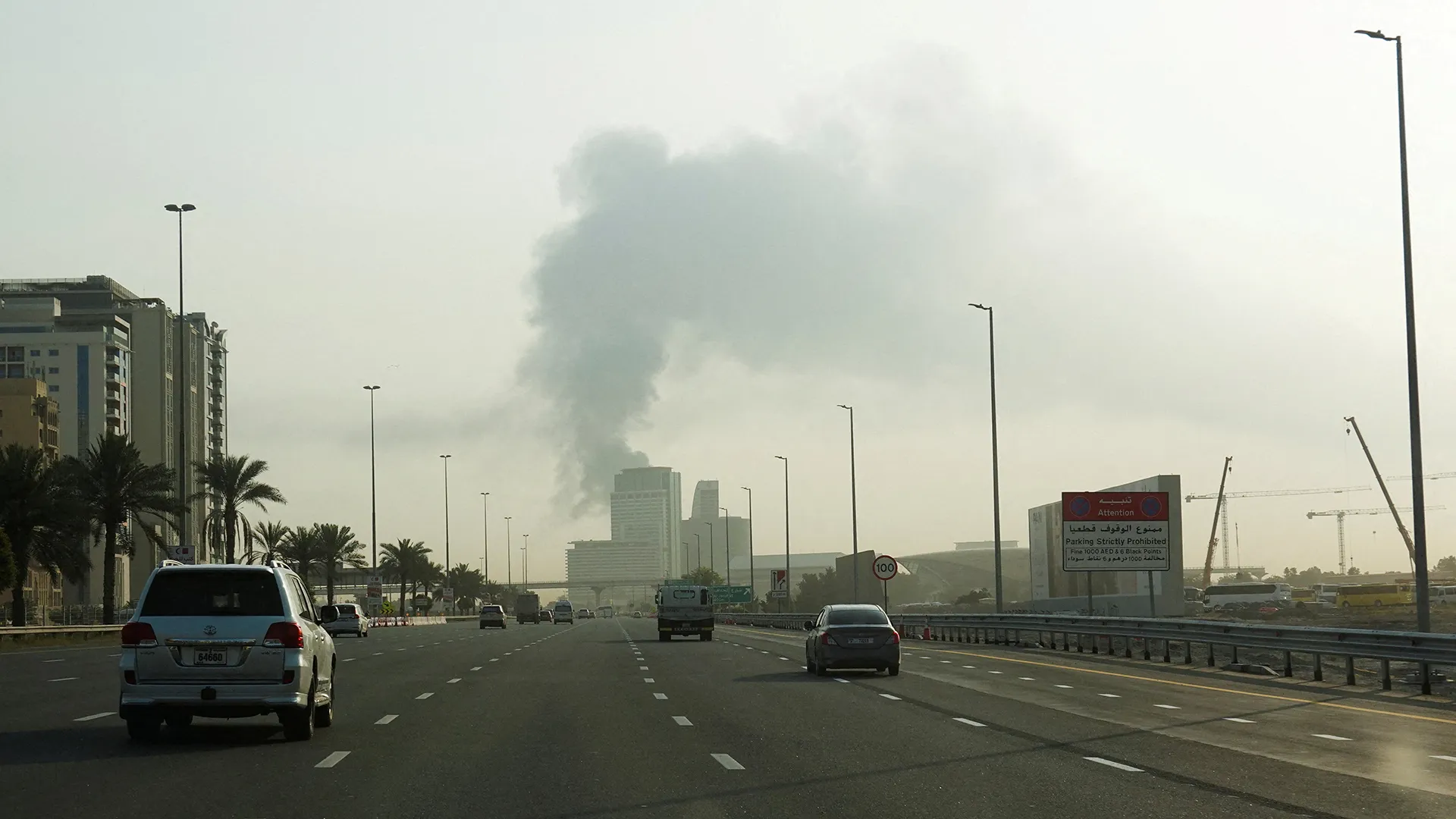
Concerns are rising in Gulf states as tensions escalate between the United States and Iran, with the latter continuing its threats to target vital facilities in the region. This situation unfolds amid warnings from President Donald Trump regarding potential military actions against Iran, which could include targeting civilian infrastructure such as power stations and bridges.
As the world awaits Trump's decision following the deadline he set for Iran, reports indicate that Iran continues to carry out strikes on Gulf states, heightening tensions further. King Hamad bin Isa Al Khalifa of Bahrain confirmed that Iranian aggression has targeted civilians and infrastructure within the kingdom.
Details of the Incident
In a related context, the Kuwait Petroleum Corporation reported that its facilities were attacked by an Iranian drone, resulting in fires and significant material losses. These events occur at a sensitive time as the US President seeks to implement his threats against Iran, increasing anxiety in Gulf countries.
Abdullah Bandar Al-Otaibi, an assistant professor in the International Affairs Department at Qatar University, believes that the Iranian escalation is part of two strategies: maintaining the upper hand in the crisis and prolonging the war. He also noted that Iran aims to spread chaos in the region by targeting civilian infrastructure.
Background & Context
Historically, relations between Gulf states and Iran have been marked by ongoing tensions, particularly following the Iranian Revolution in 1979. These tensions stem from political and religious differences, as Iran seeks to enhance its influence in the region, raising concerns among Gulf countries. In recent years, these tensions have notably escalated, making the region vulnerable to further crises.
Iran's communication with Oman aims to legitimize the Strait of Hormuz, which is considered a US condition to avoid escalation. This communication reflects Iran's attempt to seek allies in the region, while Gulf states continue to strengthen their alliances to counter Iranian threats.
Impact & Consequences
The Iranian escalation could exacerbate conditions in the region, threatening regional stability. Academic Mahjoub Al-Zuwairi pointed out that Iran may face international isolation as a result of its escalation against Gulf states, which could negatively impact its economy. Additionally, increasing pressure from its neighbors and Islamic countries like Turkey and Pakistan could lead to a change in its strategies.
Although Iran claims that its strikes target American interests, the reality indicates that these strikes directly affect civilians in Gulf states, further intensifying tensions.
Regional Significance
Gulf states are seeking to de-escalate tensions through mediation, with Oman playing a significant role in attempting to defuse the crisis. Pakistani mediation is also seen as a positive step, but it requires more pressure and goodwill from the involved parties. Pakistan's hosting of high-level diplomats from countries like Turkey, Egypt, and Saudi Arabia reflects diplomatic efforts to ease tensions.
In conclusion, the situation in the Gulf remains fragile, with increasing fears of military escalation that could lead to catastrophic outcomes. The region needs effective diplomatic efforts to avoid further crises.