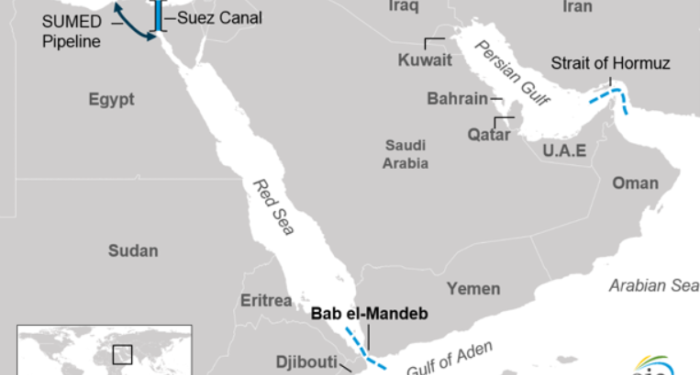
The Bab el-Mandeb Strait has become a focal point in the global economy, with rising tensions in the region posing a significant threat to oil prices. This vital waterway, which connects the Red Sea to the Gulf of Aden, plays a crucial role in global trade.
Concerns are growing that any escalation in security conditions in this area could disrupt shipping routes, negatively impacting oil prices that have seen notable fluctuations recently. With increasing global demand for energy, any threat to the passage of oil through this strait could lead to a substantial rise in prices.
Details of the Situation
The Bab el-Mandeb Strait is one of the busiest waterways in the world, with approximately 10% of total global trade passing through it, including oil shipments. In recent years, the region has witnessed a rise in military tensions, raising alarms among oil-importing nations.
As major countries strive to secure their energy supplies, the importance of the Bab el-Mandeb Strait emerges as a vital link. Reports indicate that any security threats could lead to oil prices increasing by as much as 20% in global markets.
Background & Context
Historically, the Bab el-Mandeb Strait has been a hub of conflicts and disputes, with the region experiencing numerous military and political events that have affected shipping activities. Since the onset of the Yemeni crisis, tensions in the area have intensified, making it susceptible to clashes between conflicting parties.
Regional and major powers are seeking to bolster their military presence in the area to ensure the safety of navigation, adding a new dimension to the ongoing conflict. As tensions rise, the world is moving towards seeking alternative energy sources, complicating the landscape further.
Impact & Consequences
If the situation continues along this trajectory, the economic repercussions will be widespread. Rising oil prices could lead to increased transportation and shipping costs, which would reflect on the prices of goods and services in global markets.
Additionally, oil-importing countries may face mounting economic pressures, potentially leading to a slowdown in economic growth. At the same time, oil-producing nations could benefit from rising prices, enhancing their revenues.
Regional Significance
Arab countries are among the largest beneficiaries of oil supplies, as their economies heavily rely on oil revenues. Any increase in prices could have positive effects for some nations, but it could simultaneously exacerbate economic crises in other countries that depend on oil imports.
Under these circumstances, Arab nations must take proactive steps to ensure the stability of their financial and economic markets and develop alternative strategies to deal with potential fluctuations in oil prices.