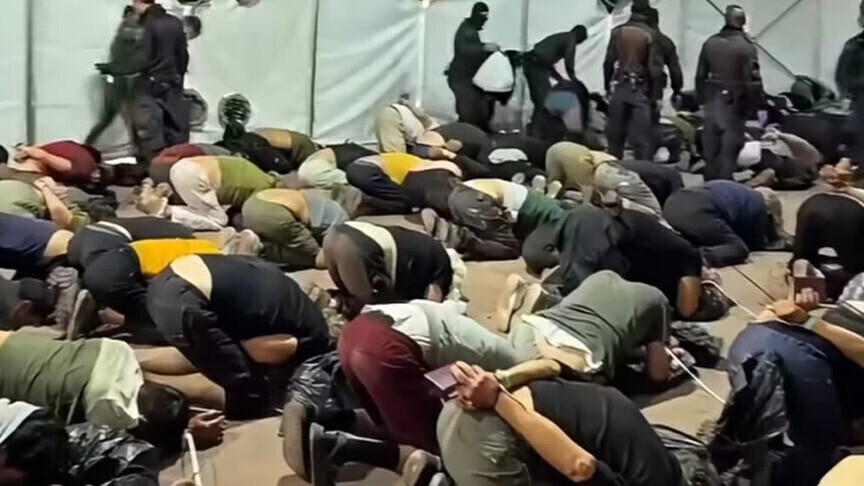
Amid rising anti-Israel sentiments, the EU spokesperson, Anwar Al-Aouni, emphasized that the treatment of activists from the global 'Sumud' fleet, which includes citizens from EU countries, was humiliating and unacceptable. This statement comes at a sensitive time as calls within Europe for sanctions against Israel due to its policies towards Palestinians are intensifying.
In an interview with Anadolu Agency, Al-Aouni pointed out that the EU faces significant challenges in making decisions regarding the imposition of sanctions, as this requires consensus among all member states. He stressed that any action must be well-considered and reflect a unified stance from member countries.
Details of the Incident
The 'Sumud' fleet, aimed at supporting Palestinian rights, faced harsh treatment from Israeli authorities while attempting to reach Gaza. This incident has sparked outrage among human rights activists and politicians in Europe, who view this treatment as a violation of human rights.
As calls for sanctions against Israel grow, the EU is struggling to achieve consensus among member states. Some countries, such as Germany and France, express reservations about imposing sanctions, complicating the situation further.
Background & Context
Historically, the EU has adopted a policy supporting a two-state solution; however, recent events in the Palestinian territories, including military escalation and attacks on civilians, have prompted some member states to reassess their positions. In recent years, there has been an increase in voices demanding a firmer stance towards Israel.
The issue of human rights in Palestine is a sensitive topic in European politics, as the EU seeks to maintain its relations with Arab and Islamic countries while also trying to uphold its ties with Israel.
Impact & Consequences
If sanctions are imposed on Israel, it could lead to significant changes in international relations in the region. The relationship between the EU and Arab countries may be affected, as these sanctions could be seen as a positive step towards supporting Palestinian rights.
However, the imposition of sanctions may also escalate tensions between Israel and European countries, potentially impacting cooperation in other areas such as security and economics.
Regional Significance
The Palestinian issue is central to the Arab world, with Arab nations closely monitoring developments in the occupied territories. Any move by the EU could directly influence the stance of Arab countries on the Palestinian issue.
If the EU takes concrete steps, it could strengthen the position of Arab countries in support of Palestine and increase pressure on Israel to comply with international laws.
It remains to be seen how events will unfold in the coming days and whether the EU will be able to achieve the necessary consensus to impose sanctions on Israel amid growing pressure from human rights activists and the international community.