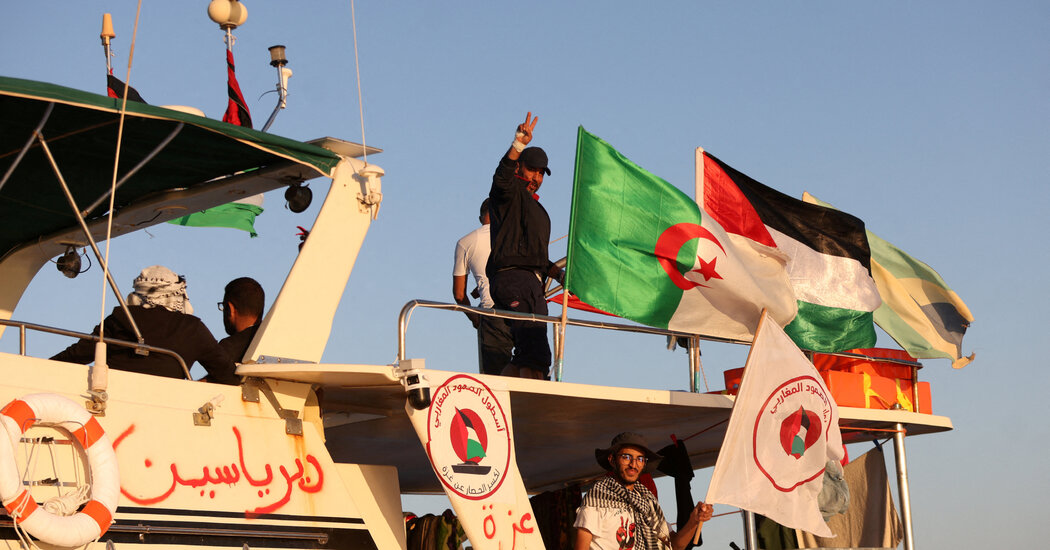
The European Commission has stated that it does not encourage sending humanitarian aid to Gaza through a humanitarian fleet due to the potential risks that participants in these operations may face. This announcement was made by spokesperson Eva Herenchikova during a press conference held on Monday, April 27.
Herenchikova indicated that the European Union regularly communicates with member states and Israel regarding the humanitarian situation in Gaza, emphasizing the importance of providing unrestricted access to humanitarian aid in the region. While they respect the humanitarian efforts of those involved in the fleet, the EU believes that this method may jeopardize the safety of participants.
Details of the Event
These statements come after a convoy of 65 ships set sail from the island of Sicily as part of the 'Global Solidarity Fleet 2026' mission, aimed at breaking the maritime blockade imposed by Israel on Gaza. Many of the ships carried Palestinian flags as they left the port, reflecting international support for the Palestinian cause.
For years, Israel has imposed a maritime blockade on Gaza, justifying it on security grounds. However, this blockade has faced widespread criticism from humanitarian organizations and the United Nations, which argue that it hinders the distribution of essential goods and medical supplies to the besieged population.
Background & Context
Historically, Gaza has experienced numerous humanitarian crises due to the imposed blockade, which has significantly affected the lives of its residents. The blockade has led to severe shortages of food and medicine, making the humanitarian situation in Gaza among the worst in the world.
The humanitarian fleet is not the first of its kind, as previous years have witnessed several attempts to break the blockade, but most faced violent reactions from Israeli authorities, complicating the humanitarian situation in the region further.
Impact & Consequences
The European Union's statements serve as a signal of the challenges facing humanitarian efforts in Gaza. While relief organizations strive to provide assistance, security and political risks hinder these efforts.
This stance may affect relations between the EU and the concerned countries, as it could be perceived as a retreat from supporting direct humanitarian efforts. Additionally, it may complicate negotiations regarding the situation in Gaza and impact the hopes of the population for necessary aid.
Regional Significance
The situation in Gaza represents a sensitive issue for the Arab world, as many countries and peoples empathize with the suffering of Palestinians. The EU's disapproval of sending aid via the fleet may provoke strong reactions in the Arab world, potentially leading to political or social movements to support the Palestinian cause.
Ultimately, hope remains for finding peaceful solutions that ensure the rights of Palestinians and alleviate their suffering amid the difficult conditions they face.