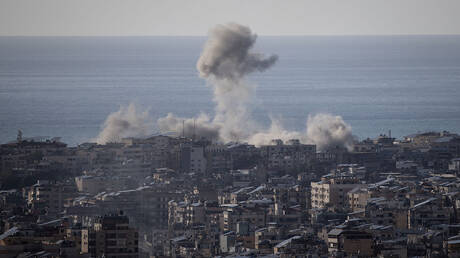
Foreign ministers from ten European countries, including the UK, France, and Italy, have called on Israel to refrain from expanding its military operations in Lebanon, emphasizing the need to respect the integrity of Lebanese territory. This call comes at a time when tensions in the region are escalating, raising concerns about negative repercussions on security and regional stability.
There are increasing fears that Israeli military operations could exacerbate the situation in Lebanon, which is already suffering from economic and political crises. The ministers highlighted the importance of maintaining Lebanon's sovereignty and territorial integrity, warning that any escalation could lead to dire consequences for the Lebanese people.
Details of the Call
In a joint statement, the foreign ministers expressed their deep concern regarding the military escalation in the region, stressing the need for all parties to exercise restraint. They also pointed to the importance of dialogue and negotiation as a means to resolve conflicts, rather than resorting to military force.
These statements come at a sensitive time, as the region is witnessing increasing tensions due to recent events, necessitating international intervention to ensure that the situation does not worsen. It was emphasized that Israel must bear its responsibilities as an occupying power and respect international laws concerning human rights.
Background & Context
Historically, Lebanon has experienced numerous armed conflicts, including civil wars and foreign interventions. Since 2006, when the Second Lebanon War erupted between Israel and Hezbollah, the situation in Lebanon has been tense, with the country suffering from the aftermath of those wars, in addition to current economic and political crises.
The relationship between Lebanon and Israel is complex, as the borders between the two countries remain undefined, increasing the likelihood of clashes. Additionally, the presence of Hezbollah as a political and military force in Lebanon complicates matters further, with the party accusing Israel of violating Lebanon's sovereignty.
Impact & Consequences
If Israeli military operations in Lebanon continue, they could exacerbate humanitarian crises in the country, where the Lebanese people are already facing shortages of essential resources. Furthermore, military escalation could lead to mass displacement of populations, increasing pressures on neighboring countries.
Moreover, any escalation in Lebanon could impact regional stability, potentially leading to interventions from other countries in the region, complicating the situation further. The situation could also negatively affect peace efforts in the region, as opportunities for dialogue and negotiation may diminish.
Regional Significance
The call from European countries to Israel serves as a warning to the international community about the need to intervene to protect human rights in Lebanon. This appeal reflects growing concern over the implications of the conflict on regional security, which could affect relations between Arab countries and Israel.
In a related context, the situation in Lebanon could influence neighboring Arab countries, potentially leading to increased tensions among states, highlighting the necessity for Arab cooperation to address common challenges. Additionally, the humanitarian crises in Lebanon may require support and assistance from Arab nations.
In conclusion, hope remains pinned on the international community to intervene effectively to ensure that the situation in Lebanon does not worsen, preserving the integrity of its territory and its people. Dialogue and negotiation are the only paths to achieving peace and stability in the region.