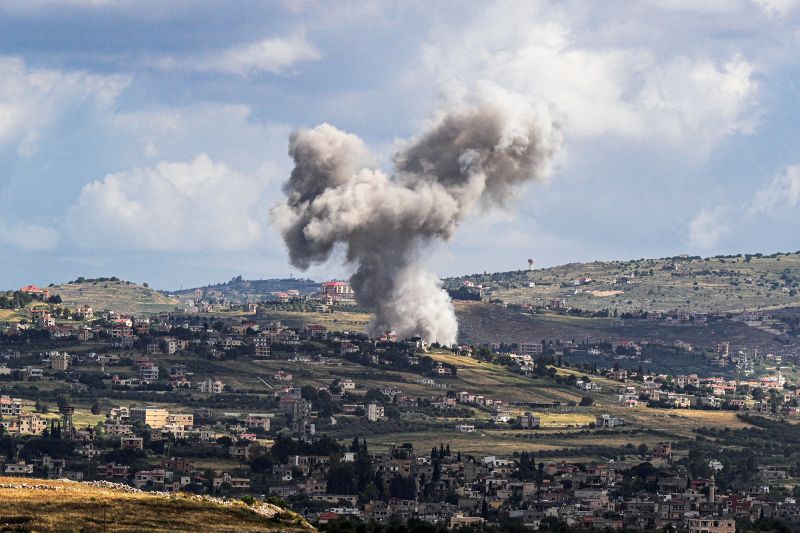
Ten European countries have urged Israel not to expand the scope of the conflict in Lebanon, warning of the severe consequences that could arise for regional stability. This call comes amid escalating tensions in the region, where fears of a broader conflict dragging in other nations are increasing.
The countries issuing this call include France, Germany, Italy, and Spain, along with other nations from the European Union. These countries emphasized the necessity of respecting Lebanon's sovereignty and its right to stability, stressing the importance of dialogue as a means to resolve disputes rather than military escalation.
Details of the Call
In a joint statement, foreign ministers expressed their deep concern over the military escalation in the region, noting that any expansion of the conflict could lead to unforeseen consequences. The ministers also called for the protection of civilians and the avoidance of any actions that could exacerbate the humanitarian situation in Lebanon.
This call comes at a time when Lebanon is facing multiple crises, including a crippling economic crisis and internal political tensions, making the situation even more fragile. European countries have shown their willingness to provide support and assistance in reconstruction efforts and to enhance stability in Lebanon.
Background & Context
Historically, Lebanon has experienced multiple conflicts, the most notable being the civil war that lasted from 1975 to 1990. Since then, the country has continued to suffer from the repercussions of that war, in addition to the impact of regional conflicts. In recent years, tensions between Israel and Hezbollah have escalated, raising fears of a new conflict.
The relationship between Lebanon and Israel is complex, as the borders between the two countries remain poorly defined, leading to ongoing friction. Recent years have seen several military incidents along the border, further heightening tensions.
Impact & Consequences
If Israel continues to expand the conflict, it could have serious repercussions for regional security. Neighboring countries such as Syria and Jordan may be affected, complicating the situation in the region. Additionally, any escalation could lead to an influx of refugees into neighboring countries, placing economic and social burdens on them.
Moreover, military escalation could reignite old conflicts among various groups in Lebanon, exacerbating already dire humanitarian crises. This could worsen the already deteriorating economic conditions in the country.
Regional Significance
This call from European countries serves as a warning to all parties involved in the conflict. It reflects the international community's concern over the worsening situation in Lebanon and its impact on stability in the Arab region. It also highlights the importance of international cooperation in addressing regional crises.
At the same time, this call may enhance diplomatic efforts to resolve the conflict, as the international community seeks peaceful solutions that benefit all parties. The stability of Lebanon is vital for regional security, necessitating a concerted effort from both international and local stakeholders.
In conclusion, the call from European nations marks an important step towards avoiding the escalation of conflict in Lebanon. The response of the involved parties to this call will be crucial in determining the future of Lebanon and the entire region.