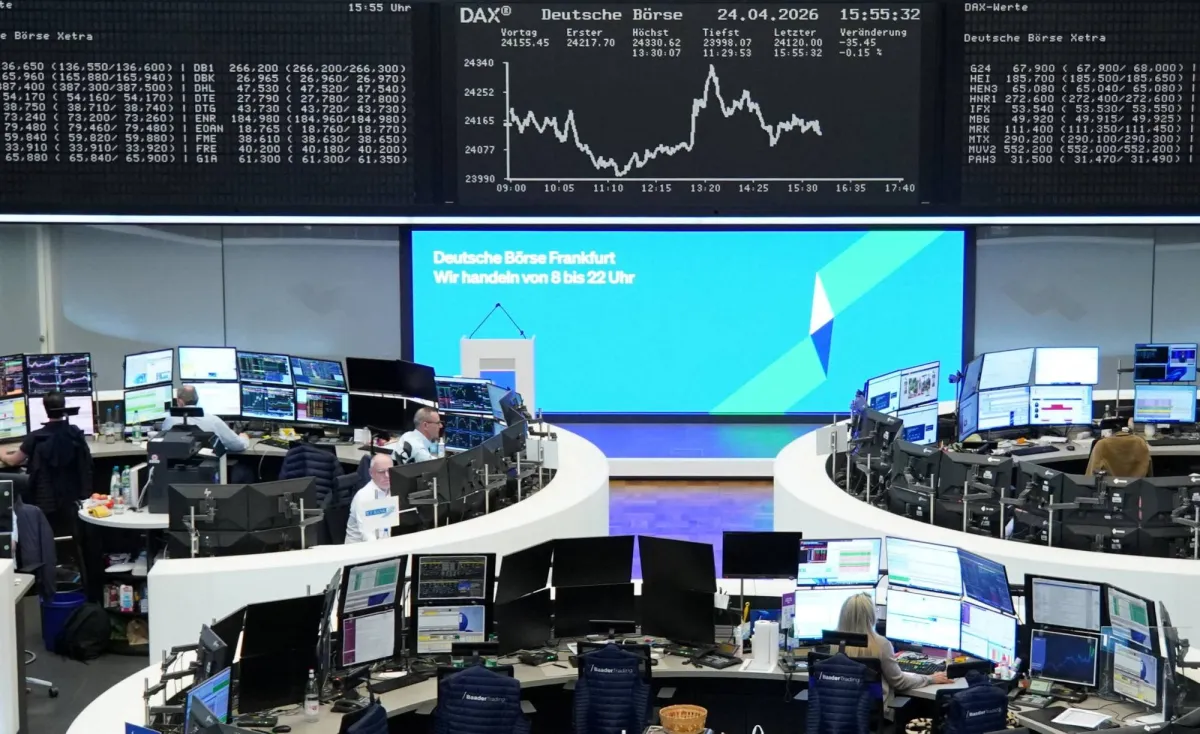
European stocks opened the week with caution, as investor sentiment was negatively affected by stalled peace talks between the United States and Iran. This situation has resulted in rising oil prices, increasing concerns about inflation.
These developments follow U.S. President Donald Trump's cancellation of a visit by envoys to Pakistan, which was mediating negotiations with Iran over the weekend. However, sentiment received partial support after a report from Axios indicated that Iran proposed reopening the Strait of Hormuz and postponing the nuclear negotiations to a later stage.
Event Details
Trump confirmed that Iran could reach out by phone if it wished to negotiate an end to the two-month-long war, emphasizing that Tehran would not be allowed to possess nuclear weapons. With rising oil prices, investors are closely watching monetary policy meetings from both the European Central Bank and the Bank of England this week for any signals regarding interest rate trajectories.
The European Stoxx 600 index stabilized at 610.86 points by 07:03 GMT, according to Reuters. In terms of individual stocks, shares of Nordex rose by 8.3% after the company announced earnings and core sales that exceeded expectations, supported by strong performance in the onshore wind turbine sector.
Background & Context
Oil prices rose by about $3 per barrel at the start of the week, surpassing $108, following the breakdown of U.S.-Iran negotiations. Brent crude futures reached $108.52 by 09:38 GMT, an increase of about 3%, while U.S. crude rose by approximately 2.5% to $96.85 per barrel.
The failure of peace talks between the U.S. and Iran has prolonged disruptions to energy exports from the Middle East, causing anxiety among markets and policymakers ahead of a busy week of central bank meetings. Although a ceasefire has frozen most fighting in the conflict that erupted due to U.S.-Israeli strikes on Iran two months ago, markets are now focusing on the closure of the Strait of Hormuz, the main chokepoint behind rising energy prices.
Impact & Consequences
The Bank of England is expected to keep interest rates unchanged this week as it assesses the escalating economic implications of the Iranian war. The bank had maintained interest rates in March amid ongoing uncertainty regarding the conflict's impact on inflation and growth. With geopolitical fog remaining, a similar decision is likely to be made on Thursday.
Nonetheless, investors believe that the rate hike cycle may return later this year, as markets are currently pricing in the possibility of two quarter-point increases in July and September, with a lesser chance of a third increase before the end of the year. The bank is expected to present its first comprehensive economic update since the outbreak of the war, which may show rising inflation and weakening growth during 2026 and 2027, complicating monetary policy decisions further.
Regional Significance
The Arab region is significantly affected by rising oil prices, as many countries rely on oil revenues in their budgets. The ongoing uncertainty regarding the war's trajectory and its repercussions may lead to volatility in Arab financial markets, impacting investments and economic growth.
In conclusion, the situation in European markets remains under observation, as investors look for any signals from central banks regarding future monetary policy amid rising geopolitical tensions.