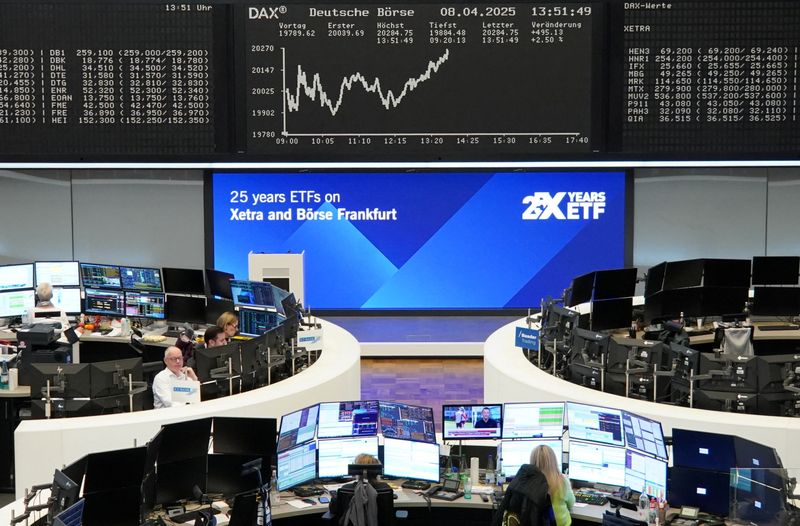
European stocks declined at the end of trading on Tuesday, with markets showing negative performance across most sectors. This downturn comes as investors closely monitor the escalating tensions in the Middle East, alongside the earnings results of several major companies.
The Stoxx Europe 600 index ended the session down by 0.37%, reaching 606 points, which reflects a reduction in its gains since the beginning of the year to just 2.43%. In contrast, the UK's FTSE 100 index saw a slight increase of 0.11%, reaching 10,332 points, while Germany's DAX index fell by 0.27% to 24,018 points, and France's CAC 40 dropped by 0.46% to 8,104 points.
Details of the Event
European markets have been significantly affected by the prevailing uncertainty surrounding the situation in the Middle East. Former U.S. President Donald Trump indicated his rejection of Iran's recent peace proposal, stating that Tehran is in a state of "collapse" and needs to reopen the Strait of Hormuz as soon as possible.
In related news, reports suggest that brokers in Pakistan expect Iran to present an alternative proposal in the coming days following signs of U.S. rejection. These developments come at a sensitive time, as financial markets await the earnings results of major companies such as Novartis, BP, and Barclays.
Context and Background
European markets are highly sensitive to political and economic events in the Middle East, as these events directly impact oil prices and global trade. Ongoing tensions in the region, particularly with escalating conflicts, raise concerns among investors and lead to fluctuations in financial markets.
Historically, European markets have experienced notable declines during times of political crises in the Middle East, reflecting the strong interconnection between the European economy and geopolitical events. Additionally, the earnings results of major companies play a crucial role in guiding market movements, as any decline in profits may exert further pressure on stocks.
Consequences and Impact
The decline witnessed in European stocks today could have significant implications for investors, potentially leading to increased uncertainty and anxiety in the markets. If tensions in the Middle East persist, we may witness further declines in European indices, which could adversely affect the economy as a whole.
Moreover, the earnings results of major companies may influence investor confidence, as any drop in profits could lead to reduced investments and increased pressure on markets. Investors are awaiting the outcomes of meetings from the European Central Bank, Bank of England, and the Federal Reserve, which may reflect monetary policy directions in the upcoming phase.
Impact on the Arab Region
Developments in European markets directly affect the Arab region, as any downturn in the European economy could negatively impact trade and investment in Arab countries. Additionally, tensions in the Middle East may lead to rising oil prices, affecting the economies of oil-producing nations.
Under these circumstances, Arab countries must closely monitor developments, as any changes in economic or political policies could impact market stability in the region.
In conclusion, European markets remain under pressure from tensions in the Middle East, highlighting the importance of monitoring political events and their impact on the global economy. Investors are on alert, as any new developments could significantly affect market movements.