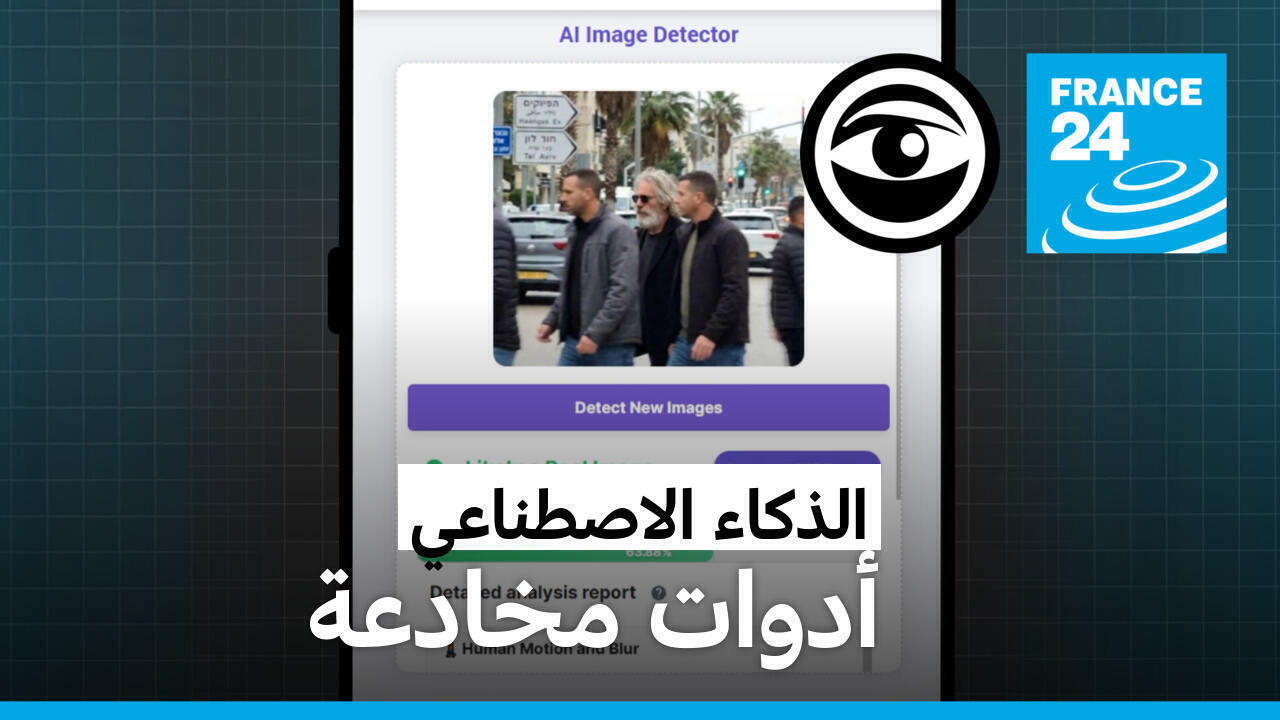
The rise of tools designed to detect AI-generated images reflects a growing interest in this field. However, the accuracy of the results provided by these tools is not always guaranteed, which can mislead users.
These tools analyze images to determine whether they are AI-generated or real. However, reports indicate that many of these tools may fail to deliver accurate results, raising questions about their reliability.
Details of the Event
The currently available tools incorporate various techniques, including pattern analysis and deep learning. Yet, despite technological advancements, significant challenges remain for these tools, such as the ability to accurately distinguish between generated images and real ones. Some studies have shown that the error rate in these tools can reach concerning levels, raising fears about their use in sensitive areas.
Moreover, the increasing use of AI in content creation, whether images or texts, complicates this issue. As AI's ability to produce seemingly natural content grows, it becomes increasingly difficult for current tools to differentiate between what is generated and what is real.
Background & Context
Recent years have witnessed notable advancements in AI technologies, leading to the emergence of new tools capable of generating diverse content. However, these technologies come with new challenges related to verifying the authenticity of information and content. In this context, the need for reliable tools to detect AI-generated content has become more urgent.
Historically, detection tools for forgery relied on traditional techniques, but with the emergence of AI, it has become essential to develop new methods that address these challenges. Some academic institutions and companies have begun developing new models aimed at improving the accuracy of detecting generated content.
Impact & Consequences
The implications of inaccurate AI detection tools extend beyond mere incorrect results. This issue can affect public trust in information, leading to the spread of rumors and misinformation. In the information age, where anyone can easily publish content, it is essential to have reliable tools that help users distinguish between fact and fiction.
Furthermore, this issue may impact various fields, including education, media, and cybersecurity. In education, for example, reliance on inaccurate tools could lead to erroneous assessments of students. In the media, misinformation could cause a loss of trust between the public and media outlets.
Regional Significance
In the Arab region, where the importance of technology and AI is increasing, it is crucial to develop reliable tools for detecting generated content. With the growing use of these technologies in media and social communication, the inaccuracy of detection tools could lead to the proliferation of misinformation, affecting public opinion.
Therefore, Arab countries should enhance research and development in this field and provide necessary training for users to understand how to use these tools correctly. Awareness campaigns should also be launched to promote understanding of the risks of misinformation.
In light of the rapid advancement of AI technologies, the greatest challenge remains ensuring the accuracy of tools for detecting generated content. This requires collaborative efforts from all stakeholders to ensure the provision of reliable information to users.