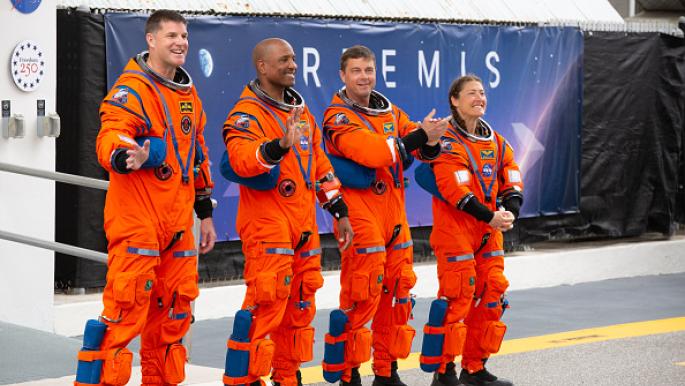
The adventure of astronauts on the Artemis 2 mission continues as they experience a unique life in lunar orbit. Despite being far from Earth, their daily lives include familiar activities such as eating and taking photos, reflecting a glimpse of life in space.
The meals consumed by the astronauts are diverse, ranging from pancakes to couscous, showcasing the efforts made to provide them with balanced and enjoyable nutrition. However, life in space is not without its challenges, as the astronauts have encountered some malfunctions in the toilet system, which is vital for the success of the mission.
Details of the Mission
The Artemis 2 mission is part of NASA's lunar exploration program aimed at returning to the moon and exploring it more deeply. The mission involves a crew of four astronauts who undergo intensive training before launch. The astronauts live in a confined environment, requiring them to adapt to the conditions of space, including microgravity.
The astronauts' daily activities also include conducting scientific experiments and communicating with the control center on Earth. Their experiences are documented through photos and videos shared with the public, contributing to increased awareness about space exploration.
Background & Context
The Artemis 2 mission comes as part of global efforts to explore space, with many countries striving to make advancements in this field. This mission is a significant step towards returning to the moon, following decades since the last manned mission to the moon in 1972. Artemis 2 aims to lay the groundwork for future missions that will include landing on the moon's surface and exploring new areas.
Through this mission, NASA seeks to enhance international cooperation in space, with many countries participating in the development of the technologies and systems necessary to support this endeavor. There is also an increasing interest from the private sector in space, which contributes to accelerating innovations and developments in this field.
Impact & Consequences
The Artemis 2 mission represents an opportunity to enhance scientific understanding of space and its effects on humans. By studying the impact of microgravity on the human body, scientists can gain valuable insights that may benefit future long-duration space flights or life on other planets.
This mission also underscores the importance of education in the fields of science, technology, engineering, and mathematics (STEM), inspiring new generations to explore these areas. Witnessing astronauts living in space can serve as a powerful motivation for youth to engage in these disciplines.
Regional Significance
The Artemis 2 mission exemplifies the scientific and technological advancements that can impact all nations, including Arab countries. Although the region has not been part of this program, there is a growing interest in space among Arab nations, with some countries beginning to develop their own space programs.
This mission could inspire Arab countries to invest in scientific research and technology, contributing to sustainable development. Additionally, collaboration with global space agencies can open new avenues for scientific and technological cooperation.
In conclusion, the experience of astronauts on Artemis 2 marks an important step towards space exploration, providing valuable lessons about the challenges and opportunities facing humanity in this field. Advancements in space exploration can contribute to enhancing international cooperation and achieving scientific and technological benefits for all.