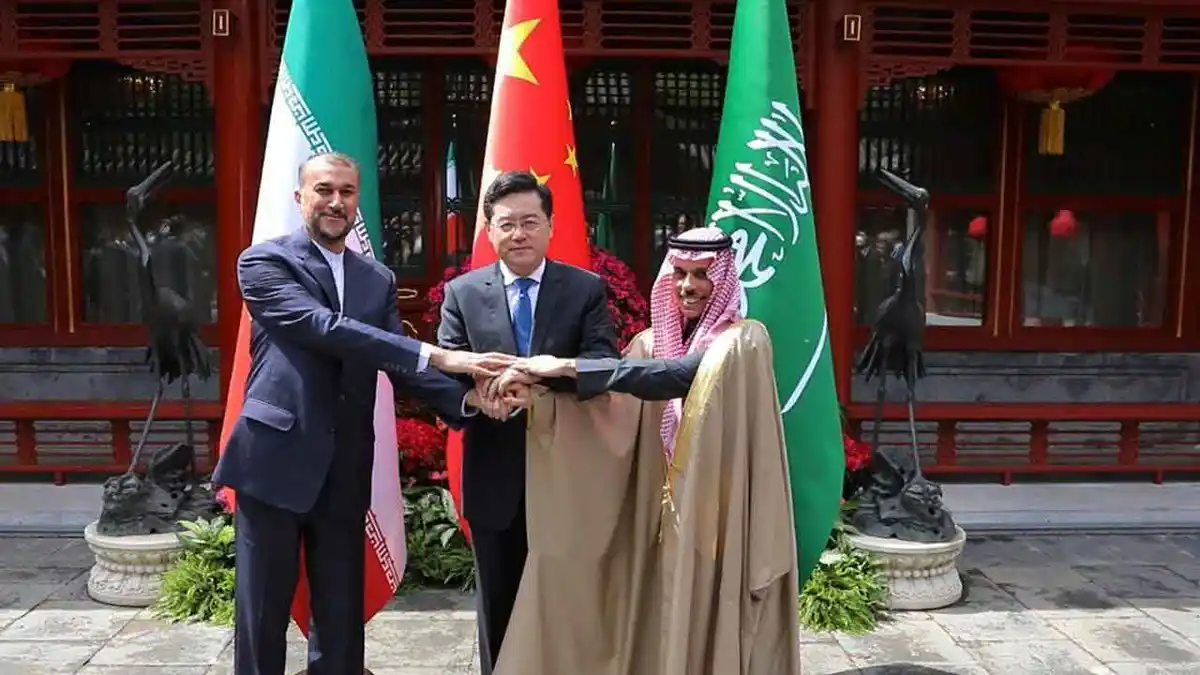
Recent developments in the region suggest the potential formation of an Arab stability sphere, intertwining interests between the Iranian crescent and the Arab arc. These dynamics could reshape regional balances.
In recent years, the region has witnessed radical shifts in relations between Arab countries and Iran. After years of tension and conflicts, some Arab nations have begun to reassess their strategies towards Iran, opening the door for new cooperation opportunities.
Details of the Event
Indicators are increasing regarding the possibility of forming new alliances in the region, as some Arab countries seek to enhance their stability through cooperation with Iran. These transformations come at a sensitive time, as the region faces multiple challenges, including economic and political crises.
For instance, the relationship between Saudi Arabia and Iran has seen a notable improvement, with exchanges of visits between officials reflecting both parties' desire to overcome historical differences. This rapprochement could lead to greater stability in the Gulf region, which is considered one of the most tense areas in the world.
Background & Context
Historically, relations between Iran and Arab countries have been strained, especially following the 1979 Iranian Revolution. Regional conflicts, such as the wars in Syria and Yemen, have exacerbated these tensions. However, recent geopolitical changes, including trends towards dialogue, may contribute to altering these dynamics.
Moreover, the economic challenges faced by many Arab countries, including rising unemployment rates and declining growth, may push them to seek new partnerships. Cooperation with Iran, which possesses vast natural resources, could be part of this strategy.
Impact & Consequences
If Arab countries succeed in forming new alliances with Iran, it could lead to radical changes in the regional landscape. This cooperation is likely to enhance security and stability, positively reflecting on the economy and development in the region.
However, these dynamics may raise concerns among some regional and international powers, which may view this cooperation as a threat to their interests. Therefore, managing these relationships cautiously will be essential to avoid any escalation.
Regional Significance
The formation of an Arab stability sphere could have positive effects on Arab countries, as it may lead to improved relations among the Arab states themselves. This cooperation could contribute to enhancing economic and political integration, thus strengthening the ability of Arab nations to face common challenges.
Ultimately, the question remains open regarding the extent to which Arab countries can achieve this cooperation and turn it into tangible reality. Success in this endeavor depends on political will and mutual understanding among the involved parties.