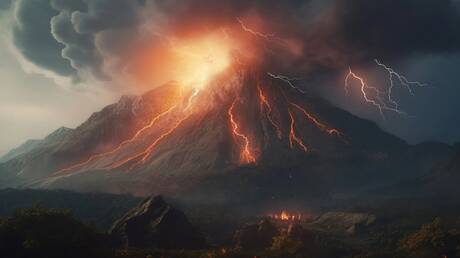
Volcanic lightning is a fascinating atmospheric phenomenon observed during volcanic eruptions, appearing within clouds of smoke and ash. This occurrence piques the curiosity of scientists and researchers regarding its causes and effects.
Volcanic lightning occurs when electrically charged particles collide within ash clouds, resulting in an electrical discharge that produces flashes of light. This phenomenon is not new; it has been documented in numerous volcanic eruptions around the world, yet it continues to attract significant interest in scientific circles.
Details of the Event
Volcanic ash clouds consist of tiny particles of rock, glass, and chemicals released by volcanoes during eruptions. When these particles rise to high altitudes, they are subjected to strong air currents, leading to friction among them. This friction generates electric charges, and when these charges accumulate sufficiently, an electrical discharge occurs, resulting in lightning.
Studies indicate that volcanic lightning can be more intense than regular lightning, with the temperatures of electrical discharges reaching thousands of degrees Celsius. This phenomenon is not only visually striking but can also impact the surrounding environment, potentially causing fires or affecting aircraft movement.
Background & Context
Historically, volcanic lightning has been recorded in various cultures, with some societies considering it a sign of divine wrath. As science has advanced, researchers have begun to better understand this phenomenon, with recent studies showing that volcanic lightning can have significant environmental effects.
For instance, ash clouds can lead to air and water pollution, affecting wildlife and vegetation. Additionally, volcanic lightning can influence local climate, causing changes in temperature and precipitation patterns.
Impact & Consequences
Studying volcanic lightning is crucial for understanding how volcanic eruptions affect the environment. Such studies can aid in developing better predictive models for volcanic eruptions, which can help mitigate risks to surrounding communities.
Moreover, understanding this phenomenon can contribute to improving aviation technologies, as information about volcanic lightning can help guide aircraft away from hazardous areas.
Regional Significance
Although volcanic lightning is not common in the Arab region, some countries like Iraq and Syria experience volcanic activity. Therefore, understanding this phenomenon can have important implications for public safety in these nations.
Additionally, studying volcanic lightning can enhance Arab countries' capacity to deal with natural disasters, contributing to the protection of lives and property.
In conclusion, volcanic lightning is an intriguing natural phenomenon that requires further research and study to fully understand its impacts. As scientists continue to explore this phenomenon, there is hope for improved strategies for predicting and managing volcanic eruptions.