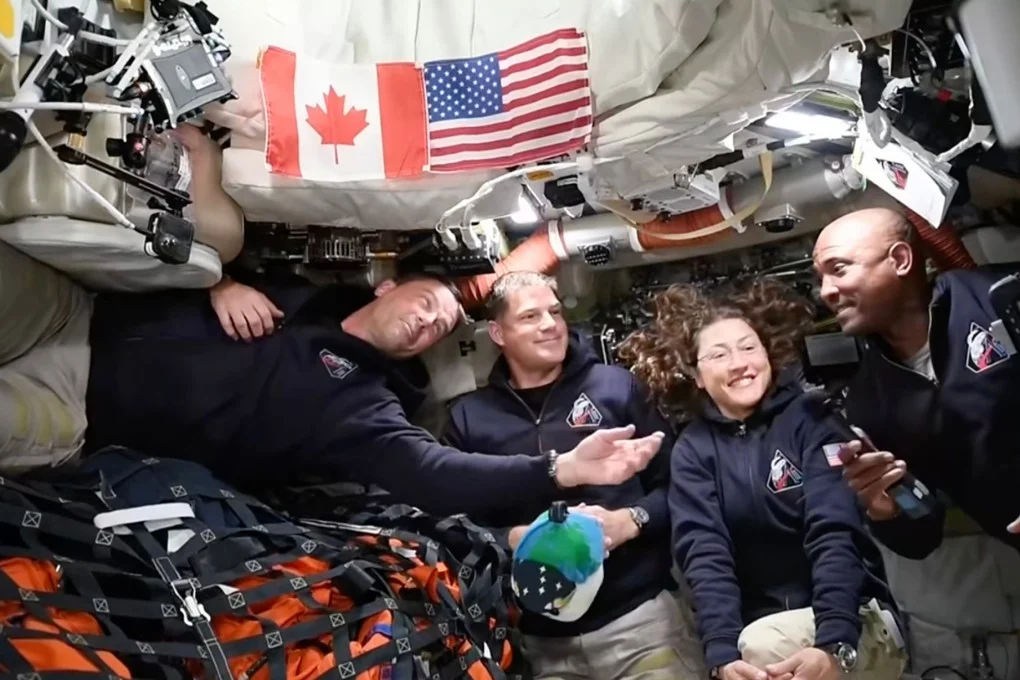
The American space agency NASA is gearing up for the launch of Artemis II, the first crewed mission to the moon in over 53 years. The crew, consisting of three Americans and one Canadian, will embark on a historic journey around the moon next Monday. Despite the mission's historical significance, the crew is facing new challenges related to a malfunction in the toilet system, raising concerns about the conditions of the flight.
The Artemis II mission is part of the Artemis program, which aims to return humans to the moon and expand human exploration beyond it. The mission will capture images of the far side of the moon, a region that has not been sufficiently explored, providing scientists with an opportunity to gather new data about this celestial body.
Event Details
The spacecraft is scheduled to arrive at the moon on Monday, where the crew will take photographs of the far side. This mission comes more than five decades after the Apollo program, which saw humans land on the moon for the first time. However, the toilet malfunction could raise concerns about comfort and safety during the flight.
This mission is a significant step towards achieving larger goals, including sending astronauts to Mars in the future. Nevertheless, technical challenges such as toilet issues highlight the importance of thorough preparation and planning for such missions.
Background & Context
The history of space exploration is filled with challenges and achievements. The Apollo program, which began in the 1960s, launched the first human to the moon in 1969. Since then, there have been increasing efforts to explore outer space, as nations seek to enhance their capabilities in this field. The Artemis program represents a strong return for the United States to the moon, reflecting its commitment to excellence in space.
The technology used in today's space missions is more advanced than ever, yet challenges remain. Issues like the toilet malfunction remind us that space travel requires meticulous planning and readiness to face any emergencies.
Impact & Consequences
NASA faces significant challenges within the Artemis program, requiring substantial investment in technology and resources. The toilet malfunction could affect the mission's timeline, potentially leading to delays in future missions. Additionally, these problems may impact public confidence in the agency's ability to carry out complex space missions.
Despite these challenges, the success of the Artemis II mission could bolster the United States' position as a leading force in space exploration and stimulate further investment in this vital sector.
Regional Significance
Space exploration is a topic of interest for many Arab countries, with some nations like the United Arab Emirates seeking to enhance their space programs. The success of the Artemis program could inspire Arab nations to invest in space technology, thereby enhancing their scientific and technological capabilities.
Furthermore, international cooperation in space could open new horizons for Arab countries, contributing to strengthening scientific and technological partnerships among nations.
In conclusion, the Artemis II mission represents a significant step towards space exploration, despite the challenges it faces. The success of this mission could have far-reaching implications for the future of space exploration, both in the United States and around the world.