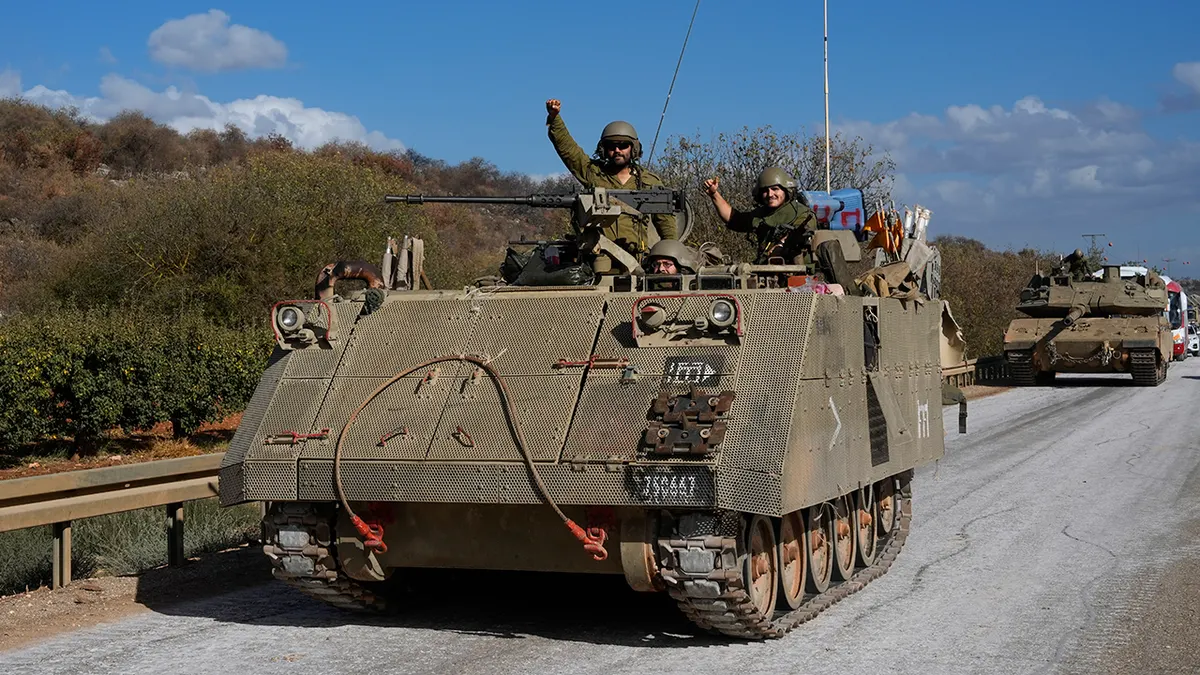
Families of Israeli soldiers have voiced their profound concern regarding the risks their children face while serving in Lebanon, calling on Israeli Prime Minister Benjamin Netanyahu to take immediate measures to ensure their safety. These demands come at a time when the region is witnessing an increase in tensions, heightening fears for the soldiers' well-being.
In an open letter, the families emphasized that the current situation in Lebanon poses a significant and unreasonable threat to the soldiers, stating that the government must take responsibility for protecting their children. This issue has sparked widespread debate within Israeli society, with many questioning the efficacy of continuing military operations in Lebanon.
Details of the Situation
Concerns are growing over escalating violence in Lebanon, particularly with increased military activities along the border. Recently, several incidents have resulted in injuries among Israeli soldiers, amplifying the worries of their families. Some families have pointed out that the government has not provided sufficient information regarding its military plans in the region, which adds to the anxiety and uncertainty.
The families also expressed their dissatisfaction with the lack of a clear response from the government to their demands, feeling that they are left to face the dangers threatening their children's safety alone. They asserted that these risks are unacceptable and that the government must take tangible steps to protect the soldiers.
Background & Context
Historically, relations between Israel and Lebanon have been tense, with the region experiencing numerous armed conflicts. Since the Lebanese Civil War in the 1970s and 1980s, tensions between the two sides have not ceased. In recent years, military activities along the border have intensified, raising fears of a new conflict.
Hezbollah, the Lebanese armed group, is considered one of the main factors affecting security in the region, with Israel accusing the group of posing a direct threat to its security. In this context, Israeli soldiers face significant challenges in carrying out their missions, further increasing the risks they encounter.
Impact & Consequences
These demands from the families may lead to increasing pressure on the Israeli government to alter its military strategy in Lebanon. If the risks continue, public discontent towards the government may grow, potentially affecting its popularity in the future. Additionally, any escalation in tensions could have negative repercussions on regional security.
The current situation requires the Israeli government to reassess its military strategies, especially in light of the mounting pressure from families and the international community. Such pressures could lead to changes in military policies, which may impact the security situation in the region.
Regional Significance
The situations in Lebanon and Israel are of great importance to the Arab region, as any escalation in conflict could affect neighboring countries. Fears of a new conflict remain, which could lead to humanitarian and economic repercussions for Arab nations.
In light of these circumstances, Arab countries must closely monitor developments, as any escalation could impact the stability of the region as a whole. Diplomatic efforts should be made to resolve conflicts and achieve peace in the area.