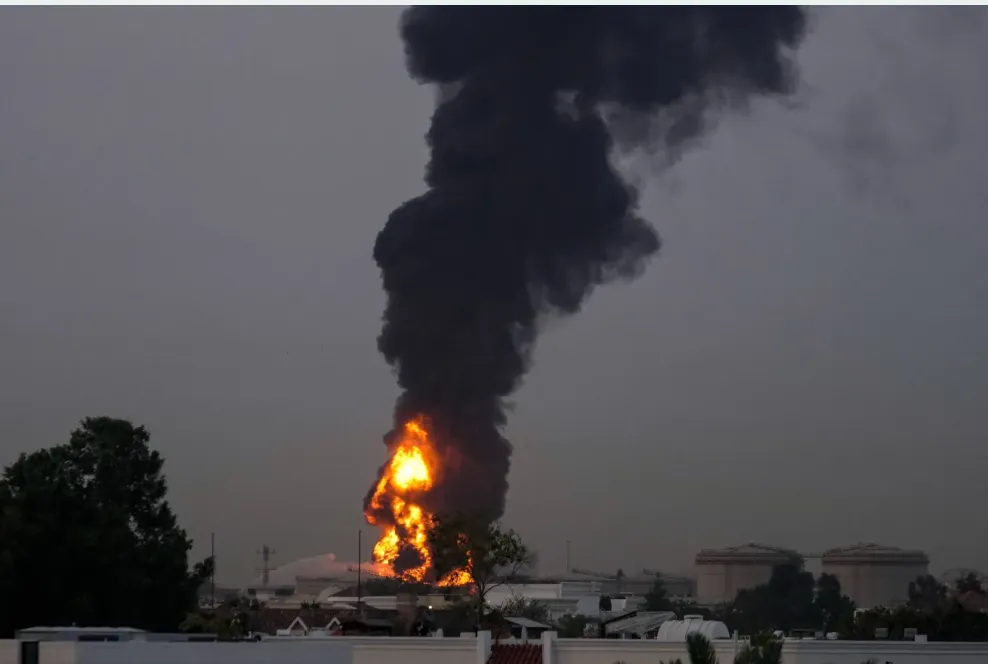
Early this morning (Saturday), the United Arab Emirates was subjected to Iranian attacks characterized by missile and drone strikes, leading to two fires in an industrial area. The incident resulted in injuries to five individuals, drawing attention to the rising tensions in the region.
The UAE Ministry of Defense reported that the air defenses and Emirati fighter jets effectively dealt with these attacks, intercepting several missiles and drones. The ministry confirmed that the sounds heard in various parts of the country were a result of successful interception operations.
Details of the Incident
The UAE Ministry of Defense announced via the "X" platform that the air defenses repelled missile and drone attacks originating from Iran, indicating that the fires broke out in the vicinity of the Khalifa Economic Zones in Abu Dhabi - KIZAD. The successful interception of a ballistic missile resulted in debris falling in the area, injuring five individuals of Indian nationality.
In a statement from the Abu Dhabi Media Office, it was confirmed that authorities are managing the fires resulting from these attacks, and the injuries range from moderate to minor. This escalation comes at a time when the region is witnessing increasing tensions, as Iran continues its attacks on Gulf countries a month into the outbreak of war in the Middle East.
Background & Context
These attacks occur amid rising tensions between Iran and Gulf countries, with the UAE and Saudi Arabia facing repeated missile and drone assaults. These attacks have significantly increased since the onset of the conflict in the Middle East, raising concerns about regional security and the stability of the affected nations.
Historically, the region has witnessed numerous armed conflicts and assaults, with Iran seeking to expand its influence in the Gulf. These events reflect the ongoing geopolitical struggle in the area, which directly impacts civilian lives and complicates security situations.
Impact & Consequences
The repercussions of these attacks extend beyond military dimensions, affecting relations between Gulf countries and Iran. The military escalation may provoke reactions from the involved nations, increasing the likelihood of new conflicts erupting in the region.
Moreover, these events could impact the regional economy, potentially leading to a decline in investments and tourism in the affected countries. Additionally, the rising tensions may prompt international intervention, further complicating the situation.
Regional Significance
These attacks serve as a wake-up call for Arab countries, highlighting the need to enhance security cooperation and coordination among nations to address common threats. Furthermore, these events may lead to a reassessment of defense and security strategies in the region.
Under these circumstances, Arab nations must work together to secure their borders and protect their national interests. Strengthening dialogue and cooperation among countries can contribute to reducing tensions and achieving stability in the region.
In conclusion, the current escalation in the UAE is part of a broader landscape of regional tensions, necessitating a coordinated response from Arab nations to confront the increasing security challenges.