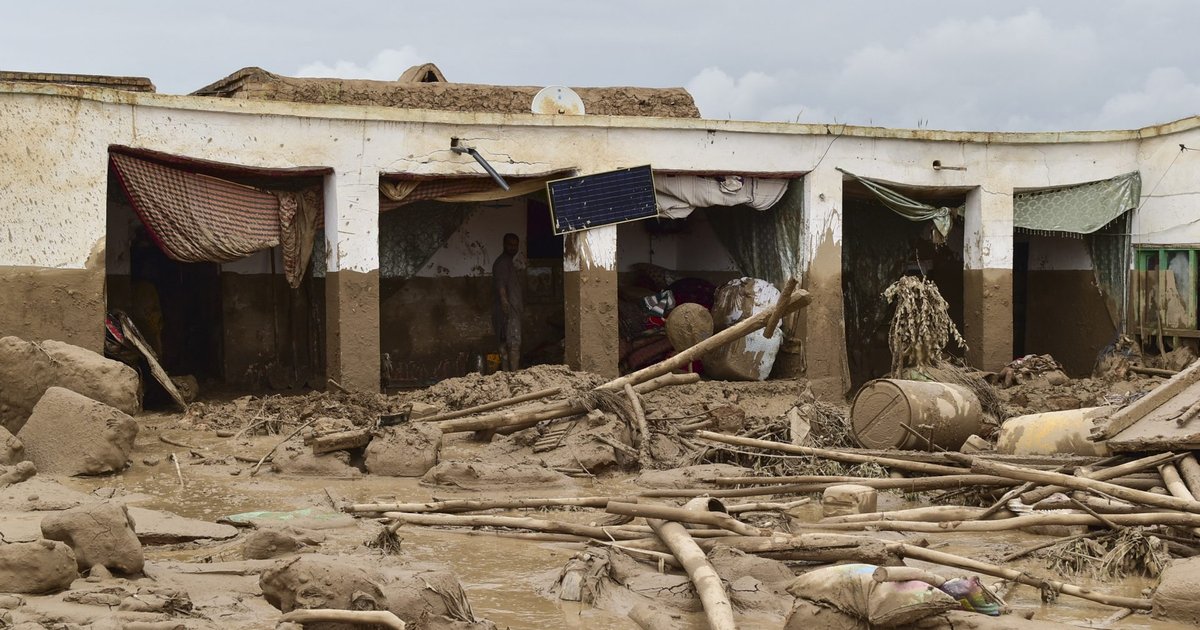
Afghan authorities have reported a significant rise in the death toll from floods that have swept across vast areas of the country, with the number of fatalities exceeding 100 individuals, alongside the destruction of numerous homes and infrastructure. These floods come at a time when Afghanistan is facing increasing humanitarian crises, further intensifying the suffering of local residents.
Heavy rainfall has caused sudden flooding, inundating villages and residential areas, resulting in the loss of many lives and the destruction of property. Images circulated on social media depict horrific scenes of the devastation left by the floods, with water submerging streets and homes, making it difficult for rescue teams to reach those affected.
Details of the Flooding Incident
According to official reports, the floods have primarily affected northern Afghanistan, where many villages have suffered significant damage. The government has declared a state of emergency in the affected areas, and rescue teams have begun providing humanitarian assistance to those in need. Medical teams have also been dispatched to the impacted regions to offer healthcare to the injured and affected individuals.
These floods are considered one of the worst natural disasters Afghanistan has faced in recent years, adding to the list of crises confronting the country, including ongoing conflicts and economic challenges.
Background & Context
Afghanistan has long suffered from humanitarian crises, with ongoing conflicts exacerbating economic and social conditions. As the number of internally displaced persons increases, many residents struggle to access basic necessities such as food, water, and healthcare. The recent floods complicate these situations, adding to the challenges faced by the Afghan government in delivering necessary aid.
In recent years, Afghanistan has experienced several natural disasters, including earthquakes and floods, highlighting the fragility of the country's infrastructure. These disasters directly impact the lives of residents and increase their suffering.
Impact & Consequences
If the flooding continues, it may worsen the humanitarian situation in the country, as the destruction of homes and infrastructure could lead to a rise in the number of displaced individuals. Additionally, a lack of humanitarian aid may result in the outbreak of diseases and increased mortality rates among the affected populations.
This disaster presents an opportunity for the international community to provide support and assistance to Afghanistan, as humanitarian aid can alleviate the suffering of residents and improve conditions in the affected areas.
Regional Significance
The humanitarian crises in Afghanistan are a concern for the Arab world, as they can impact security and stability in the region. Providing support and assistance to Afghanistan reflects Arab solidarity with peoples affected by natural disasters.
In light of the escalating crises, Arab nations must play an active role in providing humanitarian aid, contributing to the improvement of conditions in Afghanistan and enhancing regional stability.
In conclusion, the floods that have swept through Afghanistan represent a significant challenge for local authorities and the international community. It is crucial to intensify efforts to provide necessary aid to the affected individuals and work towards improving humanitarian conditions in the country.