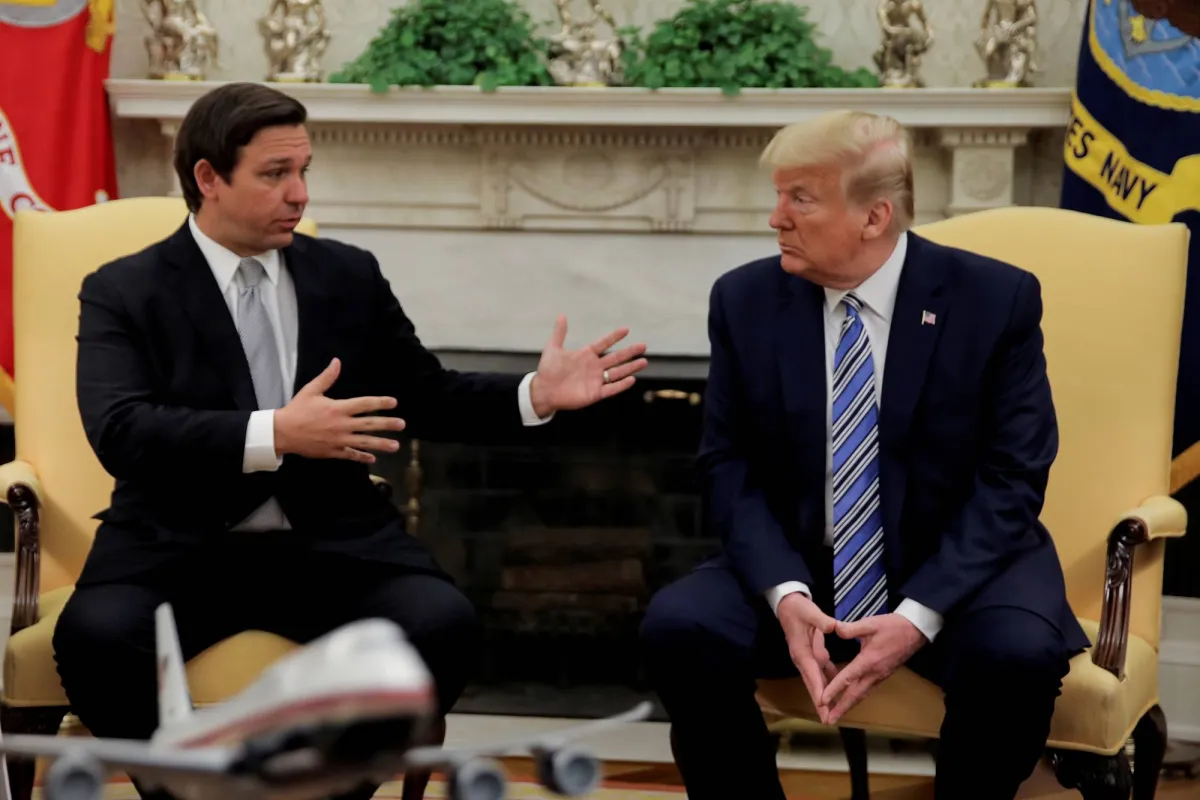
Florida Governor Ron DeSantis signed a bill on Monday that aims to rename Palm Beach International Airport to 'Donald J. Trump International Airport.' This decision is part of DeSantis's efforts to bolster connections with former President Trump, who remains a significant figure in the Republican Party.
Despite the signing of the law, the airport name change still requires approval from the Federal Aviation Administration (FAA), in addition to completing certain legal agreements related to rights. The FAA confirmed in a statement that 'changing the name of the airport is a local issue,' indicating that it does not automatically approve airport name changes.
Event Details
Palm Beach International Airport is located about 3 kilometers from Mar-a-Lago, Trump's resort. Florida has seen a rise in support for Trump in recent years, reflecting his ongoing influence on local politics. This decision is expected to elicit mixed reactions among state residents, with some viewing it as a boost for Trump’s stature, while others see it as a disservice to public institutions.
In a related context, since returning to political life after leaving the White House, Trump has sought to leave his mark on public institutions, aiming to add his name to prominent landmarks such as the John F. Kennedy Center for the Performing Arts in Washington. This trend reflects the continuity of his influence on the American political landscape.
Context and Background
Historically, there have been numerous attempts to name public landmarks after prominent political figures, but this move comes at a sensitive time as Trump faces legal and political challenges. This decision has raised questions about how it will affect relations between local and federal government.
It is noteworthy that DeSantis, considered one of the leading potential candidates for the upcoming presidential election, is using this move to strengthen his support base, especially amid fierce competition within the Republican Party.
Implications and Effects
This move could exacerbate political divisions in Florida, as citizens are expected to react differently to this decision. At the same time, it may spark debate over how public institutions are used to promote political names, potentially affecting the reputation of local government.
Furthermore, this decision may open the door for further discussions on how political figures influence public institutions, leading to calls for renaming other landmarks in the future.
Impact on the Arab Region
Although this event appears local, it reflects political trends in the United States that could affect international relations, including those with Arab countries. During his presidency, Trump took controversial stances on Middle Eastern issues, which may influence how the current U.S. administration handles these matters.
In conclusion, this decision represents a new step in American politics and reflects the challenges faced by local government in managing the influence of political figures on public institutions.