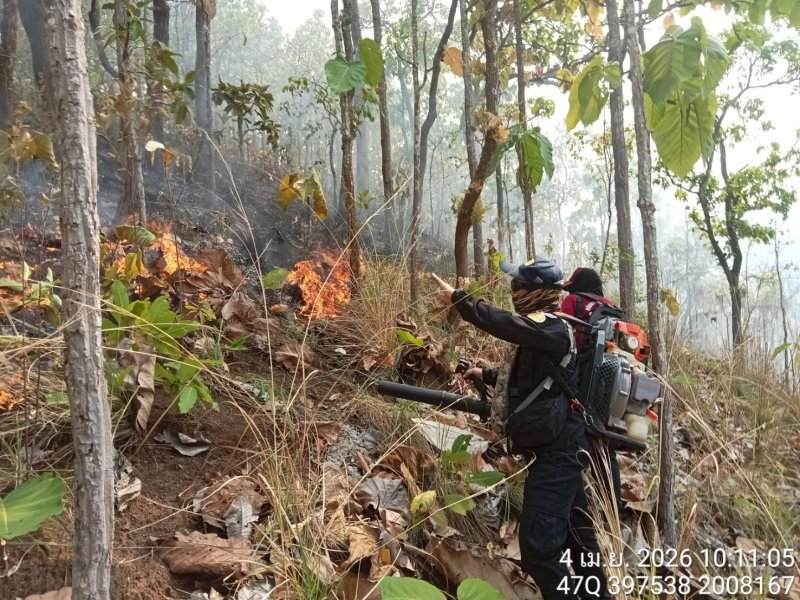
Mae Hong Son province in northern Thailand is grappling with an escalating forest fire crisis, as 186 fire hotspots have been detected via satellite, leading to alarming levels of air pollution that pose health risks. Local authorities are facing significant challenges in combating these fires, especially in the rugged mountainous areas that hinder firefighting efforts.
The provincial governor, Weiboon Waipand, stated that the fires continue to spread across several regions, particularly in the Mae Sariang area, where all villages in seven districts have been declared disaster zones. The Western Forest Complex (Salawin Forest) is among the most affected areas.
Details of the Incident
Reports indicate that the difficult mountainous terrain is obstructing firefighting efforts, with firefighters facing shortages of food and potable water. Officials have been directed to enhance communication with local communities to halt the forest fires, with warnings of stringent legal actions against violators.
Data from the VIIRS system of the Suomi NPP satellite has shown an increase in fire activity, with 186 fire hotspots recorded in the province on Sunday morning. Firefighting teams from various agencies have been deployed across the Muang, Pai, and Bang Maba areas, where they have managed to contain some fires, but there are still areas difficult to access due to the rugged terrain.
Background & Context
Historically, Thailand has experienced recurring forest fires, especially during the dry season, which are considered a result of climate change and increased human activity in forested areas. However, the current situation in Mae Hong Son is regarded as one of the worst, with fires significantly increasing in recent years.
Forest fires in Thailand are a serious environmental and health issue, affecting air quality and increasing the risks of respiratory diseases. Studies have shown that air pollution resulting from forest fires can exacerbate asthma and heart diseases.
Impact & Consequences
The repercussions of the forest fires in Mae Hong Son extend beyond the province, as the Air Pollution Mitigation Center reported that PM2.5 levels have exceeded safety standards in 42 provinces, including Bangkok and northern and eastern regions. Mae Hong Son is among the most affected areas, recording concentrations ranging from 126.8 to 286.9 micrograms per cubic meter.
This crisis requires a swift response from the government and civil society, with temples in the affected areas directed to provide support, including water and food for the teams working to combat the fires.
Regional Significance
Although this crisis is occurring in Thailand, it highlights the importance of international cooperation in addressing environmental challenges. Forest fires and air pollution are global issues that affect human health and the environment, necessitating collaborative efforts among nations to tackle these challenges.
In conclusion, the forest fire crisis in Mae Hong Son underscores the urgent need for effective policies to protect the environment and enhance community awareness regarding the dangers of forest fires.