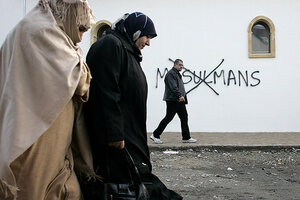
Currently, legal discussions are taking place in France regarding the ban on the annual Muslim meeting, with event organizers filing an appeal before the administrative court. The court is expected to issue its ruling by midday, raising questions about the freedom of assembly and citizens' rights to express their beliefs.
While local authorities seek to impose restrictions on gatherings, organizers assert that this ban constitutes an infringement on their fundamental rights. A representative from the police department indicated that if the decision is suspended, they will appeal to the Council of State.
Details of the Event
The annual Muslim meeting in France is an event that gathers thousands of participants from across the country, aiming to promote dialogue and understanding among communities. However, the ban has sparked mixed reactions, with some viewing it as a step towards restricting freedoms, while others see it as part of efforts to maintain public security.
Pressure is mounting on the French government amid rising concerns about extremism and terrorism, prompting it to adopt stricter policies regarding public gatherings. Nevertheless, these policies may exacerbate tensions between authorities and Muslim communities.
Background & Context
Historically, France has witnessed numerous events that have impacted the relationships between the government and Muslim communities. Following a series of terrorist attacks, security measures were intensified, leading to restrictions on public gatherings. However, the freedom of assembly is considered a fundamental right in democracies, raising questions about the balance between security and individual rights.
In recent years, France has seen a rise in discussions surrounding national identity and multiculturalism, making it essential to reconsider how the government interacts with diverse communities. The annual Muslim meeting is regarded as an important platform for exchanging ideas and fostering understanding between cultures.
Impact & Consequences
If the ban is upheld, it could pave the way for further restrictions on religious and cultural gatherings in France. This situation may intensify feelings of exclusion among Muslim communities, potentially negatively affecting social cohesion.
On the other hand, if the ban is lifted, it could be seen as a victory for freedom of expression and human rights, strengthening the position of Muslim communities in the country. This outcome may encourage more dialogue and understanding among various parties.
Regional Significance
This issue holds particular importance for the Arab region, as it reflects the challenges faced by Muslim communities in Western countries. The freedom of assembly and expression are fundamental issues of concern for Arabs, especially amid the political and social tensions experienced by some nations.
Moreover, these events may influence relations between Arab countries and France, as the way the French government handles Muslim communities is viewed as a reflection of values of tolerance and coexistence. Ultimately, dialogue and understanding between cultures are seen as the best way to overcome shared challenges.