France will host an emergency virtual meeting on Monday, bringing together finance ministers, energy ministers, and central bank governors from the G7 nations, marking the fourth attempt since the outbreak of the war in Iran to contain the disastrous repercussions on global markets.
Despite the frequency of these meetings, a "loss of confidence" has begun to seep into the markets, as previous gatherings have been described as mere "monitoring statements" lacking direct actions. This has led to wild spikes in global fear indicators (VIX), which recorded a rise of 13 percent by the end of last week.
Main Focus of the Meeting
French Trade Minister Sergue Babin revealed that the main focus of Monday's meeting will be the discussion of a "coordinated release" of strategic oil reserves. This step aims to calm prices that have seen the most severe fluctuations since the onset of the Ukraine war in 2022. Although the International Energy Agency reached a preliminary agreement on March 11 to utilize reserves, markets remain skeptical about long-term resilience unless a diplomatic solution is reached to end the blockade of waterways.
The diplomatic push from the G7 began on March 9 with a virtual meeting of finance ministers and central bank governors, which faced sharp criticism due to its concluding statement that merely promised "close monitoring" without concrete measures. The following day, attention shifted to energy ministers who decided, in coordination with the International Energy Agency, to intervene in "energy stocks" to calm the markets. This step achieved temporary stability that quickly evaporated in the face of violent oil price fluctuations reminiscent of the shocks seen in 2022.
Background & Context
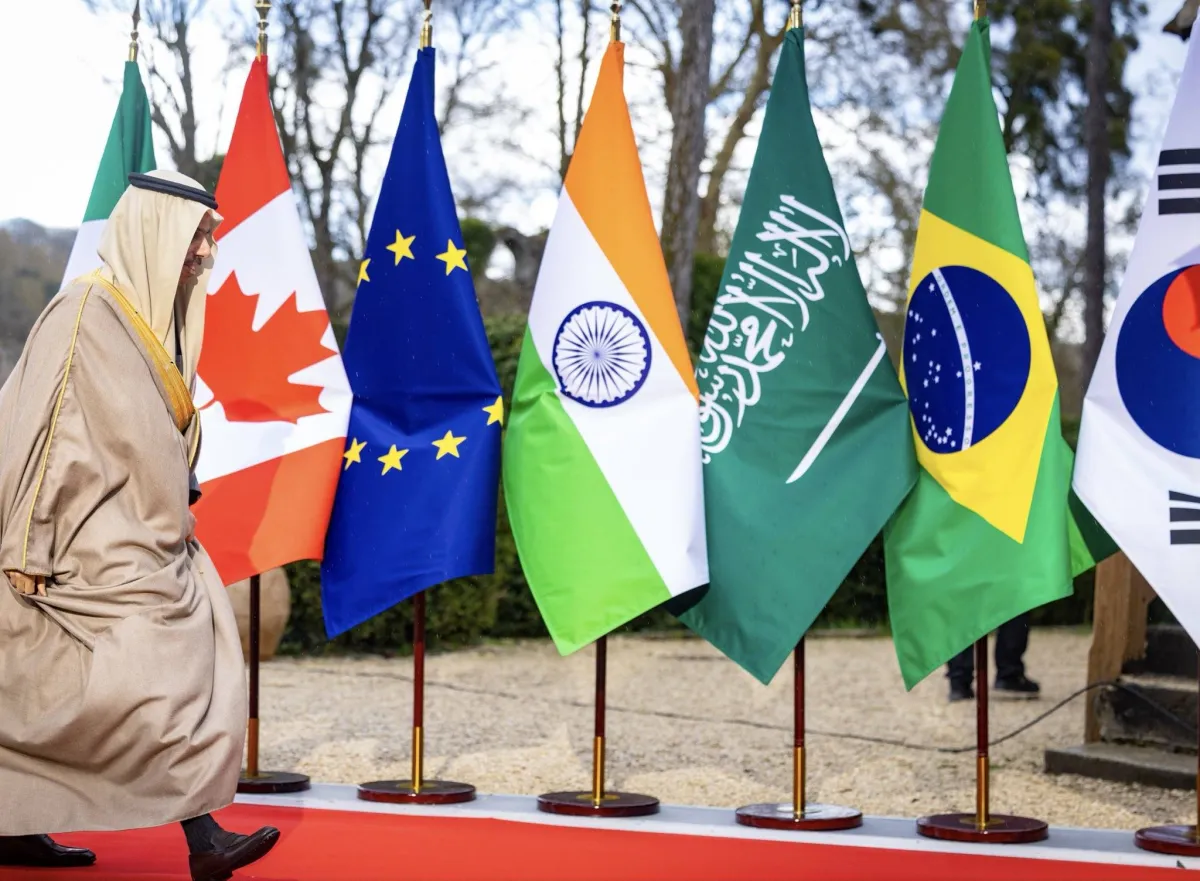
G7 foreign ministers convened in the tranquil atmosphere of the historic Faux de Cerney monastery in France. Behind the economic figures lies a silent diplomatic battle; German Foreign Minister Johann Fadipol complained about a "lack of communication" among allies, revealing arrangements for an upcoming direct meeting between the United States and Iran in Pakistan, seeking an exit from the crisis, according to CNBC.
The exclusion of South Africa from the leaders' summit scheduled for June in the French city of Évian has sparked significant diplomatic tension. Reports indicate pressure from the Trump administration that prevented an invitation to President Cyril Ramaphosa, reinforcing the impression that the "America First" approach threatens the effectiveness of the G7 as a tool for international diplomatic resolution.
Impact & Consequences
The geopolitical tensions in the region are no longer just a threat to shipping lanes; they have begun to strike at the heart of industrial infrastructure. Iran claimed responsibility on Sunday for attacks targeting two major aluminum plants in the Gulf, escalating economic tensions in the Middle East war following the involvement of Iranian-backed Houthi forces in the Yemen conflict.
The Emirates Global Aluminum (EGA) — the largest non-oil industrial company in the UAE — announced that its vital site in Al Taweelah, Abu Dhabi, suffered significant damage due to debris from ballistic missiles. The Al Taweelah site, located in the Khalifa Economic Zone, produced 1.6 million tons of metal in 2025, while the company's second smelter is located in the Jebel Ali area of Dubai. Concurrently, Aluminium Bahrain (Alba) began assessing the extent of damage to its facilities, placing major producers in the region before an existential challenge to ensure operational continuity under direct military threat.
Regional Significance
Despite the severity of the attacks, Emirates Global Aluminum revealed a proactive move by maintaining large stocks of metal in offshore locations and external warehouses outside the conflict zone since the war erupted last month. The company is currently using this external product to meet its commitments to international customers and mitigate the impact of disruptions caused by attacks on its local facilities.
The true danger of the recent attacks lies in the figures reported by the International Aluminium Institute; of the 29.6 million tons representing total global production outside China in 2025, the Gulf region alone contributed about 23 percent of this amount (equivalent to 9 percent of the total global production of 73.8 million tons). This massive production concentration relies entirely on the Strait of Hormuz for dual import and export movements.
In light of these circumstances, the world faces significant challenges in securing energy and raw material supplies, which could directly impact Arab economies and exacerbate tensions in the region.