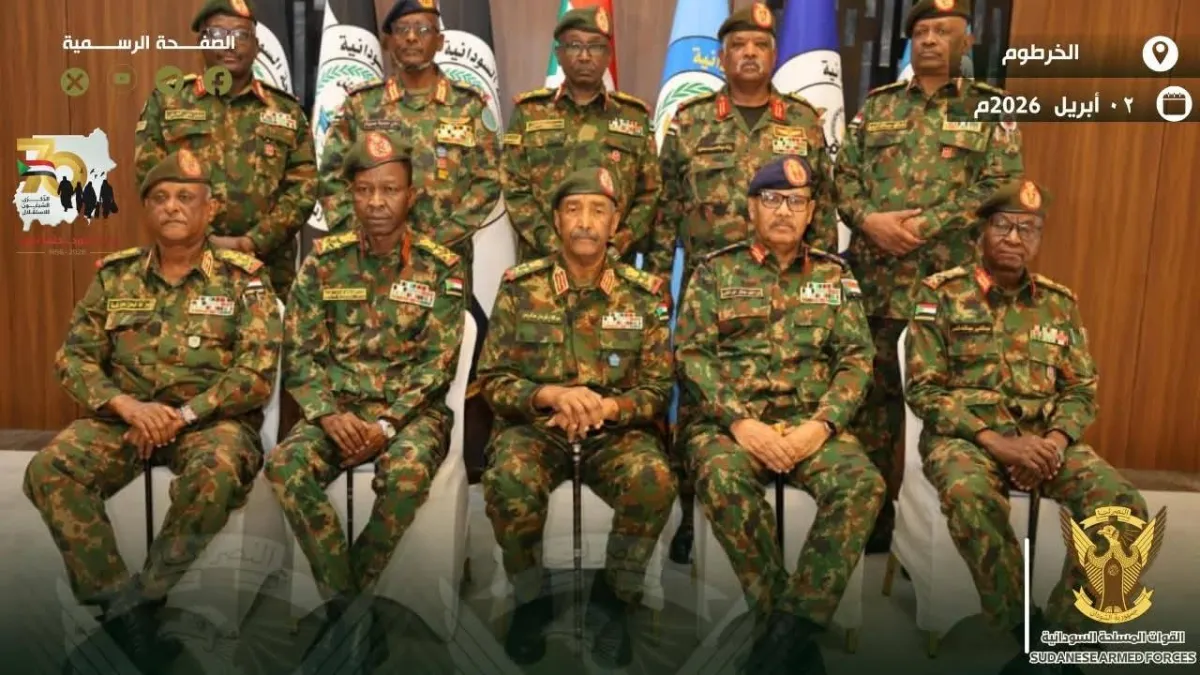
General Abdel Fattah Al-Burhan, the commander of the Sudanese army, has announced a series of changes in military leadership, dismissing several senior military leaders and appointing them to new positions. These steps come at a sensitive time, enhancing speculation about imminent changes in the ruling power structure in the country.
The decisions included the dismissal of the Deputy Army Commander, Shams Al-Din Kabbashi, and his assistants Yasir Al-Atta and Ibrahim Jaber, who have been appointed as assistants to Al-Burhan. Additionally, Yasir Al-Atta has been appointed as the Chief of Staff of the army, indicating a comprehensive restructuring in military leadership.
Details of the Event
In the context of these adjustments, Al-Burhan emphasized that the aim of creating new positions is to enhance the capabilities of the armed forces and develop military industries. He clarified that these steps are part of a military legacy aimed at injecting new blood into military leadership.
During the handover ceremony of the Chief of Staff position, Al-Burhan denied any regional criteria in the appointments, indicating that the choice of Al-Atta was based on his field competence. For his part, Al-Atta described the changes as routine annual procedures aimed at improving the performance of the armed forces.
Background & Context
These adjustments come at a time when Sudan is suffering from political and military crises since the outbreak of war in April 2023. This change is considered the most significant in military leadership since the beginning of the conflict, raising questions about the future of power in the country.
These steps coincide with calls from some political figures, such as Yasir Arman, who indicated that the army might be heading towards further escalation in the conflict, reflecting a state of political instability in the country.
Impact & Consequences
These changes are seen as an indicator of the possibility of reshaping the head of power in Sudan, with some expecting them to lead to a modification or dissolution of the Sovereignty Council. Experts have noted that these steps may result from the failure to achieve military victories on the ground.
Moreover, these adjustments could affect the relationships between various political and military forces in Sudan, potentially leading to increased tensions in the future.
Regional Significance
The developments in Sudan are of great importance to the Arab region, as they could impact stability in neighboring countries. Any change in the power structure may reflect on regional and international relations, especially amid current political crises.
In conclusion, the situation in Sudan remains under observation, as everyone looks forward to seeing how these changes will affect the future and stability of the country.