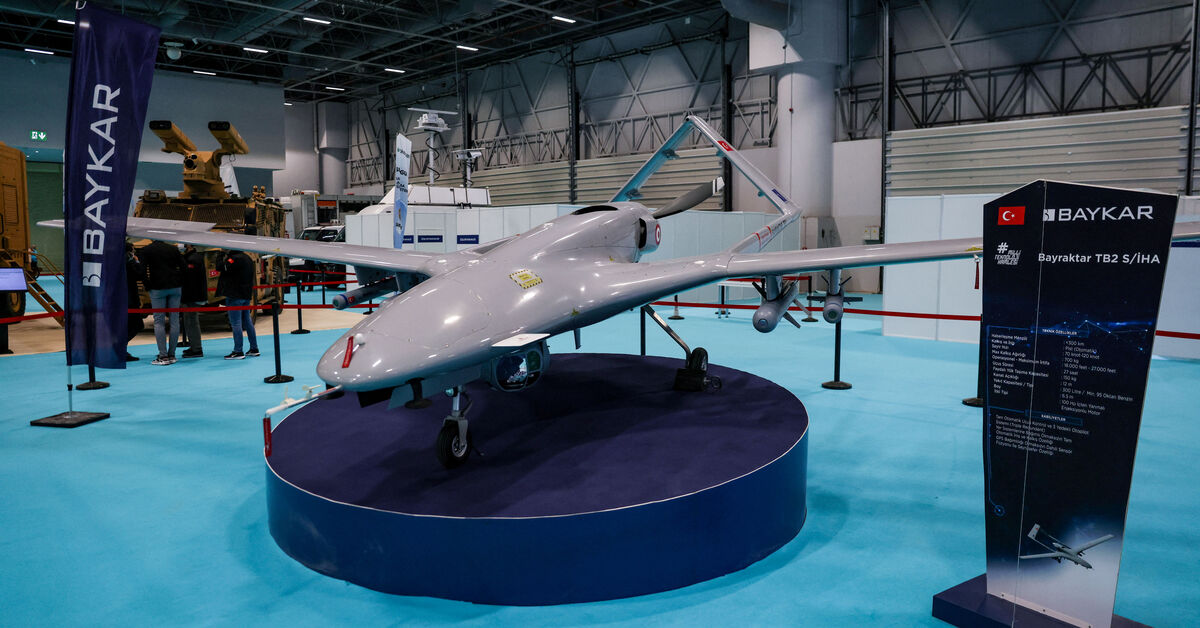
A recent report reveals that General Khalifa Haftar, the commander of the Libyan National Army, has acquired combat drones from China and Turkey, despite the United Nations' arms embargo on Libya. Commercial satellite images show at least three drones at the Al-Khadim airbase, located in the desert about 100 kilometers east of Benghazi, between late April and December of last year.
This information comes at a sensitive time when Libya is experiencing ongoing internal conflicts, with Haftar competing against the internationally recognized Government of National Accord. Despite the imposed embargo, it appears that Haftar has managed to obtain these drones to enhance his military capabilities in the ongoing conflict.
Details of the Acquisition
The satellite images captured indicate that the drones acquired by Haftar are believed to be of Chinese and Turkish models, suggesting a diversity of arms sources he relies on. This development reflects the escalating tensions in the region, as Haftar seeks to bolster his military position against his adversaries.
It is important to note that the United Nations has imposed an arms embargo since 2011, following the revolution that led to the ousting of Muammar Gaddafi's regime. However, this embargo has not prevented some parties from circumventing it, raising questions about the effectiveness of these international measures.
Background & Context
Historically, Libya has been a theater of multiple conflicts since the overthrow of Gaddafi's regime, with the country divided into warring factions. General Haftar, who leads the Libyan National Army, aims to control the country and has received support from certain regional and international powers, complicating the situation further.
In recent years, Libya has witnessed military intervention from several countries, with Turkey supporting the Government of National Accord, while Haftar has garnered support from countries like Egypt and the UAE. This regional conflict reflects the competition for influence in North Africa.
Impact & Consequences
The acquisition of drones could shift the balance of power in the Libyan conflict, as it may enhance Haftar's ability to conduct military operations against his opponents. This development could lead to an escalation of the conflict, threatening the peace efforts being made by the United Nations.
Moreover, this situation may raise concerns among neighboring countries, as the overall stability of the region could be affected. If the flow of arms to the conflicting parties continues, achieving any peaceful settlement may become increasingly difficult.
Regional Significance
The implications of this news extend beyond Libya, as the continuation of the conflict could impact regional security. Arab countries facing internal conflicts may find themselves in a similar situation, necessitating enhanced regional cooperation to address security challenges.
Ultimately, the situation in Libya remains a prime example of how internal conflicts can affect regional stability, calling for greater international attention to resolve these crises.