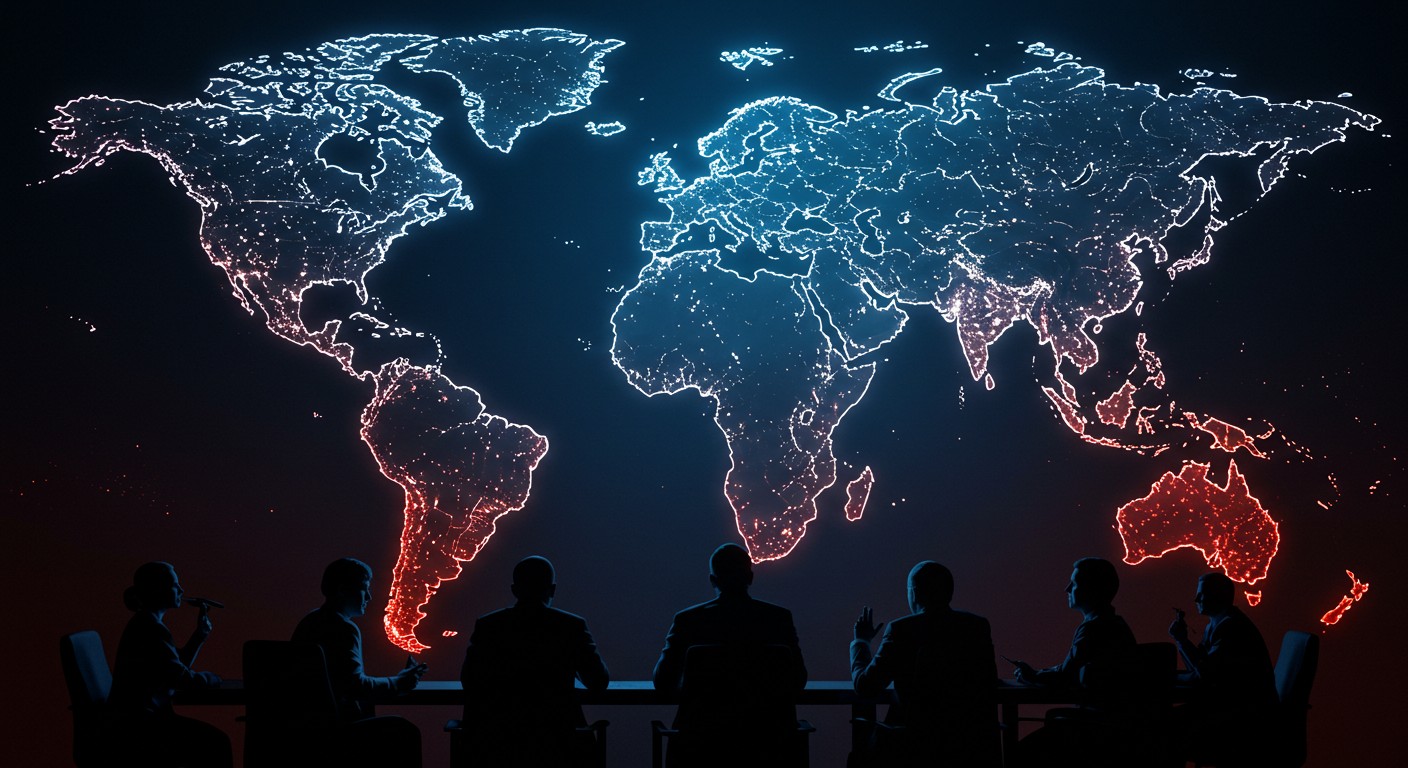
Geopolitics is one of the fundamental factors affecting international relations, playing a pivotal role in determining countries' strategies and security. In light of ongoing changes in the global landscape, understanding geopolitics and its impact on regional security has become increasingly important.
Various factors shape geopolitics, starting from geographical borders, natural resources, to population distribution. These factors directly influence how countries interact with one another and how they formulate their foreign policies.
Recent Developments in Geopolitics
In recent years, geopolitics has undergone significant changes due to regional crises and international conflicts. For instance, conflicts in the Middle East, such as the Syrian conflict and the Israeli-Palestinian dispute, have contributed to reshaping regional and international alliances. Additionally, tensions between major powers, such as the United States and China, have complicated the geopolitical landscape.
Natural resources, such as oil and gas, are critical in determining a country's geopolitical strength. Resource-rich countries often wield greater influence on the international stage, making them focal points for major powers.
Historical Context
Historically, geopolitics has played a crucial role in shaping international relations. During the Cold War, geographical borders represented dividing lines between the Eastern and Western blocs. With the collapse of the Soviet Union, dynamics shifted radically, leading to the emergence of new powers on the global scene.
Today, the world is witnessing new transformations, where the importance of geopolitics is increasing in light of global challenges such as climate change, migration, and cybersecurity. These challenges require countries to reassess their political and economic strategies.
Consequences and Implications
Geopolitics directly impacts regional security, as regional conflicts can destabilize vast areas. For example, the conflict in Ukraine has affected European security, prompting European nations to reevaluate their defense strategies.
Moreover, tensions in the Middle East influence regional security, where international interests intersect with local issues, complicating potential solutions. Countries with strong influence in the region, such as Iran and Turkey, play a pivotal role in shaping regional policies.
Impact on the Arab Region
In the Arab region, geopolitics plays a crucial role in determining relations between countries. Ongoing conflicts, such as the war in Yemen and the crisis in Syria, affect the stability of neighboring countries, necessitating regional cooperation to resolve these crises.
Furthermore, changes in international policies, such as shifts in relations between the United States and Arab countries, also impact the geopolitical landscape in the region. These changes may open new avenues for cooperation or increase tensions.
In conclusion, geopolitics remains a fundamental element in understanding international relations and regional security. As changes in the global landscape continue, Arab countries must be prepared to adapt to these challenges and opportunities.