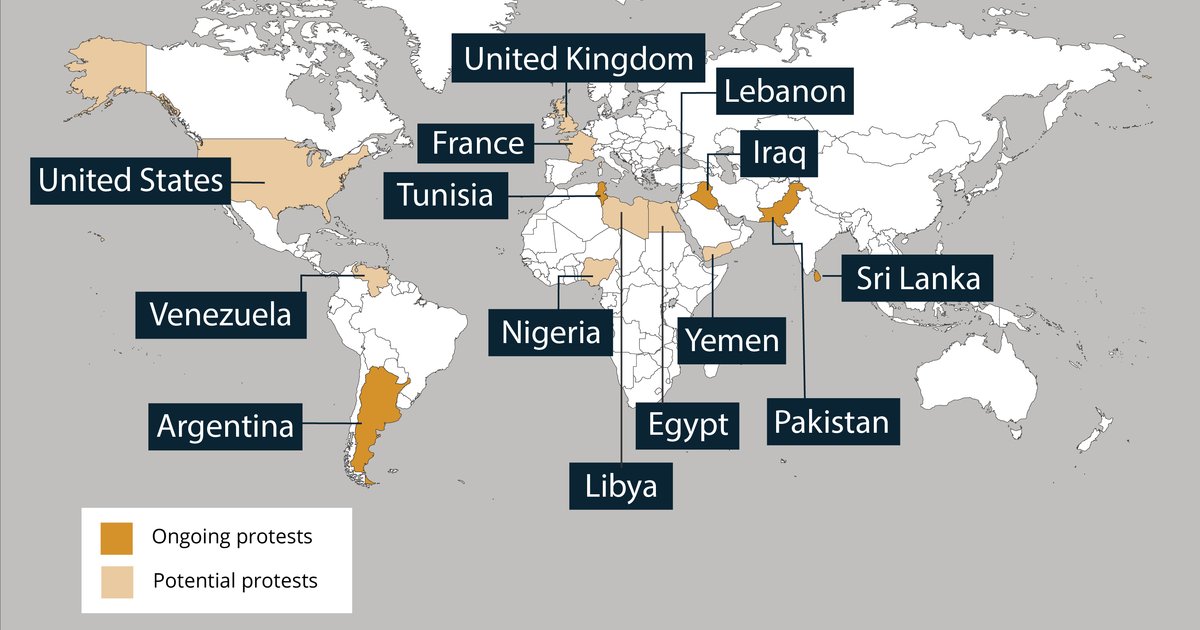
Global fears are mounting over worsening economic crises, with recent reports showing that many countries are facing economic challenges that could destabilize political systems. In light of these circumstances, attention is turning to governments and decision-makers to effectively address these crises.
These crises include rising inflation rates, increasing unemployment, and declining economic growth. These factors have significantly impacted citizens' lives, leading to a surge in protests and demands for improved economic conditions.
Details of the Situation
In many countries, financial markets have experienced sharp fluctuations, increasing uncertainty among investors. For instance, some European nations have recorded a steep decline in stock markets, affecting investor confidence in the economy. Additionally, rising energy and food prices have exacerbated the economic situation.
In the United States, recent economic data has shown a decline in growth, prompting the Federal Reserve to reconsider its monetary policy. Meanwhile, in countries like Turkey, economic crises have led to a depreciation of the lira, increasing pressure on the government.
Background & Context
The roots of these economic crises stem from several factors, including the repercussions of the COVID-19 pandemic, which disrupted global supply chains, as well as geopolitical conflicts that have driven up energy prices. Furthermore, the monetary policies implemented in many countries have proven insufficient to tackle these challenges.
Historically, the world has witnessed numerous economic crises that resulted in significant political changes. For example, the global financial crisis in 2008 led to radical changes in many governments, highlighting the importance of effectively addressing economic crises.
Impact & Consequences
The repercussions of economic crises extend beyond national borders, affecting regional and global stability. These crises may lead to increased social and political tensions, threatening security and stability in many areas. Moreover, countries experiencing economic crises may be more susceptible to external interventions.
Additionally, economic crises can lead to a rise in corruption and widen the gap between social classes, increasing discontent among citizens. Therefore, addressing these crises requires comprehensive strategies that consider economic, social, and political dimensions.
Regional Significance
In the Arab region, many countries are directly affected by global economic crises. Some Arab nations, such as Lebanon and Syria, have faced severe economic crises that have deteriorated living conditions. Furthermore, rising food and energy prices may increase pressure on Arab governments, necessitating urgent measures to protect citizens.
These conditions require a swift response from Arab governments, which must work to enhance economic and social stability. Regional and international cooperation will also be essential to effectively confront these challenges.