Global military spending saw a significant increase for the eleventh consecutive year in 2025, with governments spending a total of $2.887 trillion on ships, aircraft, missiles, and other weapons, according to new data from the Stockholm International Peace Research Institute (SIPRI). This figure represents the highest level of military spending ever recorded.
Xiao Liang, a researcher in SIPRI's military expenditure and arms production program, stated that this increase reflects countries' reactions to ongoing wars, tensions, and geopolitical uncertainties. The conflicts in Ukraine and Gaza continued into 2025, while disputes such as the war in Sudan contributed to global instability. As these crises persist, this trend is likely to continue into 2026 and beyond.
Details of the Event
The bulk of the global increase in military spending in 2025 was driven by Europe, where spending rose by 14% to reach $864 billion. The comprehensive Russian invasion of Ukraine in early 2022 altered how European nations perceive their security. Many European governments fear that Russia poses a broader threat beyond Ukraine, prompting European countries, especially NATO members, to boost defense spending to strengthen their militaries and deter further aggression.
Liang noted that this is the largest driver of the increase. In recent years, spending by Russia and Ukraine has been the main factor in Europe. However, the focus has shifted towards Central and Western European countries, where their plans for armament and spending are beginning to materialize. These nations recorded the highest annual growth since the end of the Cold War last year.
Context and Background
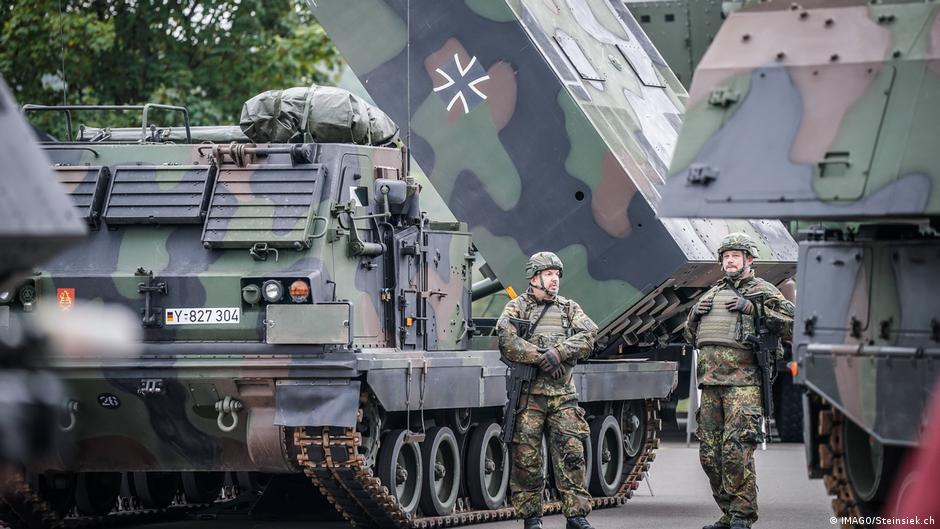
For instance, Spain's defense budget jumped by 50%, while Poland's budget increased by 23% and Italy's by 20%. Germany emerged as the largest military spender in 2025, with its defense budget rising by 24% to $114 billion, making it the fourth largest military spender in the world. For the first time since 1990, Germany's military spending exceeded the NATO guideline of 2% of GDP, reaching 2.3%.
To accommodate this increase, the German parliament altered its financial rules in 2025, allowing military spending exceeding 1% of GDP to be exempt from Germany's strict debt rule, enabling the government to borrow more to fund defense increases.
Implications and Impact
Despite the rise in German military spending, Liang pointed out that Germany's military capabilities are not increasing at the same pace as the figure. However, in the long term, Germany is becoming more powerful and militarily independent. The rise in military spending in Germany also reflects uncertainty regarding future security guarantees from the United States, as the German government, like its NATO allies, seeks to reduce its dependence on the U.S.
In contrast, the United States spent less on its military, with spending at $954 billion in 2025, a 7.5% decrease from the previous year. The primary reason for this decline is the U.S. Congress's failure to approve new military aid for Ukraine, unlike in the previous three years. However, forecasts suggest that this trend may change with the new budget for 2026 approved by Congress, indicating a significant increase in spending.
Impact on the Arab Region
In the Arab region, this increase in global military spending may affect defense and security strategies. As tensions in the Middle East escalate, Arab countries may feel the need to enhance their military capabilities to address growing security challenges. Additionally, the rise in military spending may impact public budgets, potentially leading to cuts in social services and development.
In conclusion, this increasing trend in military spending indicates a significant shift in how countries perceive their security, which may lead to heightened tensions in international relations.