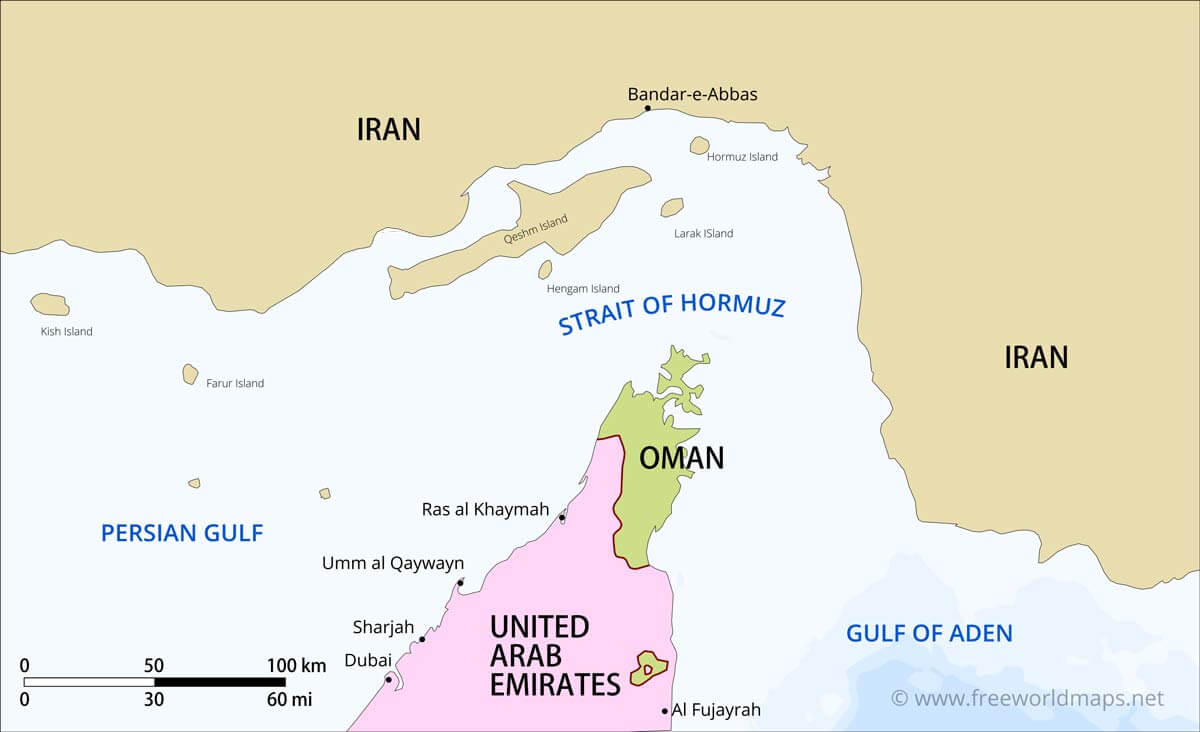
Jared Cohen, Global Affairs Director at Goldman Sachs, disclosed that Gulf countries are searching for alternatives to export oil and gas away from the Hormuz Strait, amid growing fears of its potential future closure. These remarks come at a time when bankers and analysts warn that significant Gulf investments in North America and Europe may be at risk due to the repercussions of the U.S.-Israeli war on Iran.
In an interview with CNBC's "Squawk Box," Cohen noted that he recently returned from a tour of several Gulf countries, where he listened to influential figures who confirmed that maritime traffic in the Hormuz Strait is unlikely to return to its pre-war normalcy, even in the long term.
Details of the Situation
Cohen explained that there is increasing concern in the Middle East regarding Iran's ability to control the Hormuz Strait, through which approximately 20% of the world's oil and natural gas supplies pass. He emphasized that the current situation requires Gulf countries to treat the matter as if Iran possesses a "nuclear weapon" represented by its ability to close the strait at will.
He added that unless the Iranian regime completely collapses, which he believes is unlikely, the Hormuz Strait will not return to its previous state. Although maritime traffic may resume, Iranian control over the strait will persist, leading to sustained high energy prices for a period that could extend for months or even years.
Background & Context
The Gulf states are among the largest producers of oil and gas in the world, with their economies heavily reliant on energy exports. As tensions in the region escalate, these countries have begun to reassess their investment strategies. Cohen pointed out that Gulf states are trying to buy time to find alternative outlets for their exports, particularly through the Red Sea or the Arabian Sea.
In this context, the Financial Times reported that executing deals worth approximately $106 billion in North America and Europe depends on the flow of investments from the Gulf, which now faces significant risks due to the ongoing conflict with Iran.
Impact & Consequences
Reports predict that these developments will affect Gulf investments, as Gulf investors injected around $120 billion into foreign deals last year. However, Gulf sovereign funds have begun to reassess their investment strategies, which may lead to a temporary suspension of some investments to prioritize the local economy.
A Gulf official also indicated that the Gulf Cooperation Council countries are reevaluating their current and future investment commitments to address the economic repercussions of the war.
Regional Significance
These developments are of great importance to the Arab region, as the stability of energy prices and securing export routes are fundamental factors affecting the Arab economy as a whole. Under the current circumstances, Gulf countries may face additional challenges in attracting foreign investments.
In conclusion, these events highlight the urgent need for Gulf states to develop new strategies that ensure the sustainability of their energy exports and mitigate risks associated with regional conflicts.