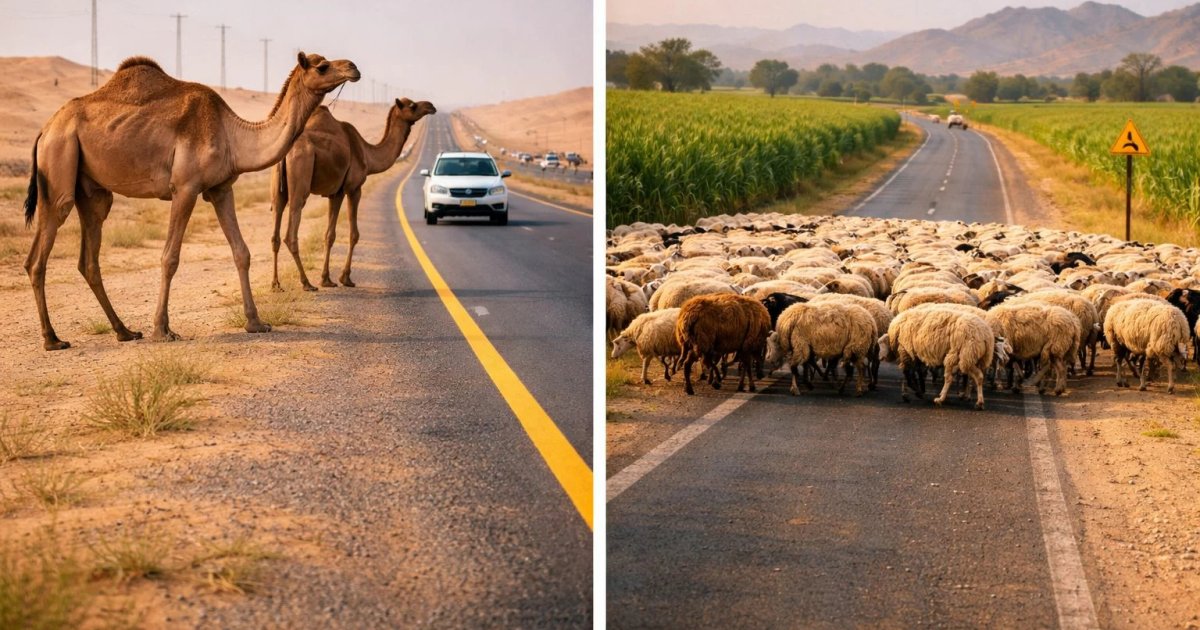
The Governor of Hail, Prince Abdulaziz bin Saad Al Saud, has issued a directive mandating that livestock pens be located at least 3 kilometers away from public, agricultural, and desert roads. This decision aims to reduce traffic accidents caused by sudden camel crossings, which are one of the main sources of traffic danger in the region.
This step comes as a direct response to the recurring traffic accidents witnessed on open roads, where camels unexpectedly cross vehicle paths without warning, increasing the likelihood of serious accidents and multiplying human and material losses, especially on desert and agricultural roads that record the highest rates of such incidents.
Details of the Incident
Data from King Abdulaziz City for Science and Technology indicates that camels account for approximately 97% of traffic accidents related to animals in the Kingdom. The estimated number of camels in the Kingdom exceeds 500,000 heads, moving in open environments that intersect with road networks. Furthermore, data shows that more than 90% of these accidents occur during nighttime hours, due to poor visibility and the absence of effective barriers in some locations.
Indicators confirm that the problem is specifically concentrated on camels, due to their size and movement patterns, making collisions with them more dangerous compared to other animals. These accidents lead to severe injuries and significant losses, in a recurring pattern linked to their presence near roads without adequate regulation.
Background & Context
Traffic accidents caused by camel crossings are an increasing issue in the Kingdom, contributing to rising traffic accident rates. Previous studies have shown that the lack of regulation in grazing areas and the absence of sufficient barriers on roads heighten the risk of collisions.
The new decision aims to regulate the relationship between grazing activities and the road network by distancing danger zones from traffic movement, thereby reducing the points of intersection between vehicles and livestock. This step is part of a comprehensive approach to improve traffic safety in the region.
Impact & Consequences
This decision is expected to significantly reduce traffic accidents, enhancing the safety of both drivers and pedestrians. It also reflects the government's commitment to improving road infrastructure and providing a safe environment for travel.
This decision is a positive step towards enhancing traffic safety in the Kingdom and reflects the government's efforts to address issues related to traffic accidents. It also opens the door for further studies and research on how to improve the management of livestock movement in areas close to roads.
Regional Significance
This decision serves as a model for countries in the region facing similar challenges in managing livestock movement and its impact on traffic safety. This approach could inspire other nations to implement similar policies aimed at reducing traffic accidents related to animals.
In conclusion, this decision is an important step towards improving traffic safety in the Kingdom and reflects the government's commitment to protecting lives and property.