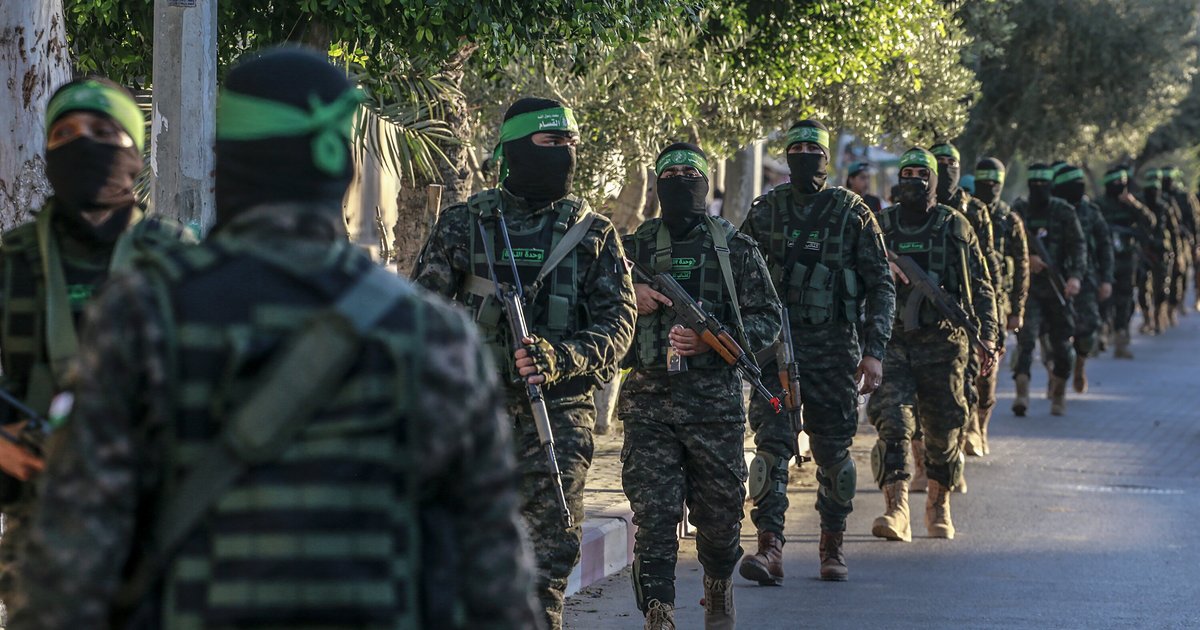
In a provocative statement, the spokesperson for Hamas's armed wing asserted that calls for disarmament from certain entities are not considered acceptable. He clarified that these calls contradict the Palestinian people's right to resist and defend themselves against occupation.
The spokesperson pointed out that weapons are a fundamental means of confronting the challenges faced by Palestinians, especially under the difficult circumstances they endure. He affirmed that the movement will not relinquish its right to resistance, and any attempts to disarm will be met with rejection.
Details of the Event
These remarks come at a sensitive time, as international pressures on Palestinian factions to halt hostilities are increasing. Recently, there have been calls from some Western countries, seeking to achieve peace in the region, advocating for the disarmament of Palestinian factions as a prerequisite for peace.
In this context, the spokesperson emphasized that Hamas views these calls as an attempt to undermine the rights of Palestinians. He explained that weapons are not merely tools but symbols of dignity and resistance against occupation.
Background & Context
Historically, the issue of arms in Palestine has been contentious. While some parties see disarmament as a pathway to peace, Palestinians regard it as part of their legitimate rights. Over the past years, there have been numerous attempts to disarm factions, but these have consistently been met with rejection from Hamas and other groups.
These statements coincide with escalating tensions in the region, as Israeli forces continue their military operations in the West Bank and Gaza Strip, complicating the situation and making any form of peace difficult to achieve.
Impact & Consequences
The continued calls for disarmament could exacerbate conditions in the region, as these demands may be perceived as provocations by Palestinian factions. Should pressures persist, we might witness an escalation in military operations by Hamas and other groups.
Additionally, these statements could affect the relations between Hamas and countries advocating for disarmament, potentially increasing the movement's isolation on the international stage. At the same time, this stance may bolster Hamas's internal position, as these calls will be seen as support for its resistance narrative.
Regional Significance
This issue holds significant importance for Arab countries, as any escalation in the Israeli-Palestinian conflict could impact the stability of the entire region. Arab nations are closely monitoring developments, especially amid current tensions in relations between some Arab states and Israel.
Hamas's rejection of disarmament calls may enhance its standing in the eyes of many Palestinians, potentially leading to increased popular support. Furthermore, this position could complicate mediation efforts by some Arab countries aimed at achieving peace in the region.
In conclusion, Hamas's position remains steadfast in defending Palestinian rights, viewing arms as an integral part of these rights. As international pressures continue, the question remains about how the situation will evolve in the future.