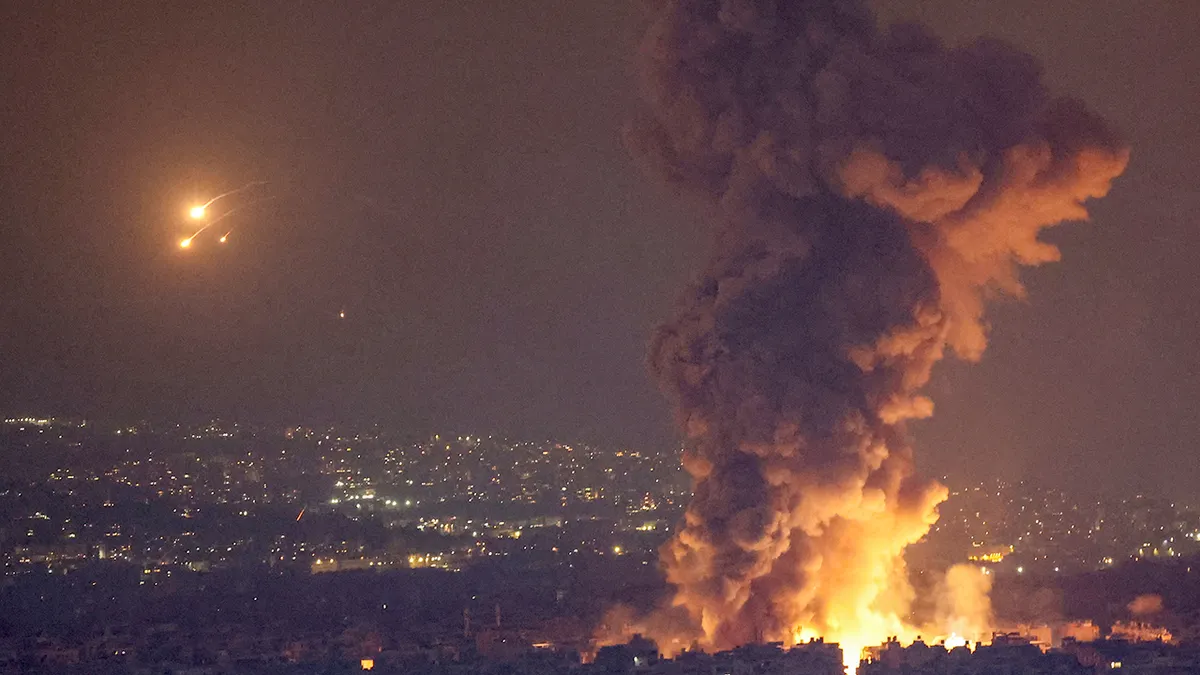
Hezbollah, the Lebanese militant group, has announced the execution of a rocket attack targeting an Israeli army gathering in the Sidon area of southern Lebanon. This attack is part of the escalating tensions between the two parties and reflects the ongoing conflict in the region.
This operation is considered part of a series of attacks carried out by Hezbollah against Israeli positions, as the group seeks to assert its ability to respond to any aggressions. The party's statement indicated that the shelling was a response to the continuous violations by the Israeli army.
Details of the Incident
According to local sources, the shelling targeted a military gathering of the Israeli army in Sidon, resulting in material damage. No injuries among Israeli soldiers have been reported so far. This operation follows a series of increasing tensions in the region, where the Lebanese-Israeli border has seen intensified military movements from both sides.
Hezbollah, which is one of the prominent armed factions in Lebanon, has confirmed on several occasions its readiness to respond to any aggressions. It has pointed out that this attack falls within its legitimate right to defend Lebanese territory against any incursions.
Background & Context
Historically, the Lebanese-Israeli border has witnessed numerous armed conflicts, with Hezbollah being one of the main factions resisting Israeli occupation. Since the 2006 July War, tensions between the two sides have increased, leading to a continuous escalation in military operations.
In recent years, Israeli violations of Lebanese airspace have increased, prompting Hezbollah to take military action in response to these violations. Additionally, the tense regional situation, especially with the events in Syria, has affected the dynamics of the conflict in the area.
Impact & Consequences
These military operations could lead to further escalation in the conflict between Hezbollah and the Israeli army, increasing the likelihood of a new war in the region. The military escalation may also affect stability in Lebanon, which is already suffering from economic and political crises.
Moreover, the continuation of these operations could open the door for international interventions, as some countries may seek to mediate to calm the situation. However, any intervention may face resistance from the involved parties, complicating the situation further.
Regional Significance
The rising tensions between Hezbollah and the Israeli army do not only affect Lebanon but extend their impact to neighboring Arab countries. The ongoing conflict could lead to political and security repercussions in the region, especially amid the current crises facing some Arab nations.
These events may also affect the relationships between Arab countries and Israel, potentially increasing hostility towards the occupation and prompting some countries to reassess their policies towards Israel. Under these circumstances, the situation in the region remains fragile and requires intensive diplomatic efforts to achieve peace and stability.
The recent shelling by Hezbollah reflects the escalating tensions in the region and indicates that the conflict between the involved parties is still far from resolution. The current situation requires careful analysis and continuous monitoring by the international community to ensure that conditions do not worsen.