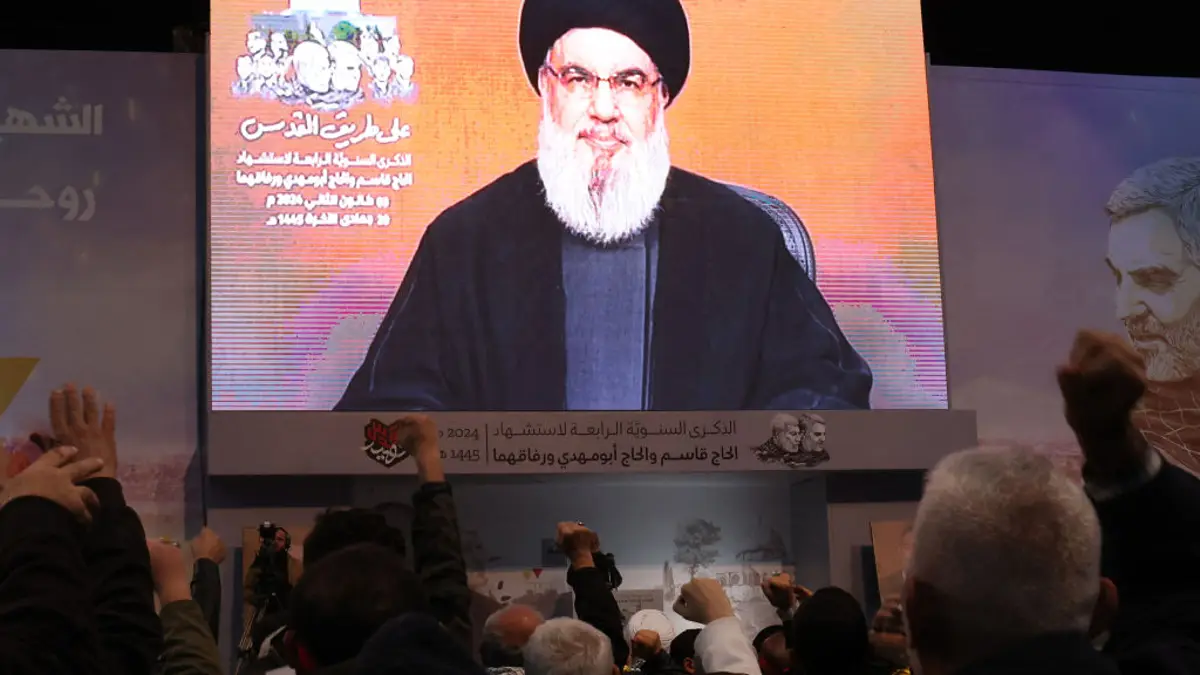
Hezbollah has announced the execution of a drone attack targeting the Israeli Nasherim military base, located southeast of Haifa, in a move reflecting the escalating tensions between the party and Israel. The attack, carried out by a swarm of kamikaze drones, comes at a sensitive time when the region is witnessing increasing tensions.
The Nasherim base is considered one of the important military bases in northern Israel, playing a vital role in Israeli military operations. Hezbollah indicated that this attack is a response to repeated Israeli aggressions against Lebanese territory, reflecting the intensifying conflict between the two parties.
Details of the Attack
According to reports, the attack was executed early this morning, with the drones directly targeting the base. So far, there have been no reports of injuries or significant damage at the base, but the party confirmed that the operation was successful and that it will continue to carry out such attacks if Israeli aggressions persist.
This attack is part of Hezbollah's strategy to enhance its military and technical capabilities, as the use of drones is considered part of the evolving modern combat methods adopted by the party. Reports have shown that Hezbollah has significantly developed its capabilities in this area over recent years.
Background & Context
Historically, the relationship between Hezbollah and Israel has been marked by ongoing tensions, especially following the 2006 war that led to widespread destruction in Lebanon. Since then, Hezbollah has continued to bolster its military capabilities, including the development of a stockpile of advanced weapons and drones.
These events are part of a broader conflict in the region, where regional and international interests intersect. The recent escalation comes amid the political and economic crises facing Lebanon, further complicating the landscape.
Impact & Consequences
This attack could have significant implications for regional security, potentially leading to greater military escalation between Hezbollah and Israel. Additionally, these events may affect the relationships between Arab countries and Israel, especially in light of the normalization attempts witnessed in the region in recent years.
Moreover, this attack may increase tensions in Lebanon, where the party faces internal pressures due to economic and political crises. These pressures could affect Hezbollah's ability to continue executing complex military operations.
Regional Significance
These events signal a rise in tensions in the region, which could impact stability in neighboring countries. Amid ongoing crises in Syria and Iraq, an escalation of the conflict between Hezbollah and Israel could exacerbate humanitarian conditions in the region.
This attack may also influence Arab countries' positions on the Israeli-Palestinian conflict, potentially increasing the divide between countries seeking normalization with Israel and those supporting resistance against the occupation.
In conclusion, the situation in the region remains tense, and this attack reflects the ongoing challenges faced by the various parties. As escalation continues, the hope for peaceful solutions remains elusive.