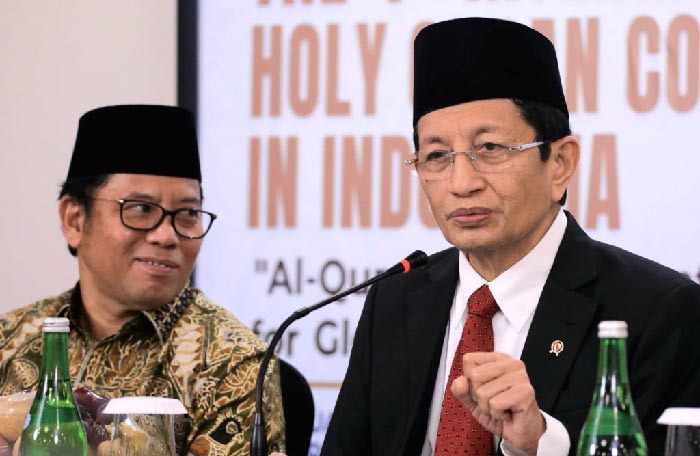
Indonesian Minister of Religious Affairs Nasseruddin Umar stated during a press conference in Sigi that religions play a pivotal role in enhancing moral values and national unity in Indonesia. He explained that cooperation among all segments of society, including the government, parliament, and religious leaders, is fundamental for achieving sustainable development.
Umar noted that the challenges facing Indonesian society require everyone to adapt and innovate while upholding the high values that distinguish the nation. He emphasized the importance of the role individuals play in maintaining social harmony, stressing that religions are not merely personal beliefs but a collective responsibility to preserve social peace.
Event Details
In his remarks, the minister mentioned that the concept of tolerance should go beyond mere acceptance of differences; it must transform into an active commitment that respects and protects religious and cultural diversity. He also highlighted the significance of celebrating differences as part of national identity, citing the occasion of the Fifth National Easter that reflects this diversity.
He clarified that Indonesia, as a multi-religious nation, should serve as a model for peaceful coexistence, where there is no room for intolerance or discrimination. He affirmed the necessity for every citizen, regardless of their religious or ethnic background, to feel safe and respected.
Background & Context
Indonesia is the largest Muslim-majority country in terms of population, with over 270 million people from various religions and cultures. Historically, the country has experienced periods of religious tensions, making the promotion of tolerance and national unity essential for maintaining stability.
Indonesia was founded on the principles of Pancasila, which promote values of humanity and social justice, reflecting the country's commitment to diversity and mutual respect. These principles have contributed to building a cohesive society despite challenges.
Impact & Consequences
The minister's statements come at a sensitive time, as calls for enhancing tolerance grow amid increasing global tensions. Promoting values of tolerance and cooperation can have a positive impact on social and economic stability in Indonesia.
These calls also reflect the need for effective strategies to address social challenges such as poverty and discrimination by fostering cooperation among different religions and communities.
Regional Significance
Indonesia's experience in promoting religious tolerance serves as a model that many Arab countries can benefit from, as they face similar challenges in coexistence among religions and cultures. Enhancing interfaith dialogue can contribute to building more stable and cohesive societies.
In conclusion, the Indonesian Minister of Religious Affairs' calls serve as a reminder of the importance of unity and cooperation in facing challenges, reflecting a forward-looking vision that transcends religious and cultural boundaries.