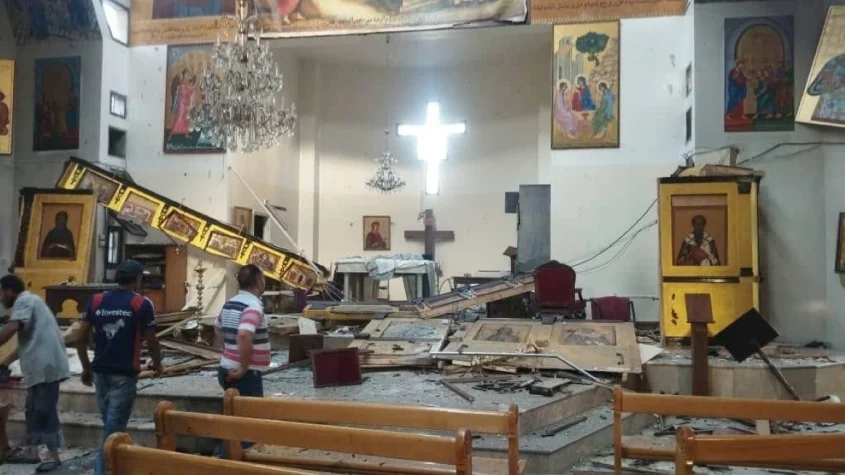
The Yarmouk massacre in Damascus is considered one of the most tragic incidents in the history of the Syrian conflict, where the blood of victims from both Syrians and Palestinians was mixed in a horrific act of mass murder. This massacre, which occurred in 2013, continues to evoke pain and painful memories in the hearts of the victims' families.
As part of the ongoing investigations, Amjad Youssef, the main suspect in the massacre, was arrested in the city of Hama. This arrest has raised new hopes among families in both Syria and Palestine for uncovering the truth about this horrific crime.
Details of the Incident
According to information gathered by the Action Group for Palestinians of Syria, the number of victims of the massacre reached 288 civilians, including Palestinian refugees. Some victims have been identified, such as Waseem Omar Sayyam, Saeed Ahmed Khattab, and Louay Al-Kubra. Estimates suggest that between 40 and 50 civilians were killed at a single site, with indications that there may be larger numbers that have not yet been documented.
The group documented the killing of 58 Palestinian refugees from the Yarmouk neighborhood, including 7 women, in addition to 21 cases of field executions. In documented testimonies, a Palestinian woman lost her entire family, which included 11 members, including children and infants.
Background & Context
The events of the massacre date back to April 16, 2013, when Syrian regime forces killed 41 civilians and disposed of their bodies in a large pit. Human bones were later found in the area, reflecting the atrocity of the crime. On April 27, 2022, the British newspaper The Guardian published a video showing the killing of several civilians by the military intelligence unit known as Branch 227.
Investigations into this massacre are ongoing, but the number of Palestinian victims has not yet been officially confirmed. However, both Syrians and Palestinians share demands for the truth to be revealed after 13 years of suffering.
Impact & Consequences
The arrest of Amjad Youssef represents an important step towards achieving transitional justice, as stated by Syria's representative to the United Nations, Ibrahim Alabi. He called on the international community to hand over fugitive criminals to Syria to hold them accountable for their crimes.
This massacre is considered one of the most heinous acts of mass murder in the new millennium, highlighting the urgent need for justice for the victims and their families. The continuation of investigations may help restore hope to families who lost their loved ones in these tragic events.
Regional Significance
The Yarmouk massacre illustrates how humanitarian crises in the region can overlap, as Palestinians and Syrians share their pain and suffering. These events remind us of the importance of Arab solidarity in the face of injustice and aggression.
In conclusion, the Yarmouk massacre remains a landmark in the history of the Syrian conflict, and calls continue for the truth to be revealed and for those responsible for this crime to be held accountable. Achieving justice is not merely a humanitarian demand but a necessity for building a better future for the region.