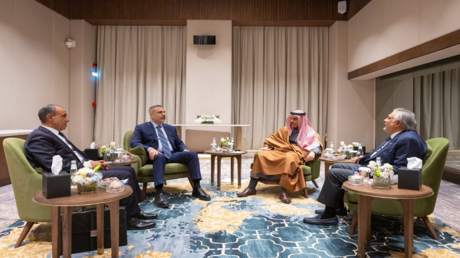
Pakistani Foreign Minister Muhammad Ishaq Dar held phone discussions with Iranian counterpart Abbas Araghchi on the eve of a crucial meeting in Islamabad, which will include the foreign ministers of Egypt, Saudi Arabia, and Turkey. The meeting aims to explore ways to ease tensions in the region amid escalating conflicts.
These discussions come at a sensitive time as the participating countries seek to enhance regional cooperation and alleviate the conflicts affecting security and stability in the Middle East. Pakistan has expressed its desire to play a mediating role among various parties, reflecting a positive trend towards strengthening relations among Islamic nations.
Details of the Event
The anticipated meeting in Islamabad represents a significant step in the efforts to achieve stability in the region. The participation of Egypt, Saudi Arabia, and Turkey underscores the importance of this event, as these countries are considered major powers in the Islamic world. The meeting is expected to address multiple issues, including the crises in Syria and Yemen, as well as the tensions between Iran and Arab nations.
Foreign Minister Muhammad Ishaq Dar, who assumed office earlier this year, is striving to enhance his country's role in regional and international issues. He has previously emphasized the importance of dialogue and cooperation among Islamic countries to achieve peace and stability.
Background & Context
The region is experiencing increasing tensions due to ongoing conflicts and political crises. The Syria crisis, for instance, has exacerbated humanitarian conditions and increased the number of displaced individuals, while the war in Yemen continues to impact regional stability. Additionally, relations between Iran and Arab nations are notably strained, heightening the need for effective diplomatic initiatives.
In this context, Pakistan is considered a key player, as it maintains good relations with both Iran and Arab nations. Islamabad has attempted in recent years to strengthen its role as a mediator in regional disputes, aligning with its foreign policy that focuses on regional cooperation.
Impact & Consequences
If the meeting in Islamabad succeeds in achieving tangible progress towards de-escalation, it could help alleviate tensions in the region. It may also lead to enhanced cooperation among Islamic countries in various fields, such as security and economy.
Conversely, if the meeting fails to yield positive results, it could exacerbate existing conditions and heighten ongoing conflicts. Therefore, attention is focused on the outcomes of this meeting and what concrete steps it may lead to towards peace.
Regional Significance
The outcomes of the meeting in Islamabad are of great importance to the Arab region, as they could directly impact the situations in Syria, Yemen, and Iraq. If agreements are reached among the involved parties, it may contribute to improving humanitarian conditions and alleviating the suffering of civilians.
Furthermore, enhancing cooperation among Islamic nations could open new avenues for economic and political collaboration, benefiting all parties involved. Amid the significant challenges facing the region, hope remains pinned on diplomacy as a means to achieve peace and stability.