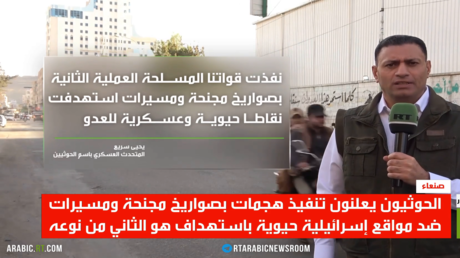
The Houthis have launched new attacks targeting vital military sites in southern Israel, utilizing cruise missiles and drones. These attacks come at a time coinciding with escalations from Iran and Hezbollah, further complicating the security situation in the region.
These assaults are part of the Houthis' strategy to enhance their military strength and demonstrate their capability to target distant objectives, reflecting a notable advancement in their military capabilities. The Houthis have indicated that these operations are a response to what they describe as Israeli aggression against the Palestinian people, highlighting increasing tensions in the region.
Details of the Incident
The Houthi group announced through its media channels that it used cruise missiles and drones in these attacks, targeting vital military sites in southern Israel. Reports have not disclosed the extent of the damage or casualties resulting from these attacks, but the military escalation reflects a state of instability in the region.
These attacks coincided with further escalations from Iran and Hezbollah, where Iran issued threats against Israel, while Hezbollah launched rockets towards Israeli positions in the northern part of the country. This dynamic indicates that the situation in the region may be heading towards further escalation, raising concerns in international circles.
Background & Context
The Houthi group is considered part of the broader regional conflict between Iran and its allies on one side, and countries like Israel and Saudi Arabia on the other. Since the onset of the war in Yemen, the Houthis have significantly developed their military capabilities, enabling them to carry out complex military operations.
Historically, the region has witnessed rising tensions between Iran and Israel, with Israel accusing Iran of supporting armed groups in the area, including the Houthis. This regional conflict reflects the geopolitical tensions that overshadow security and stability in the Middle East.
Impact & Consequences
These attacks are seen as an indicator of a potential escalation in the conflict between the Houthis and Israel, which may lead to military responses from the Israeli side. If these operations continue, we may witness a greater military escalation, complicating the security situation in the region.
Additionally, these attacks could affect relations between Arab countries and Israel, especially in light of recent developments in the normalization process. These events may lead to a setback in peace efforts and an increase in regional divisions.
Regional Significance
These attacks raise significant concerns in Arab countries, as they may lead to escalated conflicts in the region. The military escalation could impact regional security and increase the number of displaced persons and refugees.
At the same time, these events may lead to increased Arab support for the Palestinian cause, as many Arabs view the escalation against Israel as part of defending Palestinian rights. This situation may revive discussions about Arab unity in the face of regional challenges.
In conclusion, these attacks represent a new development in the regional conflict, necessitating urgent action from the international community to contain tensions and prevent military escalation.