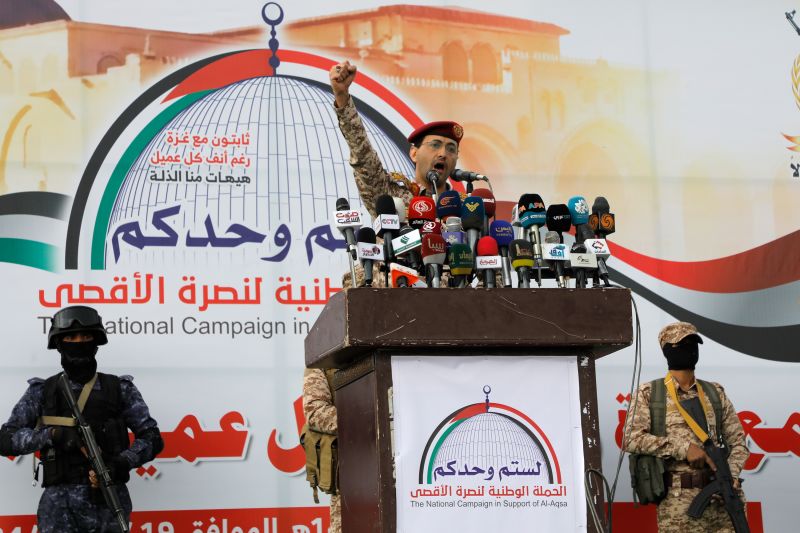
In a new escalation, the Houthi group in Yemen announced on Saturday, April 4, the execution of military operations targeting Israel's Ben Gurion Airport, along with other military sites, using ballistic missiles and drones. The Houthi military spokesperson, Yahya Saree, confirmed that these operations were carried out in cooperation with the Iranian Revolutionary Guards and Lebanese Hezbollah, stating that the mission "achieved its objectives."
Despite the lack of official confirmation from Israeli authorities regarding these attacks, the Houthis began targeting Israel on March 28 as part of their support for their allies in the region, including Iran, Iraq, Lebanon, and Palestine, at a time when tensions in the Middle East are escalating.
Details of the Event
These operations are part of the Houthis' strategy to enhance their military presence in the region, having seized control of the capital Sana'a and most of northern Yemen since 2014. The Houthis indicated that these operations are in support of the resistance against what they perceive as Israeli and American aggression in the region.
These developments coincide with rising tensions in the Middle East, where the region has witnessed an escalation in armed conflicts in recent years, particularly between Iran and its allies on one side, and the United States and Israel on the other. The Houthi military operations against Israel serve as a clear message from the Houthis that they are part of the resistance axis aiming to confront American and Israeli influence in the region.
Background & Context
The Houthi group was established in Yemen in the early 1990s but gained significant strength and influence following the outbreak of the civil war in Yemen in 2014. Since then, the group has been heavily supported by Iran, which provides military and logistical assistance. This support has enhanced the Houthis' military capabilities, enabling them to conduct complex operations like those recently announced.
In recent years, the relationship between the Houthis and Iran has evolved significantly, with the Houthis becoming part of Iran's regional strategy aimed at enhancing its influence in the Middle East. This dynamic has contributed to rising tensions between Iran on one side and the United States and its allies on the other, complicating the situation in the region.
Impact & Consequences
These Houthi military operations represent a serious escalation in the ongoing conflict in the Middle East, potentially leading to military responses from Israel or the United States. These developments could affect regional security, possibly resulting in greater escalation in armed conflicts in the area, increasing civilian suffering and complicating peace efforts.
Additionally, these operations may impact relations between Arab states and Iran, prompting some countries to reassess their policies towards Iran and its allies in the region. Major powers, such as the United States and Russia, are expected to closely monitor these developments, as they may influence their strategies in the region.
Regional Significance
These events come at a sensitive time for the Arab region, where many countries are suffering from internal conflicts and political tensions. The Houthi military operations against Israel could increase tensions between Arab states and Iran, potentially affecting efforts to achieve stability in the region.
Moreover, these operations may strengthen the Houthis' position domestically in Yemen, potentially exacerbating the conflict in Yemen and increasing the suffering of the Yemeni people, who are already enduring a severe humanitarian crisis. Under these circumstances, the hope for achieving peace and stability in the region remains elusive.