Tensions are escalating in the regional conflict involving Iran, the United States, and Israel, with the Houthi group playing an increasingly significant role. A new analysis explores potential scenarios for the Houthis' involvement and their impact on maritime security.
This paper provides an analytical reading of the Houthis' engagement in the ongoing war, where Iran adopts a diverse range of strategies to expand the scope of confrontation. By reviewing the 'multi-front pressure' strategy, Iran aims to transform battlefronts into simultaneous pressure tools.
Details of the Event
The paper seeks to dismantle the Iranian approach, where Houthi considerations intersect with local priorities and internal calculations. This variance in assessing the timing of engagement in the war reflects a relative conflict of wills within the group.
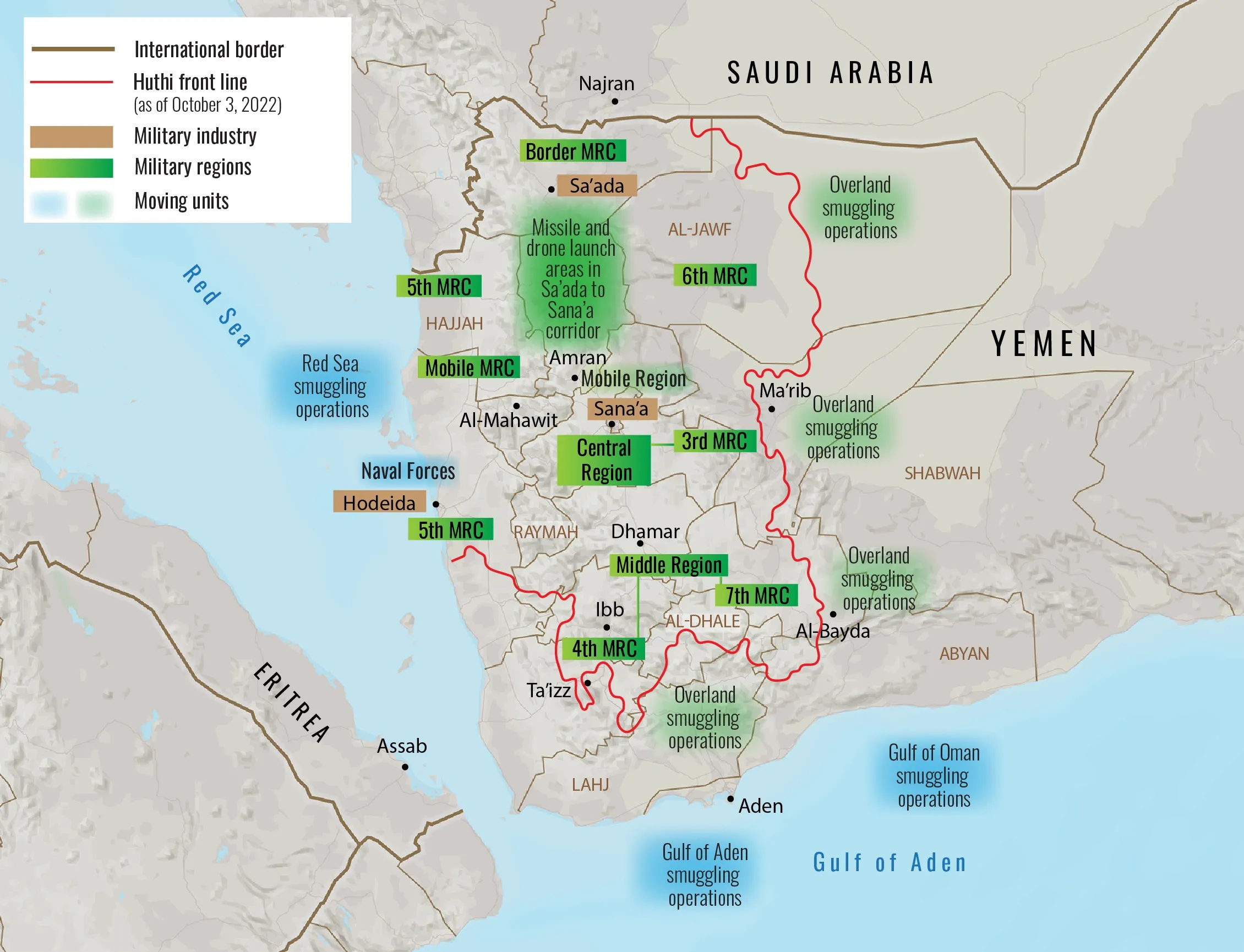
The analysis anticipates the potential strategic impact of the Houthis' role, particularly in the maritime domain, given their sensitive geographical location. The proposed scenarios detail the patterns of this role, its tools, and the limits of its influence, highlighting the implications of this engagement in the broader context of the regional conflict.
Background & Context
Since the outbreak of the war between Iran, the United States, and Israel on February 28, 2026, Tehran has turned to managing the confrontation through an intertwined matrix of strategies. Leading these strategies is the resilience and deterrence strategy, which relies on absorbing initial strikes and maintaining the cohesion of the domestic front.
This approach also includes the 'multi-front pressure' strategy, which allows for shifting the confrontation to multiple operational theaters, thereby distracting the adversary's capabilities and exhausting their defensive systems. This pattern of engagement reflects a complex role for these groups, extending to psychological pressure and the depletion of adversaries' defensive capabilities.
Impact & Consequences
The importance of the Houthis' role in the regional conflict is increasing, as their involvement raises questions about the nature of their relationship with Iran. Is it a complete dependency or a strategic partnership governed by mutual interests?
Joint operations, such as attacks on Tel Aviv and Haifa, demonstrate the level of operational coordination between the Houthis and Iran. Despite the modest military capabilities of these groups, they have succeeded in disrupting defense systems and shifting the confrontation to arenas that were not traditionally within the scope of direct engagement.
Regional Significance
The role of the Houthis represents a potential threat to regional and international interests, especially in the Red Sea. This threat extends beyond military dimensions to impact maritime security equations and the regional economy.
The risks are increasing for Red Sea basin countries, as Houthi operations could affect international trade flows. Furthermore, this role provides the Houthis with a dual leverage point, regionally against Iran's adversaries and locally in the context of their conflict with the Yemeni government.
In conclusion, the Houthis' engagement in the regional conflict reflects a shift in the nature of confrontation, moving from direct military scope to an extended impact on trade and energy flows, complicating containment pathways.