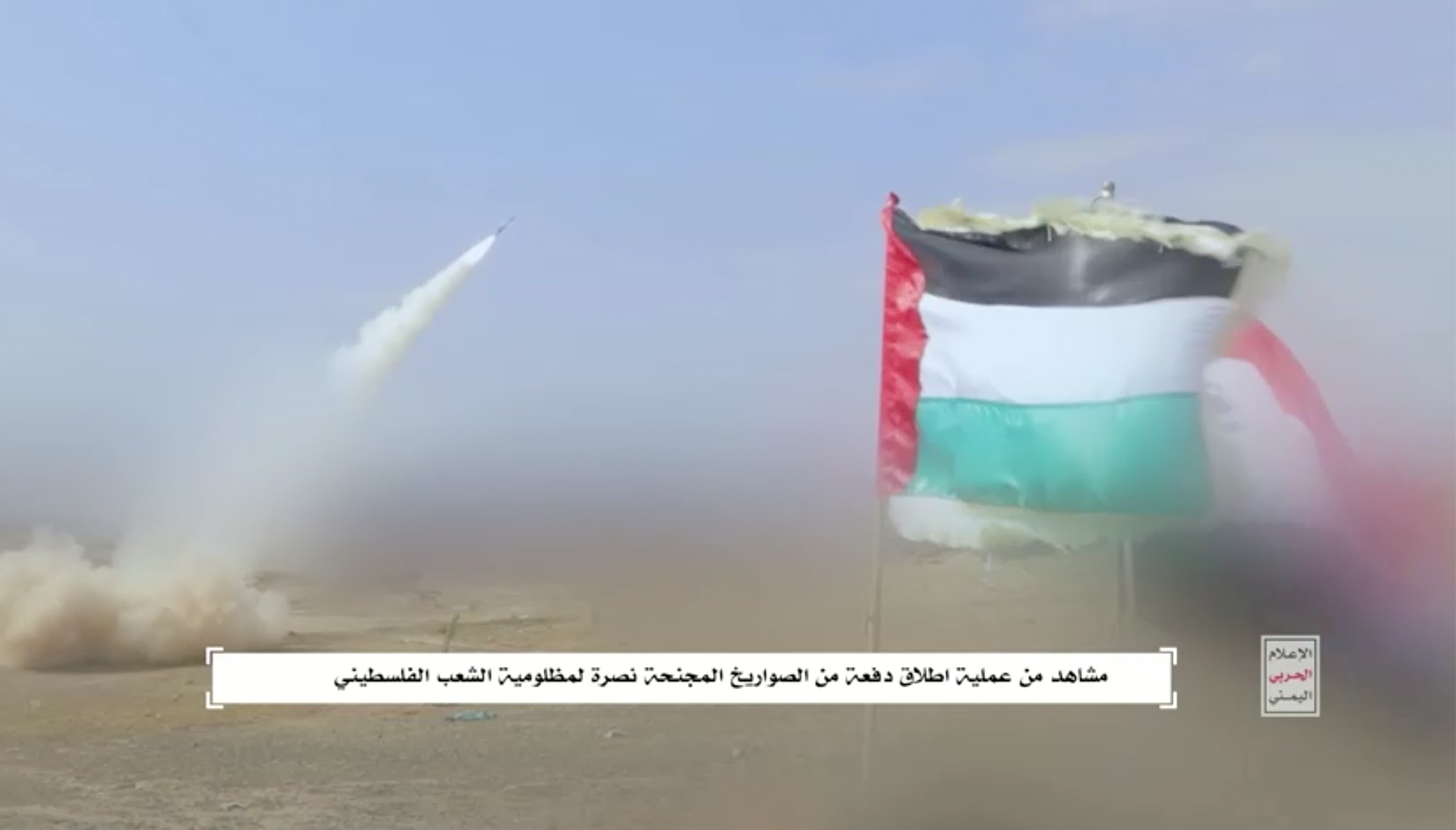
In a new escalation, the Houthis have declared that they launched missiles from Yemen towards Israeli territory, affirming their determination to continue military operations in support of Iran. These statements follow previous threats from the Houthis to engage in the conflict that has erupted due to Israeli-American attacks on Iran, reflecting the rising tensions in the region.
The Houthi military operations are framed as support for the Palestinian cause, as they have targeted Israel repeatedly between 2023 and 2025 amid the ongoing war in Gaza. The Houthis have indicated that they see themselves as part of the resistance axis that includes Iran and its allies in the region.
Details of the Incident
In recent days, the Houthis launched missiles towards Israel, marking a significant escalation in the regional conflict. This announcement comes at a sensitive time, as tensions between Israel and Iran are increasing, raising fears that this escalation could lead to a broader conflict in the region. The Houthis, who control large parts of Yemen, consider themselves part of the resistance against what they describe as Israeli and American aggression.
It is noteworthy that the Houthis have previously launched missiles at Israeli targets, but this time the operations are framed within the context of supporting Palestinian efforts against Israeli aggression in Gaza. The Houthis have confirmed that they will not hesitate to use their military power to support their allies in the region.
Context and Background
Historically, the region has witnessed numerous conflicts in which Iran and its allies have been involved. The Houthis, who belong to the Zaydi sect, have received significant support from Iran, making them part of the broader regional conflict between Iran and Saudi Arabia. Since the outbreak of the war in Yemen in 2015, the Houthis have become a major force in the conflict, complicating the security situation in the region.
In recent years, Houthi military operations against Israeli targets have increased, reflecting a shift in Houthi strategy that previously focused on the internal conflict in Yemen. This escalation comes at a time when the region is experiencing heightened tensions due to the conflict in Gaza, as the Houthis seek to bolster their position as defenders of the Palestinian cause.
Impact and Consequences
This escalation by the Houthis could exacerbate tensions in the region, as Israel may respond militarily, increasing the risk of a wider conflict. Additionally, this development could affect relations between Iran and its allies on one hand, and other Arab states on the other, especially those that adopt opposing stances towards Iranian presence in the region.
Moreover, this escalation may increase pressure on the internationally recognized Yemeni government, which faces significant challenges in controlling the security situation in the country. This situation could also impact peace efforts in Yemen, as the Houthis may exploit this escalation to strengthen their position in future negotiations.
Significance for the Arab Region
These events are of great importance to the Arab region, as they reflect the increasing tensions between different axes. The Houthis, through their escalation against Israel, aim to strengthen their position as a major force in the resistance axis, which may affect stability in the Gulf Arab states. This escalation could also provoke reactions from Arab countries that seek to achieve peace and stability in the region.
In conclusion, the situation in the region remains complex and volatile, with increasing tensions among various powers. The Houthis, through their military operations, send a strong message that they will not hesitate to use their power to support their allies, further complicating the regional landscape.