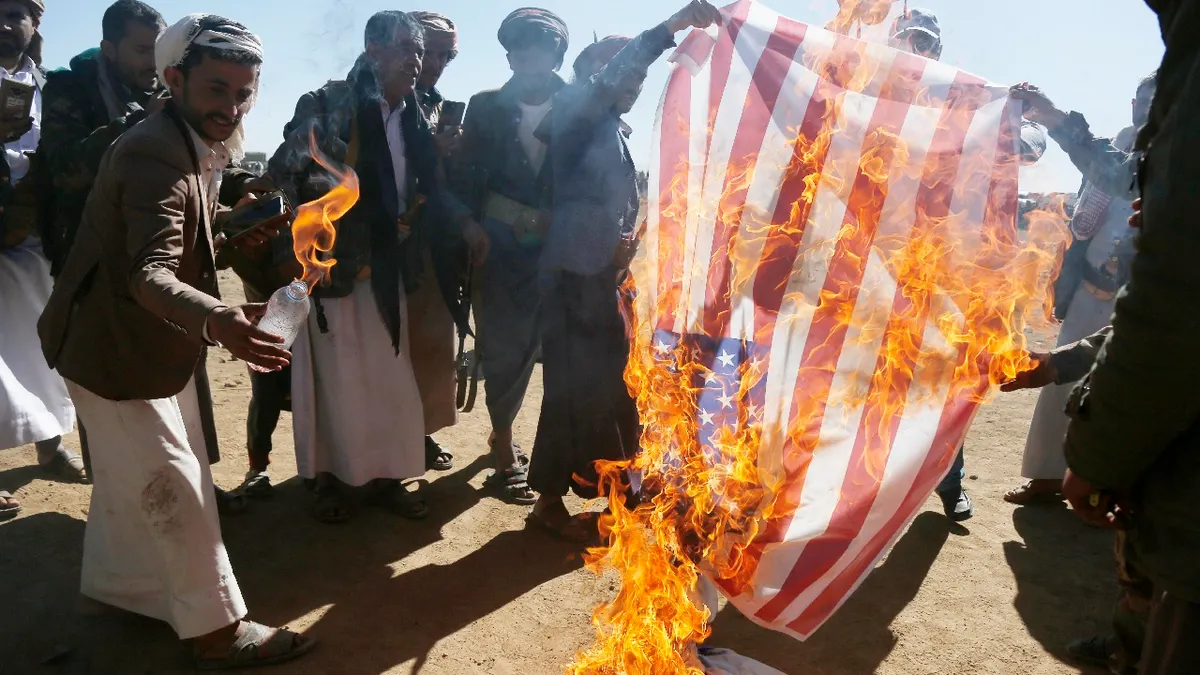
The Houthis in Yemen announced on Saturday, March 28, their readiness to launch new military operations, asserting that their recent attacks on Israel are considered a legitimate right in response to what they describe as American-Israeli aggression. This announcement comes at a sensitive time as the Middle East witnesses a rise in military and political tensions.
In an official statement, the Houthi Foreign Ministry confirmed that their military interventions are part of a broader regional strategy that includes Iran, Palestine, Iraq, and Lebanon. The Houthis accused the United States and Israel of supporting "Zionist plans" that threaten the stability of the region, calling on Islamic countries to unite to confront these threats.
Details of the Incident
Earlier on Saturday, the Houthis announced that they had launched ballistic missiles toward what they described as "sensitive military sites" in southern Israel. This attack is considered the first of its kind since Israel and the United States began a large-scale offensive against Iran on February 28. This escalation indicates a shift in the Houthis' strategy, who have controlled the capital Sana'a and most of northern Yemen since late 2014.
In contrast, the internationally recognized Yemeni government condemned these statements, warning that such actions could drag the country into larger regional conflicts. They also expressed concern that any escalation in military actions could jeopardize Yemen's national security.
Context and Background
Historically, the Houthis have been linked to Iran, which has supported the group in its conflicts against the Western-backed Yemeni government. The region has seen rising tensions between Iran on one side and the United States and Israel on the other, especially after repeated attacks on Iranian military facilities. The Houthis are considered part of the resistance axis that includes armed factions in Iraq, Syria, and Lebanon, complicating the regional landscape further.
It is noteworthy that the Houthis have previously shown their support for Iran during regional conflicts, reflecting a strategic alliance aimed at countering American and Israeli influence in the region. This alliance has raised concerns about the potential outbreak of new conflicts that could affect the stability of the entire region.
Consequences and Impact
The military operations that the Houthis plan to execute are seen as a "high-risk gamble," according to Ali Salah, a researcher at the Strategic Studies Center in Sana'a. Any steps that threaten navigation in the Red Sea could lead to direct American intervention, complicating the situation further and escalating the conflict.
The Houthi military escalation could also bolster Iran's position in the region and increase tensions with Arab countries seeking stability. This escalation poses a challenge to international efforts aimed at ending the conflict in Yemen, which has persisted for over six years.
Impact on the Arab Region
Arab countries are directly affected by the rising tensions between the Houthis and Israel, as these actions could destabilize neighboring countries such as Saudi Arabia and Egypt. Any escalation in military actions could negatively impact regional security and affect trade and navigation in the Red Sea, a vital corridor for global trade.
In conclusion, this announcement from the Houthis marks a turning point in the regional conflict, with growing concerns about the potential outbreak of new conflicts that could affect security and stability in the region. It is crucial for Arab countries to remain united in facing these challenges and work towards peaceful solutions to existing disputes.