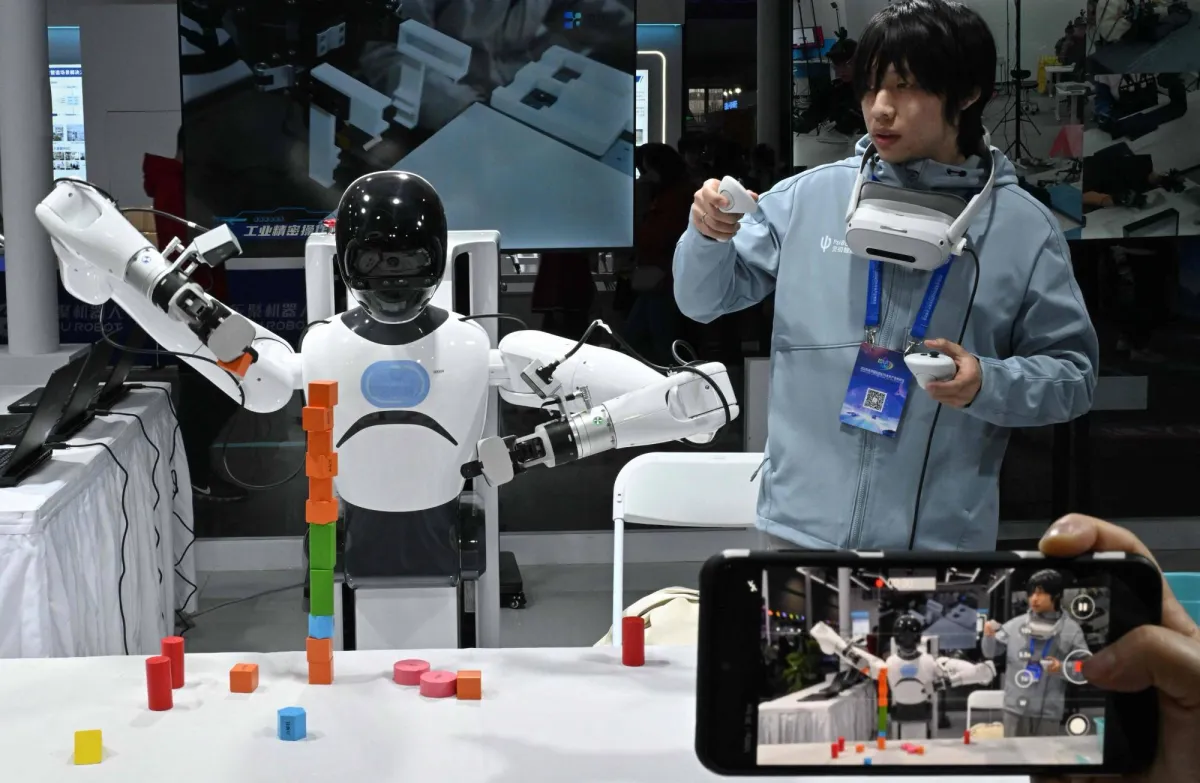
The humanoid robotics industry is striving to realize the dream of having robots in every home, leading to the emergence of new jobs focused on imaging household tasks. This work requires a head-mounted device, a smartphone, and a list of household chores.
With advancements in artificial intelligence, humanoid robots have become a significant challenge in the field of advanced technology. Manufacturers have launched a range of new models capable of walking, dancing, and fighting with increasing skill, as reported by CNN.
Event Details
The primary goal of this industry is to develop multi-purpose robots that can operate in diverse environments such as stores, offices, and homes. To achieve this, these robots need vast amounts of data to learn how to work safely and effectively instead of humans. The percentage of data collected through individuals recording themselves performing routine household tasks has significantly increased.
As a result, there is a growing demand for first-person perspective video footage, also known as “self-data” or “human data.” In recent months, startups have accelerated efforts to meet this demand by collecting and categorizing videos from thousands of contracted workers around the world.
Background & Context
In this context, Aryan Sadeghi, Vice President of Robotics Data at Micro1, explained that manufacturing, warehouses, retail stores, nursing homes, and hospitals all require this type of data, as movements vary from place to place.
Each participant receives a device to mount the camera on their head, along with filming instructions and a list of tasks such as cooking, cleaning, gardening, and pet care. Workers are expected to rotate through tasks and provide at least 10 hours of video weekly.
Impact & Consequences
While the footage currently focuses on household tasks, Sadeghi emphasized that the company encourages contractors to experiment with different types of filming, hoping this will help robots adapt more quickly to new environments and responsibilities.
This development in the robotics industry could change how household tasks are performed, allowing people more time to focus on other aspects of their lives. It may also contribute to improving efficiency and reducing the effort involved in routine chores.
Regional Significance
In light of rapid technological advancements, these innovations could impact the job market in the Arab region, where new opportunities may arise in manufacturing and technology fields. Additionally, the use of robots in household tasks could enhance quality of life.
In conclusion, this trend in the robotics industry represents a step towards the future, where technology could transform the daily lives of people, opening new horizons in work and social interaction.