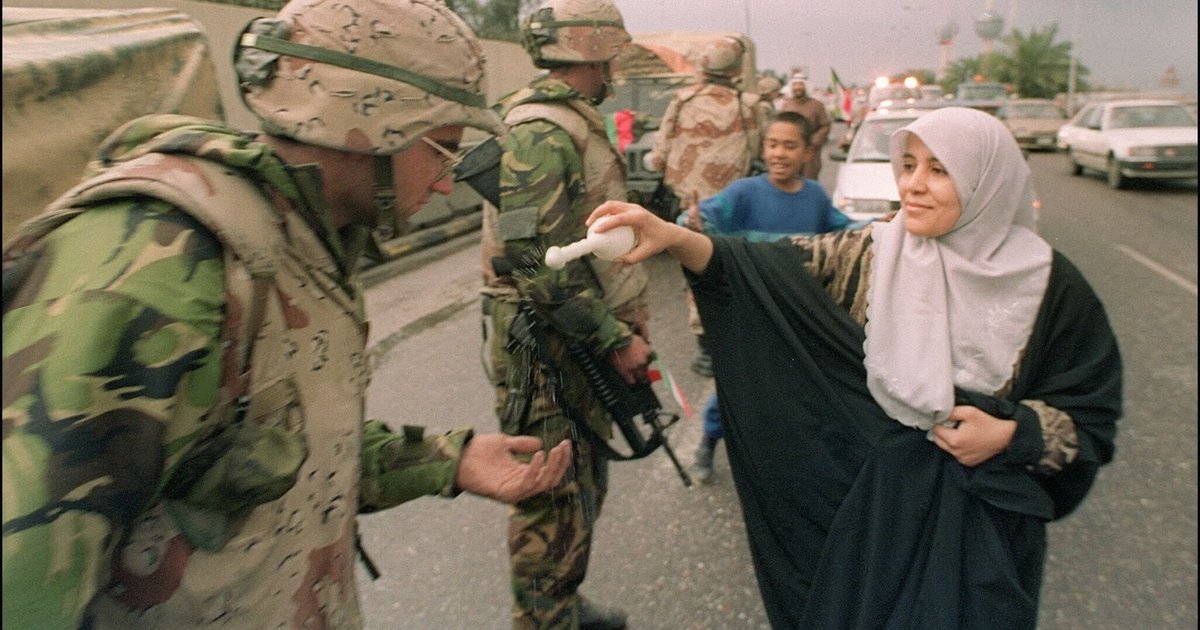
In his new book, 'The American Middle East', Mark Lynch reveals that U.S. foreign policies have not failed; instead, they were crafted to sustain chaos in the region. Since 1991, the United States has not only entered the region but has also established a regional system based on military dominance, the protection of Israel, and support for authoritarian regimes.
Lynch begins the book with intense anger, but he does not remain there. He writes from the perspective of someone who has lived within the institutions that shape American policy in the Middle East, asserting that this machinery has not malfunctioned but has operated as intended.
Details of the Event
Lynch reviews how the system created by the United States in the Middle East relies on several elements, including the protection of Israel, containing Iran, and steering Arab politics in line with its interests. This system promised peace and democracy but resulted in the destruction of Iraq, fake peace processes in Palestine, the survival of repressive regimes, the collapse of Libya, the Syrian war, famine in Yemen, and genocide in Gaza.
The book argues that the peace process in Palestine was not merely a lost opportunity but a mechanism that allowed Israel to deepen its control while the United States maintained the illusion of mediation. According to this analysis, Gaza is not an anomaly but a result of a system that treats Palestinian lives as an administrative burden.
Background & Context
Since the early 1990s, the United States has followed a foreign policy aimed at achieving its strategic interests in the Middle East, exacerbating humanitarian and political crises. These policies were not mere mistakes but were successful according to their own standards, as Israel remained armed and protected, and authoritarian regimes continued to endure.
Lynch illustrates how every American president after George H.W. Bush promised to change this system, yet they all ended up reproducing the same structure. From Bill Clinton to Barack Obama, and on to Donald Trump and Joe Biden, the policies continued to serve the same objectives.
Impact & Consequences
Lynch emphasizes that American policies have not only led to the destruction of states but have also contributed to the emergence of the Islamic forces that they claim to combat. The closure of peaceful political avenues and support for repressive regimes have fueled extremism. Furthermore, anti-Islam sentiment has become the language of governance that justifies oppression, surveillance, and wars.
The book highlights that racism is not merely a moral issue but is part of the history of American politics. American officials treat Arabs and Muslims as if they are less human, contributing to the spread of chaos in the region.
Regional Significance
The impact of these policies extends to all Arab countries, where peoples suffer from poverty and injustice due to external interventions. The chaos experienced in the region is not just a result of events but is a product of an international political system that favors authoritarianism over democracy.
In conclusion, Lynch stresses the necessity of understanding these dynamics to achieve real change. The book is not just a critique of American policies but a call to think about how to build a new system that reflects the aspirations of Arab peoples.