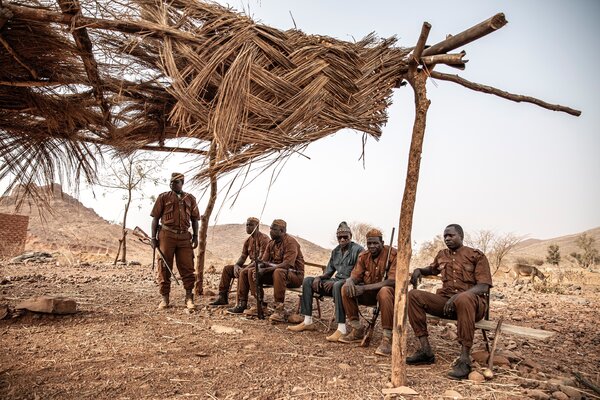
Human Rights Watch has accused the Burkina Faso army, along with its allied militias and an armed group linked to Al-Qaeda, of committing atrocities that include the killing of over 1,800 civilians and the forced displacement of tens of thousands since the beginning of 2023.
The organization noted that these violations, which involve ethnic cleansing against civilians from the Fulani tribes, constitute war crimes and crimes against humanity, and senior leaders from all parties may bear responsibility for them.
Details of the Report
The report, titled "No Escape: War Crimes and Crimes Against Humanity in Burkina Faso by All Parties," is based on documents exceeding 316 pages, documenting the devastating impact of armed conflict on civilians. Researchers at Human Rights Watch recorded 57 incidents involving Burkina Faso military forces and militias known as "Volunteers for the Defense of the Homeland," as well as the group "Jama'at Nasr al-Islam wal Muslimin" linked to Al-Qaeda, since the military council seized power in September 2022.
In this context, Philippe Bolopion, the organization's executive director, stated that "the scale of the atrocities occurring in Burkina Faso is staggering, as is the lack of global attention to this crisis." He added that the ruling military council "commits horrific violations, holds no one accountable from any side, and restricts media coverage to hide the suffering of civilians trapped in violence."
Background & Context
Government forces and the "Volunteers for the Defense of the Homeland" militias specifically target Fulani communities, accusing them of collaborating with armed groups. Human Rights Watch has documented violations including mass executions, the burning of entire villages, and widespread forced displacement, leaving tens of thousands homeless or unprotected.
On the other hand, the organization also documented bloody retaliatory attacks carried out by the "Jama'at Nasr al-Islam wal Muslimin," which included killing civilians, kidnapping them, and planting explosives on roads. It confirmed that civilians are targeted by all parties and are killed merely for their community affiliation or for being in areas suspected of harboring adversaries.
Impact & Consequences
The report emphasizes that the state bears greater responsibility due to its presumed control over the army and the allied militias, as well as its ability to prevent crimes and hold perpetrators accountable. However, the Burkinabe authorities have instead granted the "Volunteers for the Defense of the Homeland" wide powers with weak oversight, exacerbating the pattern of violations against civilians, particularly the Fulani.
Human Rights Watch has called for independent and effective investigations into these crimes and for sanctions to be imposed on military and political leaders responsible for the violations or complicit in covering them up. It also urged governments supporting Burkina Faso to review their security and military assistance and to refrain from providing any support that could be used for further crimes against civilians, while enhancing efforts to protect populations and document evidence in preparation for international accountability.
Regional Significance
In light of the escalating armed conflicts in the African Sahel region, Arab countries need to be aware of the implications of these crises, as they could lead to an influx of refugees and increased regional tensions. Additionally, the international response to these crises may impact relations between Arab states and African countries.
In conclusion, these atrocities in Burkina Faso highlight the urgent need for effective international intervention to protect civilians and ensure accountability for perpetrators of crimes, amid the growing humanitarian crises in the region.