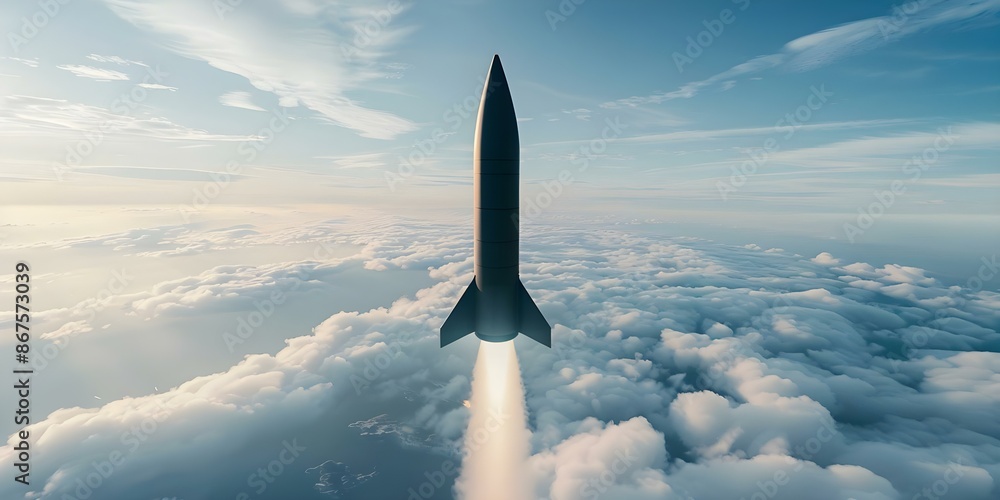
Hypersonic missiles represent a significant advancement in military technology, capable of reaching speeds five times faster than sound. This technology marks a radical shift in global military power dynamics.
Hypersonic missiles utilize advanced technologies that enable them to fly within the atmosphere at speeds exceeding 5 Mach, making them capable of evading traditional air defense systems. This incredible speed means that these missiles can reach their targets in a very short time, increasing the difficulty of countering them.
Details of the Development
Hypersonic missiles represent a new generation of weapons, relying on advanced propulsion technologies such as solid or liquid fuel propulsion. These systems allow the missiles to fly at low altitudes, enhancing their maneuverability and increasing their chances of penetrating air defenses successfully.
Many countries, including the United States, Russia, and China, are striving to develop this technology, raising global concerns about a new arms race. Recent tests have demonstrated the ability of these missiles to strike distant targets with high precision, reflecting significant advancements in military technology.
Background & Context
Historically, research on hypersonic missiles began in the mid-20th century, but it has seen a significant surge in recent years due to rapid technological developments. In recent years, several countries have conducted successful tests of these missiles, prompting many other nations to accelerate their research and development programs.
This technology is part of the national defense strategy for many countries, as they seek to enhance their military capabilities in the face of increasing threats. Additionally, these missiles pose a significant challenge to traditional defense systems, necessitating a reassessment of defense strategies in many nations.
Impact & Consequences
The proliferation of hypersonic missile technology could lead to radical changes in global military power dynamics. Countries possessing this technology will be able to exert greater influence, potentially exacerbating tensions among major powers.
Moreover, the development of these missiles may drive other nations to increase their defense budgets, thereby intensifying the global arms race. This situation could affect regional and international stability and increase the likelihood of armed conflicts.
Regional Significance
In the Arab region, advancements in hypersonic missile technology may lead to changes in defense strategies among Arab countries. Some nations may seek to develop their military capabilities to address potential threats, which could increase tensions in the region.
Furthermore, this technology may pave the way for new alliances between Arab nations and major powers that possess this technology, potentially reshaping regional alliances. In light of these developments, it is crucial for Arab countries to remain vigilant regarding changes in global power dynamics.
In conclusion, hypersonic missiles represent a significant step towards a new military future, where countries must adapt to these rapid changes to ensure their security and stability.